
Control arms: the backbone of the whole system
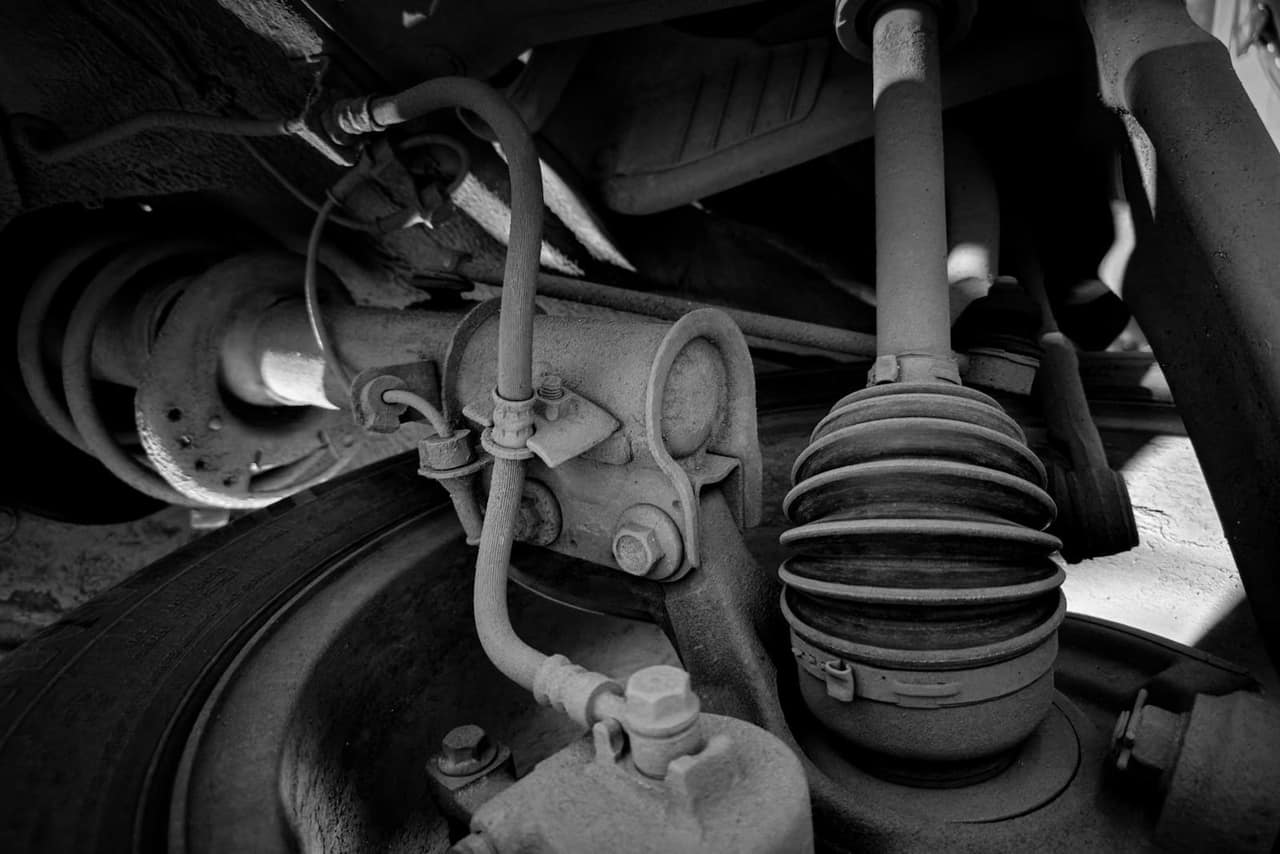
If you compared a car's suspension to a human body, the control arms would be the bones. They are the structural foundation everything else attaches to. Shocks, springs, ball joints, anti-roll bars, all of it is bolted onto the arms or linked to the rest of the car through them. When an arm fails, the whole suspension is compromised.
That is exactly why buying used control arms deserves a careful look. Unlike smaller suspension parts such as tie rods or anti-roll bar links, control arms are structural parts that carry huge loads. A wrong decision can cost a lot more than the saving on the part itself.
On the other hand, control arms are also among the more expensive suspension parts, especially on modern cars with multi-link setups. And there, buying used can save hundreds of euros. Let us see when and how.
Types of control arms
Different cars use different suspension types, and with that come different arm types. Knowing the differences matters because it shapes how worthwhile used parts really are.
MacPherson suspension (single arm)
The most common front suspension on small and mid-size cars. It uses one lower arm per wheel, while the upper function is taken over by the shock itself (a MacPherson strut). The arm is usually triangular (which is why it is also called a "wishbone" or "A-arm"), with two mounting points to the subframe and a single ball joint at the wheel knuckle.
These arms are relatively simple and cheap, both new and used. For a VW Golf, a new aftermarket arm costs 25 to 60 euros, while a used OEM one can be 15 to 35 euros.
Multi-link suspension
Premium cars (Audi, BMW, Mercedes) and more and more mid-size models use multi-link suspension with 3 to 5 arms per wheel. Each arm controls one aspect of wheel movement (longitudinal, lateral, camber). That gives excellent control over the alignment and superior driving dynamics, but also significantly higher maintenance costs.
A set of arms for the front suspension of an Audi A4 can cost 400-800 euros for new aftermarket parts, or even 1500+ euros for OEM. That is where used parts become very attractive, since a set of used arms with low mileage can cost 150-300 euros.
Steel vs aluminium arms
This is an important difference when buying used. Steel arms are tougher, harder to damage and better at shrugging off minor knocks. Aluminium arms are lighter (which improves driving feel) but more sensitive to impacts and corrosion.
With used parts, steel arms are generally a safer purchase because there is less chance of hidden damage. Aluminium arms call for a more careful inspection because microcracks in aluminium can be invisible to the naked eye and may lead to a sudden break under load.
Why control arms wear at all
The arm itself as a metal part rarely wears or breaks in normal driving. What does wear are the rubber-metal bushings (silent blocks) at the points where the arm bolts to the subframe, and the ball joint where the arm meets the wheel knuckle.
On steel arms, the ball joints and silent blocks can be replaced separately, so it is not always necessary to replace the entire arm. On aluminium arms, the ball joints are often integrated (riveted in) and cannot be replaced separately, so the whole arm has to be replaced. That is one reason why aluminium arms are more expensive to maintain.
Symptoms of worn arms
- Knocking from the suspension - especially when crossing bumps, the most common symptom of worn silent blocks
- The car pulls to one side under braking - worn front silent blocks let the arm shift during braking
- Uneven tyre wear - a worn arm changes the wheel alignment
- The steering wheel is off-centre - the arm has moved out of its correct position
- Instability at higher speeds - loose arms cause wheel oscillations
- Squeaking when turning the steering wheel fully - dry silent blocks
Used control arms: when they pay off
Control arms are actually one of the suspension parts where buying used makes the most sense. Here is why:
Steel arms with new ball joints and silent blocks
If you buy a used steel arm and replace the ball joint and silent blocks with new ones, you get a practically new part for half the price. The metal arm itself does not wear in normal conditions (except in a crash or severe corrosion), so a used arm with 100,000 km and a new ball joint can serve just as well as a brand new one.
This approach is especially worthwhile for cars with simple MacPherson suspension where the arm is cheap and replacing the ball joint and silent blocks is straightforward.
Aluminium arms for premium cars
On cars like the Audi A4, A6, BMW 5 Series or Mercedes E-Class, a set of new arms for the front suspension can cost an astronomical 1000-2000 euros. A used set with low mileage (30,000-50,000 km) for 200-400 euros is a saving that justifies the risk, provided you check the condition carefully.

Rear arms
Rear arms are generally less loaded than front ones (they do not steer, only carry and guide the wheel) and last longer. Used rear arms are therefore a safer buy than front ones. Many rear multi-link setups have arms that last the entire life of the car, so used ones from a car that was in a front-end collision can be practically new.
How to check a used control arm
A detailed inspection is critical, especially for aluminium arms. Here is what to watch for:
Structural integrity
Inspect the arm end to end. Look for any deformation, bending or cracks. Compare the left and right arms if you are buying a pair. They should be identical in shape and size. Any difference can mean one of them was exposed to an impact.
Silent block condition
Look at the rubber bushings at the mounting points. If they are cracked, dry or visibly deformed, they need replacing. That is not necessarily a reason to walk away from the buy, but you have to include the cost of new silent blocks in the total price.
Ball joint condition
If the arm has an integrated ball joint (common on aluminium arms), check the joint for play. Grab the ball joint mount and try to move it. Any looseness or dead play means the ball joint is worn, and if it cannot be replaced separately, the entire arm is useless.
Corrosion
On steel arms, surface rust is normal. Deep corrosion that has eaten into the material is a problem. On aluminium arms, white powdery deposits mean aluminium corrosion that can weaken the structure.
Prices for used control arms
Here are rough prices for the most popular categories:
- Steel arm (Golf, Focus, Megane) - 15-35 EUR used, 25-60 EUR new aftermarket
- Aluminium arm (Audi A4, BMW 3) - 30-80 EUR used, 60-150 EUR new aftermarket
- Front multi-link arm set (Audi A4) - 150-350 EUR used, 400-800 EUR new aftermarket
- Rear arm - 15-50 EUR used, 30-80 EUR new aftermarket
- Rear multi-link arm set - 80-200 EUR used, 200-400 EUR new aftermarket
As you can see, the saving is biggest on multi-link setups for premium cars. On simple single-arm suspensions, the gap between used and new aftermarket is smaller and the question is whether the risk is worth it.
Fitting used control arms
Replacing arms is a job of medium difficulty. On MacPherson suspension, replacing one arm takes 30 to 60 minutes and costs 30 to 60 euros in labour. On multi-link setups, replacing the whole set can take a full workshop shift and cost 150-300 euros in labour.
Key points when fitting:
- Bolts and nuts - use new bolts to fix the arm to the subframe. Old bolts may be stretched and not hold properly
- Tightening torque - arms must be tightened to the exact specified torque. Undertightened bolts can come loose, overtightened ones can snap
- Alignment - mandatory after replacing arms. No exceptions.
- Tightening under load - silent blocks must be final-tightened with the car on its wheels (under load), not while it is hanging on the lift. If they are tightened without load, the rubber in the silent block will be pre-stressed in the wrong position and will wear out fast
Known issues by model
Some car models are known for arm trouble, so here is a quick rundown:
Audi A4 B5/B6/B7: The front multi-link suspension with aluminium arms is known for relatively short ball joint life. The arm set is usually changed at 80,000-120,000 km. Used sets are highly sought after and easy to find since this car is still on the roads in big numbers.
BMW E46 (3 Series): Front arms with rubber silent blocks last about 100,000 km. A common upgrade is to arms with polyurethane bushings for longer life.
VW Golf 5/6/7: MacPherson front suspension with a single arm. The arm itself is tough, but the ball joint wears. There are versions with a replaceable ball joint and versions with an integrated one, so check before you buy.
Peugeot/Citroen platforms: Known for relatively soft silent blocks that wear out fast. Used arms from these cars often have worn silent blocks even at low mileage.
Find used control arms for your car
Control arms vary in size and design even between different engine versions of the same model. That is why it is important to specify your car exactly when buying.
On the PoDi platform you can send a request for used control arms with detailed vehicle information. The VIN is ideal because it practically eliminates the chance of an error. We connect you with suppliers who can send you quotes for arms that match your model, with details on condition and mileage.
Whether you need a single arm or a complete set for a multi-link suspension, used parts can be an excellent way to save without giving up quality. Just be careful during inspection and do not forget the alignment after fitting.