
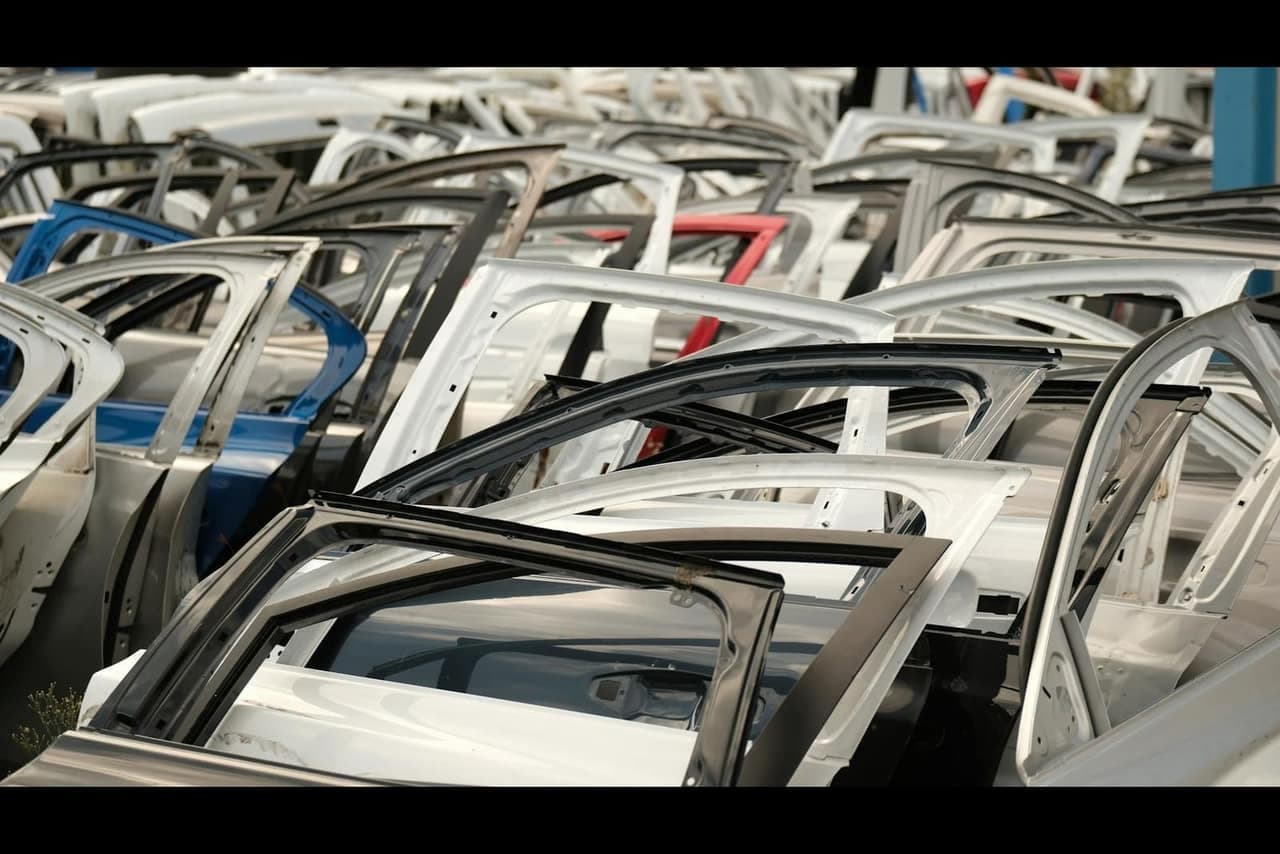
Doors are more than a piece of metal with a handle
When most people think of car doors, they picture a simple panel with a handle and a window. But modern car doors are actually a pretty complex assembly. Inside you will find: a window-lifting mechanism (manual or electric), a lock and opening/closing mechanism, a speaker or even multiple speakers, a side airbag, glass rails, a moisture seal, insulation, wiring for electrical functions, and even control modules for the windows and mirrors.
All of that means that replacing a door is not as simple as it seems. And that is exactly why, when you are buying used doors, you have a choice: buy a complete door (with everything inside) or a bare door (just the shell). Each option has its pros and cons.
But first, how much does all of this cost new? New original doors for an average car cost EUR 500 to 1,500 for the shell alone, without anything inside. Complete new doors with all the equipment? That can go up to EUR 3,000 for premium brands. Used? From EUR 80 to 400, depending on the model and how complete it is. The gap is enormous.
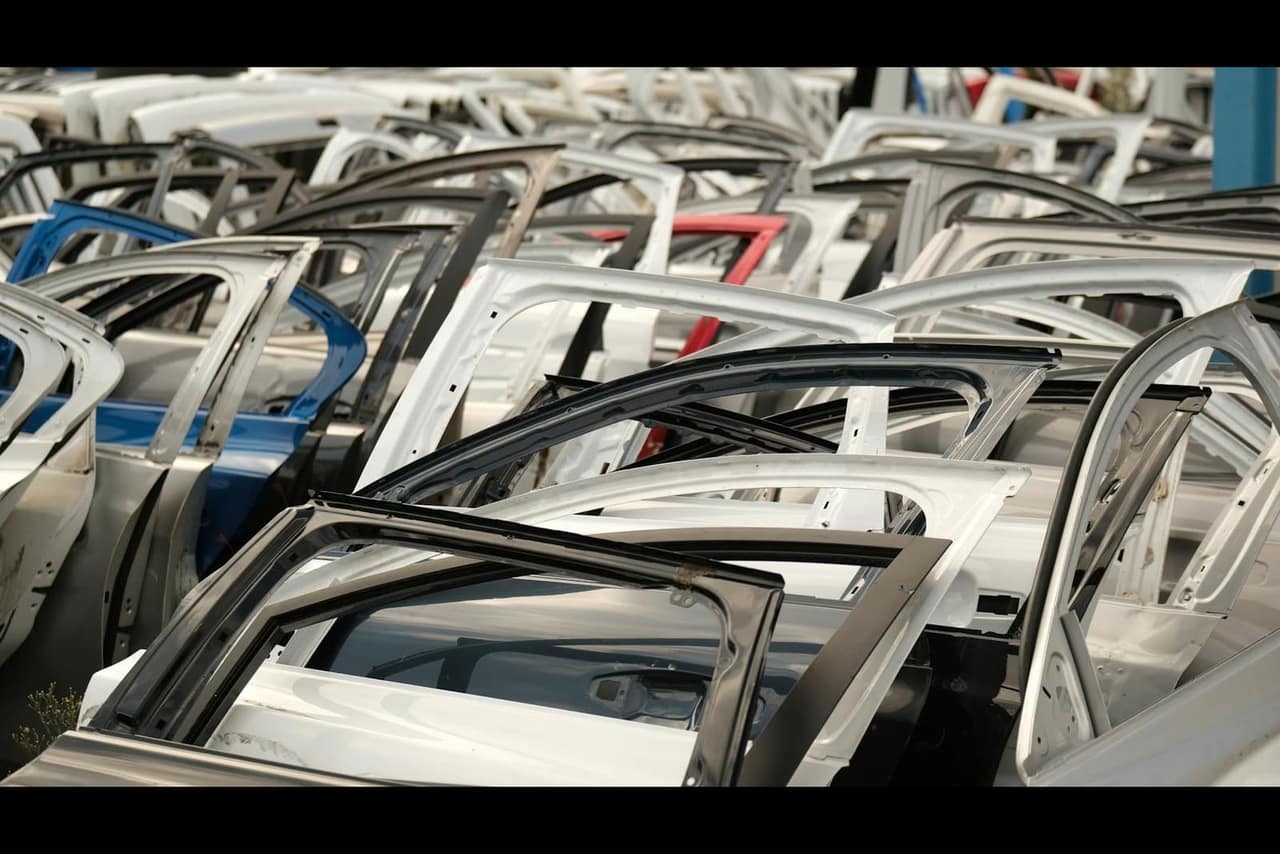
Complete doors: what you get
Complete used doors come with all the components that were inside them when they were removed from the donor vehicle. That usually includes:
- The door shell (outer panel)
- The interior trim (door card)
- The glass (side window)
- The window-lifting mechanism (motor and rails)
- The lock and interior/exterior handle
- Speakers
- Wiring
- The side airbag (sometimes, if it has not deployed)
- Seals (sometimes)
The advantage of complete doors is obvious: you get everything in one place. You take off the old door, fit the new one, connect the wires, and that is it. No hunting for individual parts, no compatibility issues between components from different sources.
Advantages of complete doors
The biggest advantage is simplicity. Everything is there, everything is compatible, everything works together. The mechanic removes the old door, fits the new one, connects the wires and the job is done in two to three hours. No second-guessing, no improvising.
The second advantage is the price. It may sound counter-intuitive, but complete doors are often cheaper than buying a shell plus all the individual components. The reason is simple: it is easier for sellers to sell a door "as a unit" than to strip it down and sell it part by part.
Drawbacks of complete doors
The main drawback is that you also get things you may not need, or that may be in worse condition than your existing ones. For example, the glass on a complete door can have scratches, a speaker can be blown, or the interior trim can be damaged. In that case you will need to replace those components or use your old ones.
Also, the side airbag. If the door is from a vehicle that was in an accident and the airbag deployed, the door will not have a functional airbag. That is a safety issue. Always ask the seller about the status of the airbag and visually check that it is in place.
Bare doors: just the shell
A bare door is just the outer metal panel (shell) without any interior components. You buy them when all you need is to replace the damaged metal, and all the interior components from your old door are working and can be transferred over.
Advantages of bare doors
They are cheaper than complete ones. Logical, fewer parts equals a lower price. Bare doors for popular models can be found for EUR 50 to 150, while complete ones run from EUR 150 to 400.
Also, you transfer your own components, so you are sure everything works because you already had it in your car. Your window motor, your lock, your speakers, your airbag.
Drawbacks of bare doors
The job is significantly more complex. You have to strip the old door, take out all the components, and then fit all of that into the new bare door. That is a half-day to full-day job, depending on the model and the mechanic's experience. And of course, more labour means a higher fitting cost.
There is also a risk of damaging components during the transfer. Plastic clips break easily, wiring can be damaged, and there is always a chance that something does not sit perfectly in the new door because tolerances are tiny.
How to decide: complete or bare
Here is a simple guide for the decision:
Buy complete doors if:
- Your old door is severely damaged (accident) and the interior components are questionable
- You want a quick and simple replacement
- You can find a complete door in the right colour
- The price difference between complete and bare is not too large
Buy a bare door if:
- The damage is only on the outer panel (dent, corrosion, scratch)
- All the interior components in your old door work correctly
- You want to save on the price of the part
- You have a reliable mechanic who has experience transferring components
Checking door compatibility
Doors differ by:
- Model and year - obvious, but worth pointing out: even within the same model generation, doors can vary. Facelift versions sometimes have a different door shape.
- Number of doors - a three-door model has different front doors from a five-door. Front doors on a three-door car are longer than on a five-door.
- Side - left or right, front or rear. Four different parts that cannot be swapped with each other.
- Equipment - electric windows vs. manual, with or without speakers for premium audio, with or without a side airbag.
Again, the OEM part number is the safest method. Send an enquiry to PoDi with your vehicle's details, and suppliers will recommend doors that fit.
Door colour
As with all exterior body panels, colour is critical. A door is a large panel and a colour difference shows immediately. Ideally you want to find a door in the same colour and a similar year to your car.
If you cannot find a door in the exact colour, painting is an option. Painting a door costs EUR 200 to 400 because it is a large panel that requires even application. Some paint shops also offer a "blending" option where they extend the paint onto the neighbouring panel (fender or rear quarter) so that the transition is invisible.
Checking the condition of used doors
Here is a detailed checklist:
- Dents and deformations - inspect the panel at an angle in the sun
- Corrosion - especially the lower edge of the door and around the water drains
- Glass - scratches, cracks (on complete doors)
- Window mechanism - test raising and lowering (on complete doors)
- Lock - must work smoothly, the key must turn without issues
- Airbag - visually check whether it is in place and undamaged
- Hinges - check the condition and wear of the hinges
- Seals - rubber seals around the door prevent water and wind ingress
Used door prices
Rough prices for used doors (complete / bare):
- VW Golf - EUR 100-200 / 50-100
- BMW 3 Series - EUR 150-300 / 80-150
- Audi A4 - EUR 150-300 / 80-150
- Mercedes C-Class - EUR 200-400 / 100-200
- Opel Astra - EUR 80-180 / 40-90
- Skoda Octavia - EUR 100-200 / 50-100
Fitting used doors
Replacing a door is a job of medium complexity. Complete doors fit faster (a full workshop shift), while bare doors with a component transfer can take significantly longer.
The process for complete doors:
- Disconnect the wiring and hoses on the old door
- Remove the old door from the hinges
- Fit the new door to the hinges
- Adjust the position until the gaps are even
- Connect the wiring and hoses
- Test all functions (window, lock, light, speaker)
- Adjust the lock until the door closes smoothly
The most critical step is adjusting the door position. The door must be perfectly aligned with the rest of the bodywork, the gaps must be even top and bottom, front and back. This takes experience and patience.
Conclusion: doors are an investment that pays off
Whether you choose complete or bare doors, buying used doors can save you hundreds of euros compared with a new part. The key is checking compatibility, condition and colour. Complete doors are simpler to fit, bare ones are cheaper but take more work.
Either way, PoDi connects you with suppliers to find the right door for your car. Just state the model, year, colour and which door you need in the enquiry, and suppliers will send you their offers.