
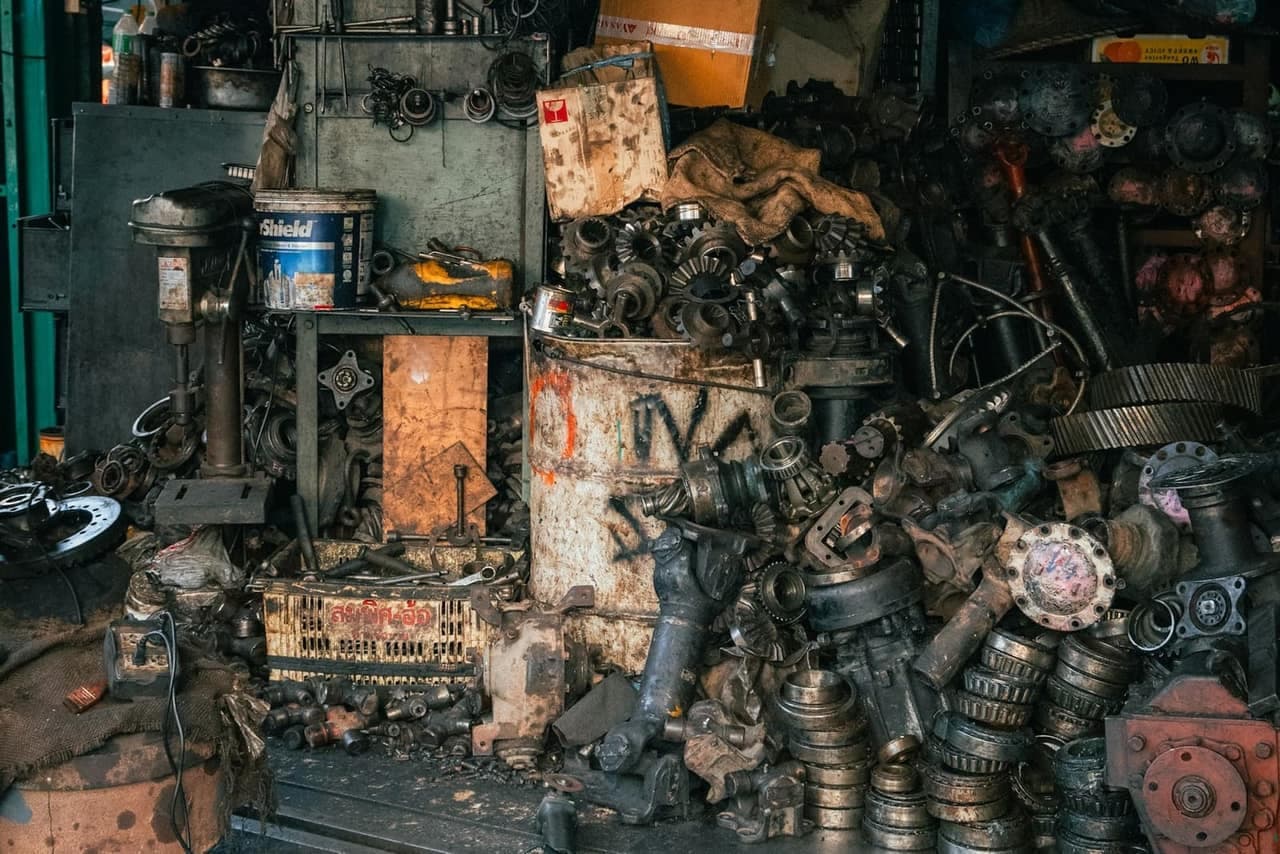
We all make mistakes, but we do not have to make the same ones
Buying used car parts can be a fantastic way to save money. But it can also be a frustrating experience if you make one of the classic mistakes we see again and again. We talked to mechanics, scrapyard owners, and hundreds of buyers to put together a list of the most common mistakes. And some of them are so basic you will wonder "how is that even possible?". And yet they happen. Every day.
The goal of this article is not to scare you away from buying used parts. Quite the opposite. The goal is to set you up so your experience is a positive one. Because once you avoid these mistakes, buying used parts becomes simple, safe and worthwhile.
Mistake #1: Buying a part without checking the VIN
This is the number one mistake for a reason. It is the most common, the most expensive, and the easiest to avoid.
The scene: you need an alternator for a "Passat B6 2.0 TDI". You find one, buy it, take it to the mechanic, and he tells you "this does not fit". The bracket is different, the connector is different, the pulley is a different size. What?
The problem is that "Passat B6 2.0 TDI" is not specific enough information. That car came with three different 2.0 TDI engines (BKP, BMR, CBAB), and each of them can have a different alternator. Plus, there are variations depending on whether the car has air conditioning, an automatic gearbox, and which factory it was built in.
The fix is incredibly simple: use the VIN. 17 characters that remove any doubt. More on that in our article on VIN numbers.
Mistake #2: Buying on price alone
We get it. The repair is already costing you for the mechanic, you want to save on the part as much as you can. But buying a part just because it has the lowest price is a recipe for trouble.
Here is what usually happens. You find an engine for EUR 400 when all the others cost EUR 800 to 1,000. Great, a saving! You buy it, pay EUR 500 for installation, and the engine starts knocking after three weeks. Now you have to pay to remove the old one (EUR 200), buy a new engine (EUR 800), and pay for installation again (EUR 500). Total: EUR 1,900 instead of the EUR 1,300 it would have cost you if you had bought a good engine first time round.
Cheap is expensive. That sentence should be tattooed on the forehead of every used parts buyer.
That does not mean you have to buy the most expensive part. It means you have to understand why something is cheap. If the part is cheaper because the seller wants a fast sale, great. If it is cheaper because it has 300,000 km or hidden damage, not so great.
Mistake #3: Skipping the warranty
How many times have we heard: "I do not need a warranty, the part looks OK." And then when the part does not work, there is no one to turn to.
A warranty on a used part is not a luxury. It is your safety net. Even 30 days of warranty is enough to fit the part and confirm it works properly. Without a warranty, every purchase is a gamble.
Especially for more expensive parts (engine, gearbox, turbo, ECU), a warranty is absolutely essential. The price difference between a part with a warranty and one without is usually 10 to 20 percent. But the difference in risk is 100 percent. We wrote more about warranties in a separate article.

Mistake #4: Not vetting the seller
The internet is full of used parts sellers. Some are professionals with years of experience and long-standing reputations. Others are people who set up a Facebook profile yesterday and are selling a part of questionable origin out of a garage.
Vetting a seller takes five minutes and can save you hundreds of euros. Look at Google reviews. Check how long they have been in business. Do they have a website? Are they a registered company? Do they have a physical location? All of this tells you how serious a seller is.
On the PoDi platform, suppliers go through verification and have a review system, so this step is already done for you. But if you are buying outside the platform, make sure you check who you are dealing with.
Mistake #5: Ignoring installation costs
Buyers often look only at the price of the part and forget about the cost of installation. And for some parts, installation is expensive because it is complex.
Example: you buy a used AC compressor for EUR 150. Great price! But fitting a compressor requires recharging the AC system, replacing seals, and sometimes recovering the old refrigerant. That costs EUR 150 to 250. Total: EUR 300 to 400.
Now, if a new aftermarket compressor is EUR 250 and the installation is the same, the difference is only EUR 100. And for that EUR 100 you get a completely new part with a 2-year warranty. In this scenario, the used part might not be the best option.
Always calculate the total cost: part + shipping + installation. That is the only fair way to compare.
Mistake #6: Having a used part fitted by an amateur
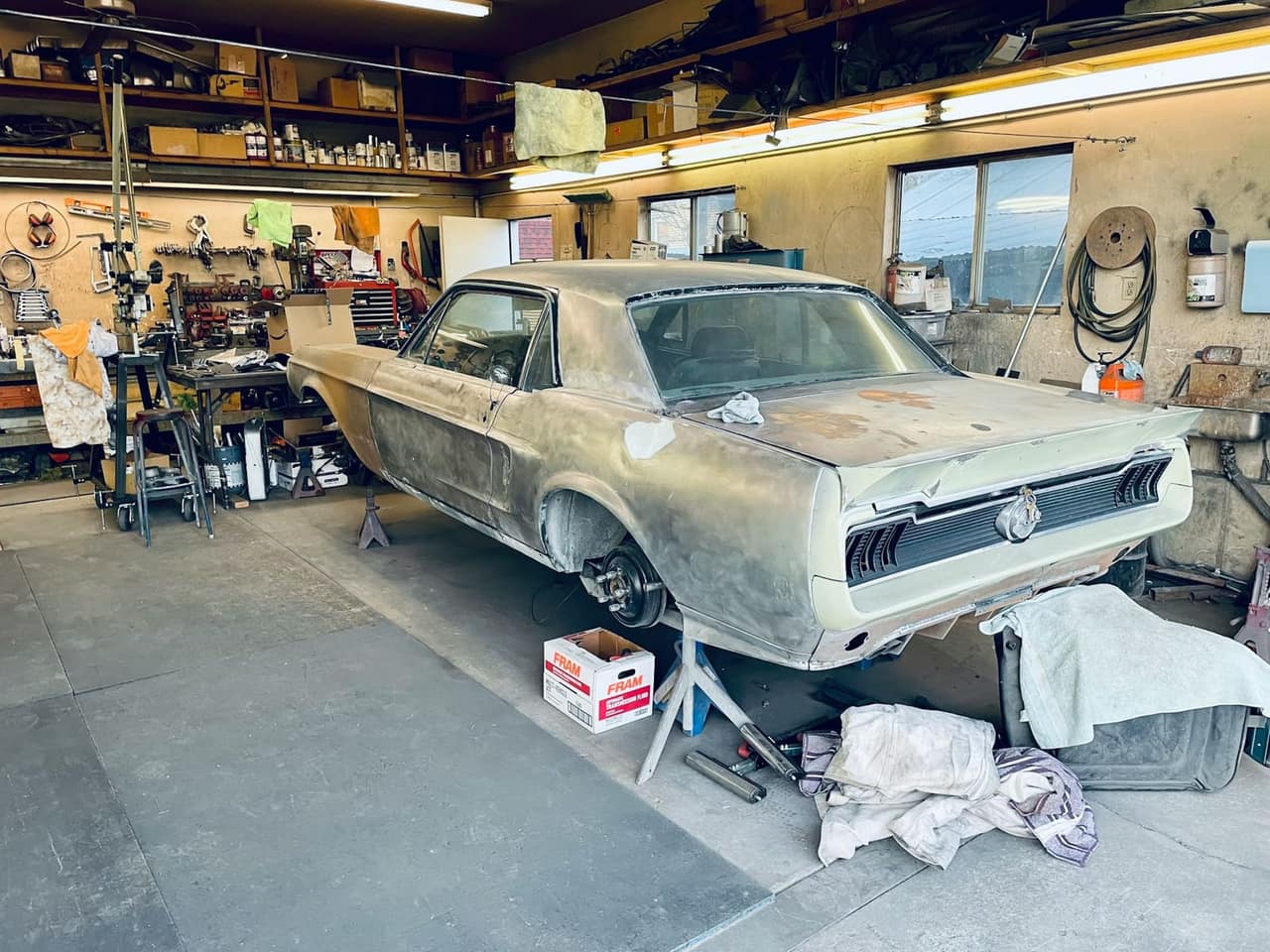
This is a mistake that comes up often, and the consequences can be serious. You buy a perfect used engine for EUR 900. You take it to a "bloke" working in a garage for EUR 200 instead of a professional workshop for EUR 500. He wires a hose wrongly, the engine overheats, the head gasket blows, and the engine is done.
Now you have no engine, no warranty (because it was voided by the amateur installation), and you have to start over. The EUR 300 saving on installation has cost you EUR 2,000 or more.
For simple parts (seats, bumpers, headlights), the installation is simple enough that even a less experienced mechanic can do a good job. But for engines, gearboxes, turbos and electronics, always go to a professional. That is not a cost, it is an investment.
Mistake #7: Buying without a physical inspection or detailed photos
This applies especially to buying online. A single photo from a distance tells you nothing about the condition of the part. And "in good condition" is subjective and can mean anything.
If you are buying in person, inspect the part in detail. Bring a torch, gloves, and a magnet (to check for filler work on body panels). If you are buying online, ask for at least 5 to 6 photos from different angles, photos of serial numbers and connectors, and if possible a video.
A seller who will not send detailed photos probably has a reason. And that reason is usually not in your favour.
Mistake #8: Rushing the purchase
Your car is sitting idle, you need it for work, every day without it costs you. I understand the urgency. But rushing into buying used parts is one of the surest ways to make a bad purchase.
When you rush, you do not compare prices, you do not vet the seller, you do not ask for a warranty, and you buy the first part you come across. All of that increases the chance of a problem.
Tip: if you often need your car for work, factor in that repairs take time. Consider renting a replacement vehicle for a day or two while you look for the right part at a good price. That EUR 30 to 50 for the rental pays for itself if it lets you buy a better part at a better price.
Or even better, send a request via the PoDi platform and compare offers from multiple suppliers at once. That is a fast way to find a part without rushing and without compromising on quality.
Mistake #9: Buying parts that are not worth buying used
Not every part is worth buying used. There are parts where the price difference between new and used is so small that new is always the better choice.
Examples:
- Thermostat - new costs EUR 15 to 30. Used EUR 10 to 15. For a EUR 10 difference, buy new
- Water pump - new quality aftermarket EUR 40 to 80. Used EUR 25 to 40. The water pump is a wear part, and a used one can fail soon
- Lambda sensor - new EUR 30 to 60. Used EUR 15 to 30. Sensors wear out and calibration drifts with age. Buy new
- Gaskets and seals - always buy new. Used gaskets make no sense
- Cables - clutch cables, handbrake cables and similar. Always new
General rule: if a part costs less than EUR 50 new, and has a limited life (wears out), buy it new. Buy used parts when the saving is meaningful and when the part can last a long time.
Bonus: how to avoid ALL these mistakes at once
There is one approach that eliminates most of these mistakes automatically. Buy from professional, vetted suppliers who:
- Ask for the VIN with every request (solves mistake #1)
- Have fair prices with transparent reasoning (solves mistake #2)
- Offer a warranty on every part (solves mistake #3)
- Have a verifiable reputation and reviews (solves mistake #4)
- Send detailed photos without you having to beg for them (solves mistake #7)
When you use the PoDi platform to send a request, you are connecting with suppliers like that. The system is designed to reduce the most common problems and make the buying experience safer.
Mistakes you now know how to avoid
Mistakes are a normal part of learning. But when it comes to car parts that cost hundreds of euros, it is better to learn from someone else's mistakes than your own. Remember these 9 mistakes, avoid them consciously, and your experience with used parts will be far more pleasant.
And remember: used parts are an excellent choice when bought smartly. The key is preparation, vetting and patience. With that in mind, the savings can be enormous without any compromise on quality.