

When your car is no longer in the catalogue
You own an Opel Vectra C with the 1.9 CDTI engine from 2006 and it needs an ECU. Or you drive a Peugeot 407 2.2 HDi and you need a turbo. Or, heaven help you, you have an Alfa Romeo 156 2.4 JTD and you need any part at all. You know that feeling when you walk into a parts shop, name the model, and the salesperson stares at you like you just spoke Martian? Yes, that.
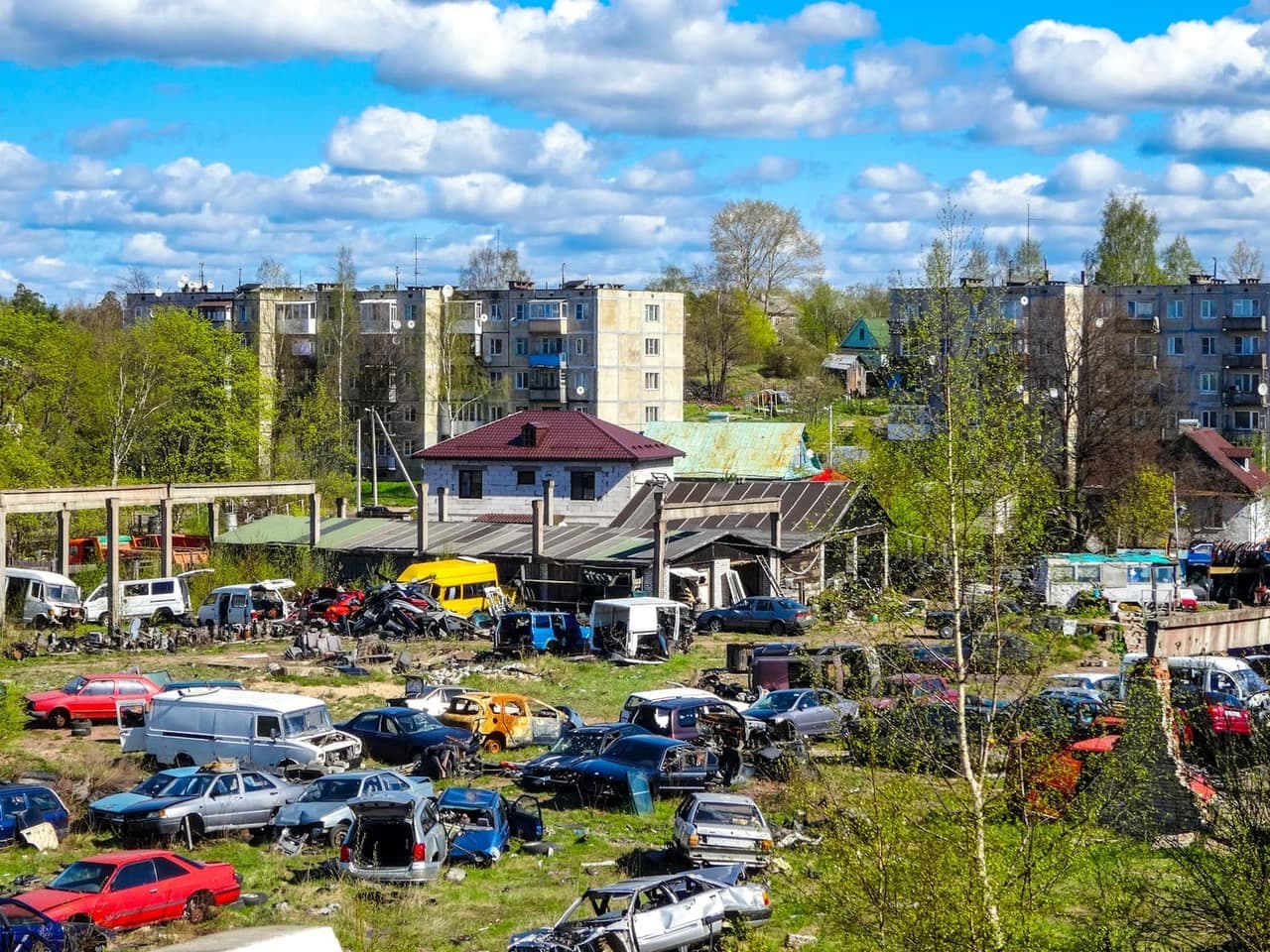
Older and rarer cars come with a special challenge when it comes to parts. New original parts are often out of production. Aftermarket supply is limited or non-existent. And the local scrapyard does not have your model because they were all stripped down years ago.
But do not despair. Rare parts can be found. You just need to know where and how to search. Online searches, specialist scrapyards, international sources and a few clever tricks can uncover even the toughest parts that seem to be nowhere.
Why is finding parts for older cars so hard?
First, let's understand the problem.
Manufacturers stop making parts
Car manufacturers are required to keep parts in stock for a set period after production of a model ends. Usually that is 10-15 years. After that, parts are no longer made and stock gradually runs out. If your car is 18 years old, many original parts simply no longer exist as new.
Aftermarket does not cover niches
Aftermarket manufacturers make parts for popular models because that is where the market is. Nobody is going to invest in tooling and moulds for a part that sells 50 units a year. Alfa Romeo 166, Lancia Thesis, Saab 9-5... these cars have almost no aftermarket support.
Scrapyards are limited
The local scrapyard has whatever comes in. If nobody has brought a Renault Vel Satis to the yard in the past year, you are unlikely to find parts for it there. And rarer models reach scrapyards much less often than Golfs and Astras.
Strategy #1: Expand the geographic scope of your search
This is the most important strategy and the one that delivers results most often.
If you only search in your own city or even just in Croatia, your chances are limited. But if you expand the search across the whole region, the odds rise dramatically.
Neighbouring countries
Slovenia, Serbia, Bosnia and Herzegovina, Hungary, Austria. All these countries have scrapyards and used-parts suppliers. And some of those yards may have exactly the model you need.
Slovenia is especially useful because it has plenty of Italian and French brands (Alfa Romeo, Lancia, Peugeot, Citroen). Serbia has good supply for German and Korean brands. Hungary for a mix of everything.
Germany
Germany is a gold mine for used car parts. With over 80 million people and one of the largest car cultures in the world, there is a scrapyard for almost every model ever sold in Europe. Plus, Germans are known for looking after their cars, so the parts are often in better shape.
German portals like eBay.de and mobile.de have a massive selection of used parts. Shipping to Croatia is typically 20-50 euros, which is acceptable for a pricier part.
Italy and France
For Italian brands (Fiat, Alfa Romeo, Lancia) and French brands (Peugeot, Citroen, Renault), these countries are the logical source. Those models were much more popular there than in Croatia, so the parts supply is bigger too.
Strategy #2: Specialist scrapyards
There are scrapyards that specialise in certain brands or vehicle types. This is a secret weapon for finding rare parts.
Brand-specialised yards
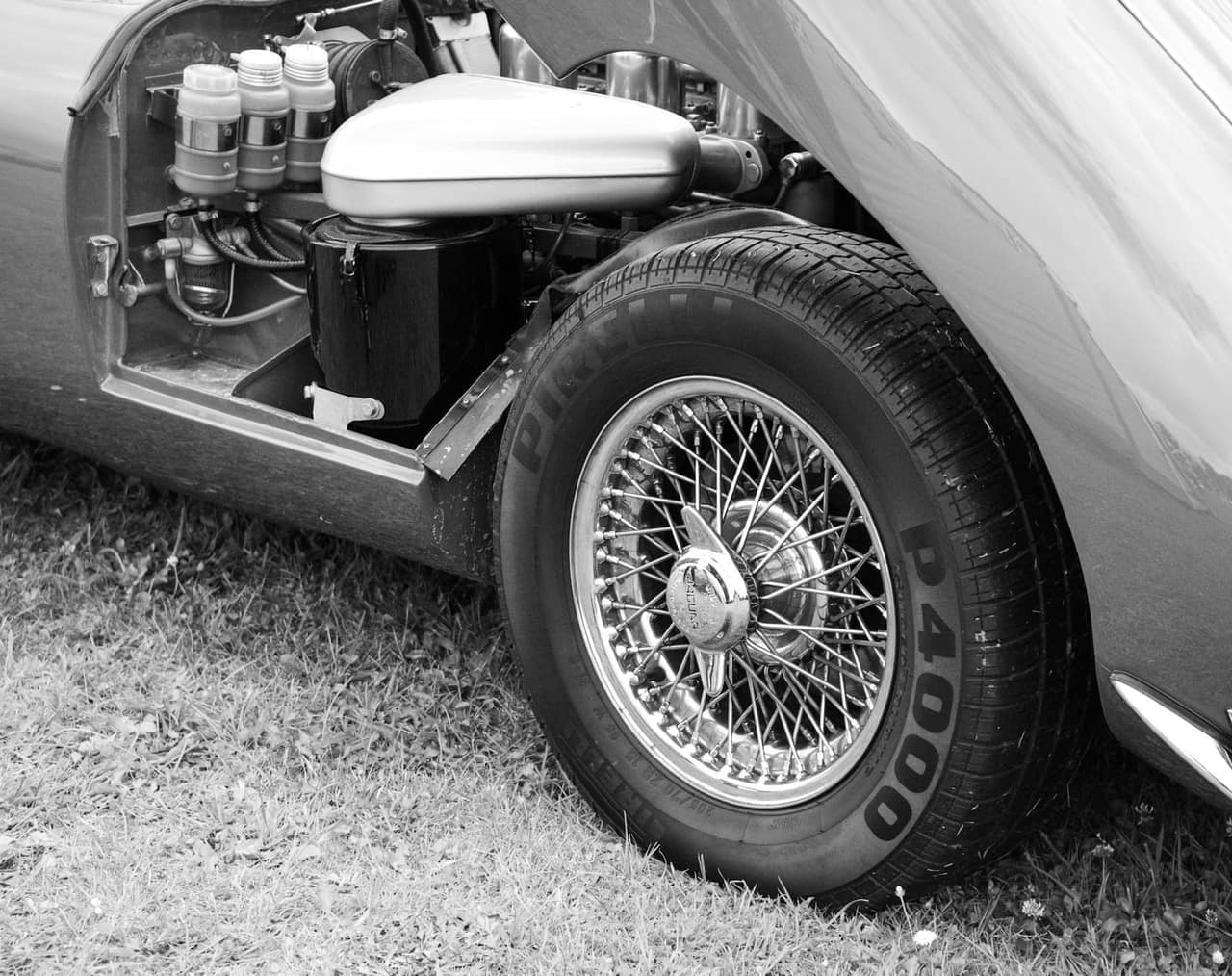
Some yards focus exclusively on one brand. There are yards that only have BMWs, only Mercedes, or only the VW group. These yards usually have deep stock and knowledge of specific models that generalist yards do not.
How do you find them? A Google search like "BMW scrapyard" or "Alfa Romeo breakers" for your region or neighbouring countries. Also, specialist car forums for your brand are an excellent place for recommendations.
Yards for older cars
Some yards specialise in older vehicles, including oldtimers. They understand the value of parts for older cars and keep them longer than general yards that focus on newer models.
Yards with large stock
Bigger yards with thousands of vehicles simply have a better chance of holding your model. If the local yard has 200 cars, the odds for your rare model are small. If a big yard has 3,000 cars, the odds are much better.
Strategy #3: Online resources
The internet has changed the game for finding rare parts. Here are the most useful resources.
PoDi platform
When you send a request for a rare part on PoDi, your request goes out to all registered suppliers. That means you do not have to search specialist yards yourself. If anyone in the network has your part, they will contact you. And you can note that you are looking for a part for an older or rarer model, so suppliers know it is a specific request.
Brand-specific forums
Almost every brand has active online forums where owners discuss things. BMW forums, Alfa Romeo forums, Peugeot forums... There you will find people who drive the same cars, know where to get parts, and sometimes sell them themselves.
Do not overlook foreign forums either. German, Italian or British forums for your brand can be a richer source of information than local ones.
Facebook groups
There are Facebook groups that specialise in buying and selling parts by brand. "Alfa Romeo parts", "Peugeot parts Croatia", "BMW parts ex-Yu"... These groups can be surprisingly useful because they are made up of enthusiasts who know these cars in detail.
eBay and similar portals
eBay is a global marketplace and you can find almost anything there. Even parts for cars that are total exotics in Croatia. The catch is shipping and customs (for parts outside the EU), but for rare parts that is often the only option.
Strategy #4: Cross-referencing parts
This is the strategy professionals use, and it can dramatically expand your options.
Many car parts are shared across multiple models, even models from different brands. That is because car makers use the same suppliers and platforms for multiple models.
Examples of parts shared between models
- Fiat/Alfa Romeo/Lancia - many mechanical parts are shared because they use the same platform. The engine in a Fiat Stilo 1.9 JTD is the same as in an Alfa Romeo 147 1.9 JTD
- VW/Audi/Seat/Skoda - parts within the VW group are widely interchangeable. The ECU for a Golf 5 can be the same as for a Seat Leon or Skoda Octavia
- PSA group (Peugeot/Citroen) - engine, gearbox and many other parts are identical between models of the same generation
- Ford/Volvo/Mazda - during the partnership era, many parts were shared. The Ford Focus and Volvo S40/V50 share a platform and many parts
- Renault/Nissan/Dacia - the 1.5 dCi engine is the same in Renault, Nissan and Dacia. The same goes for many other parts
How do you find out which parts are interchangeable? The OEM part number is the key. If the same OEM number exists for two different models, the part is identical. Use TecDoc or the ETKA catalogue for cross-referencing.
A practical example: you need an alternator for a Peugeot 407 2.0 HDi. It is hard to find because the 407 is a rarer model. But the same alternator (same OEM number) is also used in the Citroen C5 2.0 HDi, which is slightly more popular. Expand the search to both models and your chances of finding one double.
Strategy #5: Repair and rebuild parts
When you really cannot find a used part, there is one more option: rebuilding (refurbishing) your existing part.
Which parts can be rebuilt?
- Turbos - there are specialist workshops that rebuild turbos. They replace bearings, seals and blades. Cost is usually 200-400 euros and you get a warranty
- Alternators and starters - rebuilding includes replacing brushes, bearings and regulators. Cost 60-120 euros
- AC compressors - bearing and seal replacement. Cost 100-200 euros
- Injectors - cleaning and calibration. Cost 30-50 euros per injector
- Power steering pumps - seal and bearing rebuild. Cost 80-150 euros
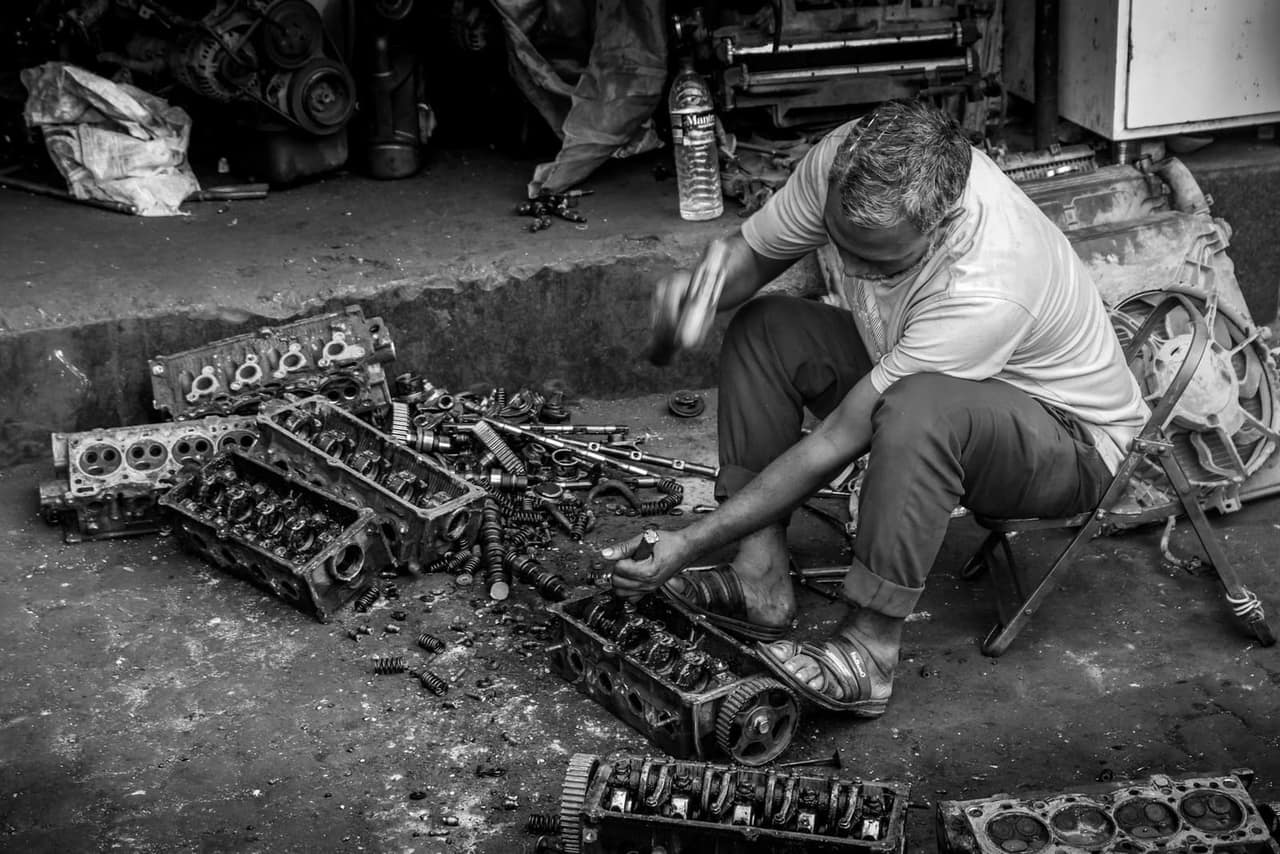
- Cylinder heads - skimming, valve and guide replacement. Cost 200-400 euros
Rebuilding has the advantage that you are using your own original part, so there are no compatibility questions. Plus, specialist rebuild workshops usually offer a 6-12 month warranty.
Strategy #6: Ordering from abroad
When the domestic market does not have what you need, it is time to look further afield.
Within the EU
Buying from any EU country is simple because there is no customs duty. You only pay for the part and shipping. Germany, Italy, France, Poland and the Netherlands are the countries with the largest used parts supply in Europe.
Shipping from Germany to Croatia for a parcel up to 30 kg usually costs 20-50 euros. For larger items like engines, transport companies offer shipping for 100-200 euros. Still worthwhile if the part you need is only available there.
Outside the EU
The UK (post-Brexit), Turkey and the USA are also potential sources. But watch out for customs, import VAT and shipping costs that can significantly increase the price. Check the total cost before ordering.
Online platforms for international purchases
- eBay.de, eBay.co.uk, eBay.it - massive selection by country
- Autodoc.hr - new aftermarket parts, but sometimes they have parts for older models too
- Teileshop24.de, Autoteile-Markt.de - German portals for used parts
- Parti.it - Italian portal for used parts
Tips for a patient approach
Finding a rare part sometimes takes time. Here is how to stay patient and organised.
Set up alerts
On eBay and similar portals you can set up an alert for a specific part. When a listing appears that matches your criteria, you get an email. You do not have to search manually every day.
Leave requests in several places
Do not rely on just one source. Leave a request on the PoDi platform, on forums, in Facebook groups and with local yards. The more nets you throw, the better the chance someone has your part.
Be prepared to pay a fair price
Rare parts are rare for a reason. When you find them, do not expect to get them for pennies. The seller knows the part is sought after and hard to find, so the price will reflect that rarity. If the part is in good condition and you get a warranty, a fair price is better than searching forever.
Consider alternatives
Sometimes the exact part for your car does not exist on the market. But maybe a part from a related model can be adapted. Or a universal part that does the same job. Talk to a mechanic who knows your brand and ask about alternative solutions.
When to think about selling the car
This is a tough topic, but sometimes it is reality. If your car needs a part that is impossible to find, and without it the car cannot run, you have to ask whether it makes sense to keep searching.
Think about the cost-to-value ratio. If the car is worth 2,000 euros and the repair (part plus fitting) costs 1,500 euros, with no certainty the car will last much longer afterwards, it might be better to put those 3,500 euros into a better car.
But if the car has sentimental value, or it is an oldtimer that only gains value, then it makes sense to keep searching as long as it takes. That is a personal decision only you can make.
How to track down a part nobody has
Finding rare used parts for older cars is a challenge, but not an impossible task. The key is widening the search geographically and across sources, using cross-referencing for interchangeable parts, and patience.
Start with the simplest step: send a request to PoDi and describe exactly which part you need. State the model, year, engine code and VIN. Our network of suppliers covers all of Croatia and surrounding countries, so the chance someone has your part is bigger than you think.
And if we do not find it immediately, do not give up. Parts appear on the market every day. A car is being broken somewhere right now, and maybe it is your exact model. Patience pays off.