

Two worlds of the same industry
When you need a used car part, you basically have two paths: go to a scrapyard or sit at a computer and search online. Both approaches have their pros and cons, and which is better depends on what you are looking for, how urgent it is, and how much time you are willing to invest in the search.
Let's compare them in detail, approach by approach, with pros, cons and concrete tips for each situation. At the end you will have a clear picture of when it pays to go to a scrapyard and when it is better to buy online.
Before we start, one note: this is not a contest where one approach "beats" the other. Smart buyers use both channels depending on the situation. The goal of this article is to help you make an informed decision for your specific case.

Scrapyards: the old school that still works
Scrapyards have existed since cars existed, and despite digitisation, they are still an important segment of the used parts market. In the region there are several hundred registered scrapyards, from small family businesses to large professional vehicle recycling centres.
Advantages of scrapyards
You can see and feel the part before buying. This is probably the biggest advantage of physically going to a scrapyard. When you hold the part in your hands, you can assess its condition, check for damage, compare it with the part you are replacing, and immediately see if it fits your car. No surprises, no waiting for delivery, no disappointment when you open the package.
Room to negotiate the price. At a scrapyard you can haggle. It is part of the buying culture and most owners expect you to try to lower the price. If you are buying several parts at once, your bargaining position is even better. Discounts of 10 to 30 percent on the initial price are not unusual.
You take the part with you straight away. No waiting for delivery, no parcel tracking, no worry about whether the part will arrive undamaged. Pay, put it in the boot and drive home. For urgent repairs, that is priceless.
Sometimes you find hidden treasure. Scrapyards sometimes have parts that are not available online, or that are available at many times higher prices. Older, rarer car models sometimes end up at a scrapyard and their parts wait for someone who is looking. If you have an older or rarer car, a scrapyard visit can be a real discovery.
You can remove the part yourself. Some scrapyards (so-called "self-service") allow you to remove the part from the vehicle yourself. That means a lower price because you do not pay for dismantling work, plus you have full control over the process. Of course, this requires tools, knowledge and time.
Downsides of scrapyards
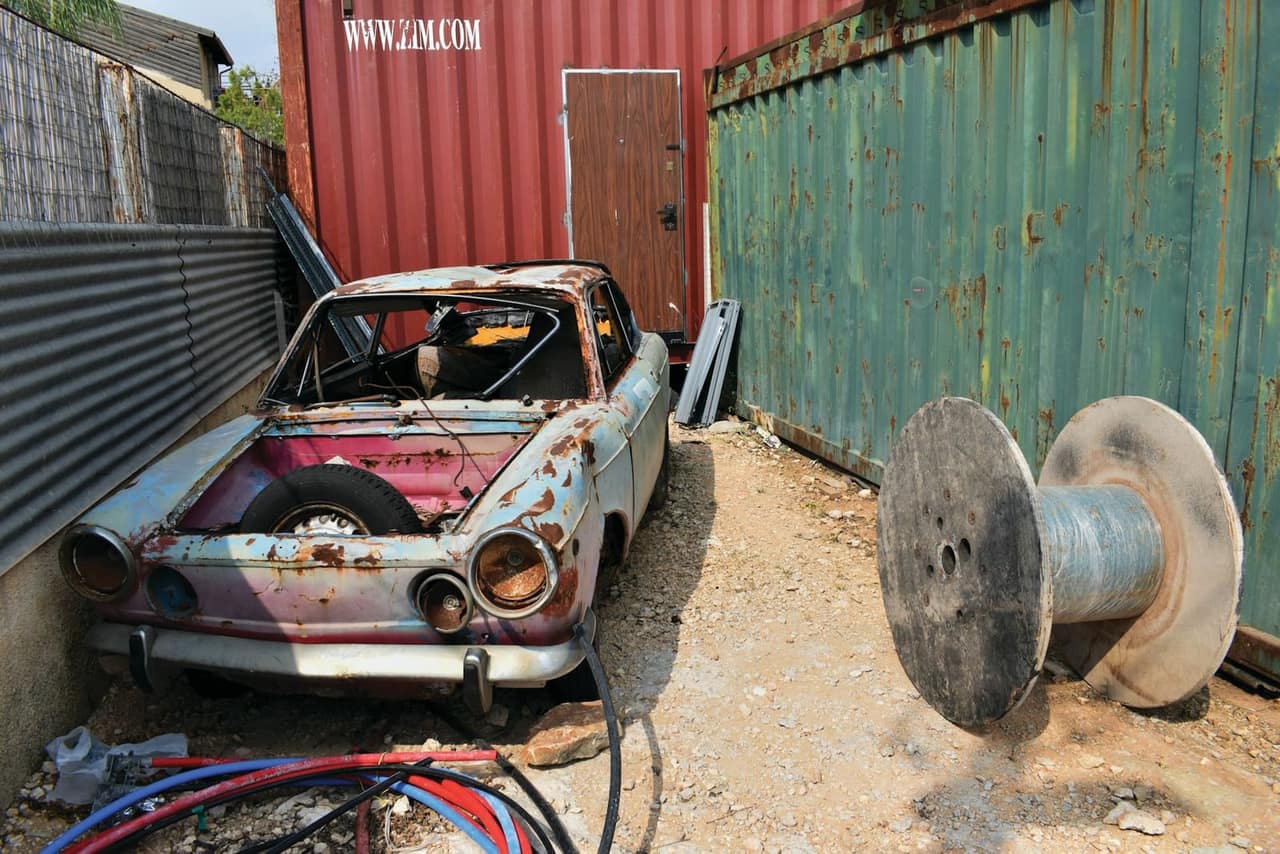
You have to physically go to the location. Scrapyards are not in the prettiest spots. They are usually on the outskirts of town or outside town, which means you have to set aside half a day for the trip, search and return. If you are looking for a specific part for a rarer model, you may have to visit several scrapyards before you find it.
The offer is limited to what is currently at the yard. Unlike online shops where you can search thousands of listings, at one scrapyard you have what is there. If you are looking for a bumper for a Golf 7 in black, and the scrapyard only has white and silver, you have to continue the search elsewhere.
Condition of parts can be uncertain. At a scrapyard you will not get a warranty or quality certificate. Parts are removed from cars that were (usually) in an accident or written off, so condition varies. You need knowledge and experience to assess whether a part is in good condition or not.
No formal warranty. Most scrapyards do not offer a warranty on parts sold. Once you buy and take a part, returns are hard or impossible. That is why pre-purchase inspection is so important.
Exposure to the weather. Parts at scrapyards are often exposed to sun, rain and wind. Plastic parts can be faded from the sun, metal ones can have surface corrosion, and electronic parts can be damaged by moisture. All of that should be considered when assessing condition.
Online shops: the modern approach to parts buying
Online buying of used car parts has exploded in the last ten years or so. From eBay and specialist platforms to Facebook groups and classifieds, the options are almost unlimited. And with platforms like PoDi, the process has become even simpler.
Advantages of online buying
A huge offer in one place. Online you have access to thousands of parts from hundreds of sellers. Looking for a turbocharger for a VW Passat B6 2.0 TDI? Instead of trekking round scrapyards hoping they have that exact part, online you will find dozens of listings with prices, photos and detailed descriptions. You can compare, choose the best offer and order from the comfort of your home.
Time saving. Instead of half a day at a scrapyard, an online search takes 15 to 30 minutes. Or even less if you use PoDi - post a request, describe what you need, and wait for offers. It cannot get simpler than that.
Access to parts from across Europe. Online buying opens the door to the European market for you. A part you cannot find in the region probably exists in Germany, Austria or Poland.
The option to compare prices. When you have multiple offers for the same part, you can compare prices and choose the most cost-effective option. At a scrapyard you are limited to one price (unless you visit several scrapyards, which again costs time).
Reviews and seller ratings. On platforms like eBay or PoDi you can check the experiences of other buyers with a particular seller. That gives you extra security you simply do not get at a scrapyard.
Legal consumer protection. When buying online from professional traders you have the legal right to 14 days to return goods. That is protection you mostly do not get at a physical scrapyard.
Downsides of online buying
You cannot physically inspect the part. This is the biggest downside of online buying. You rely on the seller's photos and description, which is sometimes not enough. A part can look perfect in a photo but have hidden damage that is not visible in the picture.
Waiting for delivery. Depending on where the part comes from, delivery can take from one day to two weeks. If you need the part urgently, that can be a problem.
Delivery costs. For smaller parts, delivery is affordable (EUR 5-15 within the region). But for larger parts like bumpers, doors or engines, delivery costs can be significant and you should factor them into the total price.
Risk of incompatibility. Without physical comparison with your part, there is a risk that the ordered part does not fit your car. The OEM number reduces this risk but does not eliminate it completely because sometimes there are variants of the same part for the same car model.
Risk of fraud. Sadly, the online space is not immune to fraudsters. Fake photos, inflated descriptions, hidden damage - all real risks. That is why it is important to buy on reliable platforms and from sellers with good ratings.
Direct comparison: scrapyard vs. online
Here is a tidy comparison of both approaches by key criteria:
- Part price: Scrapyards are sometimes cheaper because you can haggle, but online you sometimes find lower prices due to greater competition. Generally, prices are comparable.
- Total costs: Scrapyards have no delivery costs but have fuel and time costs for the trip. Online has delivery costs but saves time. Depends on the distance to the scrapyard and delivery price.
- Offer: Online is incomparably better in terms of offer quantity. One scrapyard has a limited number of vehicles, while online you have access to thousands of parts.
- Purchase security: Scrapyards give you a physical inspection but no warranty. Online has legal protection and seller ratings but you cannot physically inspect the part. Different forms of security.
- Speed: For urgent needs, the scrapyard is faster because you take the part immediately. Online requires waiting for delivery.
- Convenience: Online is far more convenient for most people. Search from home, order with one click, delivery to your door.
When does it pay to go to a scrapyard?
There are situations where physically going to a scrapyard is clearly the better choice. Here they are:
When you need a part urgently. If your car is sitting in the garage and you need the part today or tomorrow, going to a scrapyard is the only option. Online delivery, fast as it is, cannot compete with taking the part with you right away.
When you are looking for a part for an older or rarer model. Parts for older cars are sometimes not available online because nobody has catalogued them and put them up for sale. At a scrapyard, however, such a car may sit quietly waiting for someone to take a part off it.
When you need multiple parts for the same car. If you are renovating a car and need, say, a complete interior or several body panels, going to a scrapyard where the same model is can be a jackpot. You take everything you need from one car, agree a bulk price, and save significantly.
When the exact body colour matters. If you are looking for a body part in a specific colour, at a scrapyard you can visually compare the colour right away. Online, even with paint codes, shades can vary and you are not 100% sure until the part arrives.
When does it pay to buy online?
On the other hand, here are situations where online buying is clearly the better choice:
When you know exactly which part you need (OEM number). If you have the part's OEM number, online search is fast and precise. Enter the number, get offers, compare prices, order. No traipsing round scrapyards hoping they have that exact part.
When you are looking for electronic parts. Electronic parts (ECU, navigation, sensors) are better kept in indoor warehouses than at an open scrapyard. Online traders usually test electronics before sale, which gives you extra security.
When you do not live near a scrapyard. If you are in a smaller town far from larger scrapyards, or simply do not have time to travel, online buying is the logical choice.
When you are looking for a part for a popular model. For mass-popular models (Golf, Astra, Focus, Passat) the online offer is huge and prices are competitive. You will almost certainly find a better deal online than at the first scrapyard you visit.
Hybrid approach: the best of both worlds
Smart buyers do not choose one approach exclusively, they combine both. Here is how it looks in practice:
- First search online to see prices and availability of the part you need. That gives you a reference point for comparison.
- Then call local scrapyards and ask if they have that part and at what price. If the scrapyard price is lower or comparable to online prices (including delivery), go to the scrapyard.
- If local scrapyards do not have it or are too expensive, order online from a vetted seller.
- For urgent needs, go straight to the scrapyard. For everything else, online is usually more convenient.
On the PoDi platform you can combine both approaches. Post a request and get offers from online sellers and from local scrapyards that use our platform. That way you cover both channels in one move.
The future of the used parts market
The used parts market is clearly moving towards digitisation. More and more scrapyards are investing in an online presence, cataloguing parts in databases and offering online purchase and delivery. The line between "physical scrapyard" and "online shop" is becoming ever smaller.
Platforms like PoDi accelerate this process because they connect buyers with sellers, whether they are physical scrapyards, online traders or private individuals. The result is a more efficient market where buyers find parts faster at better prices, and sellers sell goods faster.
Whether you prefer the good old scrapyard visit or modern online buying, the most important thing is to find a quality part at a fair price. For that you need information, patience and reliable sources. Smart buyers use both channels, pick the one that fits you better right now.