
When the car starts to "sing": wheel bearings
You are driving on the motorway and you hear a constant hum that gets louder with speed. The sound changes when you steer slightly to one side. Most drivers first think of the tyres, but if the tyres are fine, the culprit is almost certainly a wheel bearing.
Wheel bearings are one of those parts that work quietly and reliably until they start to fail. And when they do, you cannot ignore them because the noise just gets louder and more irritating. Plus, driving with a worn wheel bearing is not safe because in the worst case the wheel can seize or even come off.
Replacing a wheel bearing can be a significant expense, especially on modern cars where the bearing is integrated into the hub. And that naturally raises the question: can I buy a used bearing or hub and save money? The answer needs a bit of context.
How a wheel bearing works
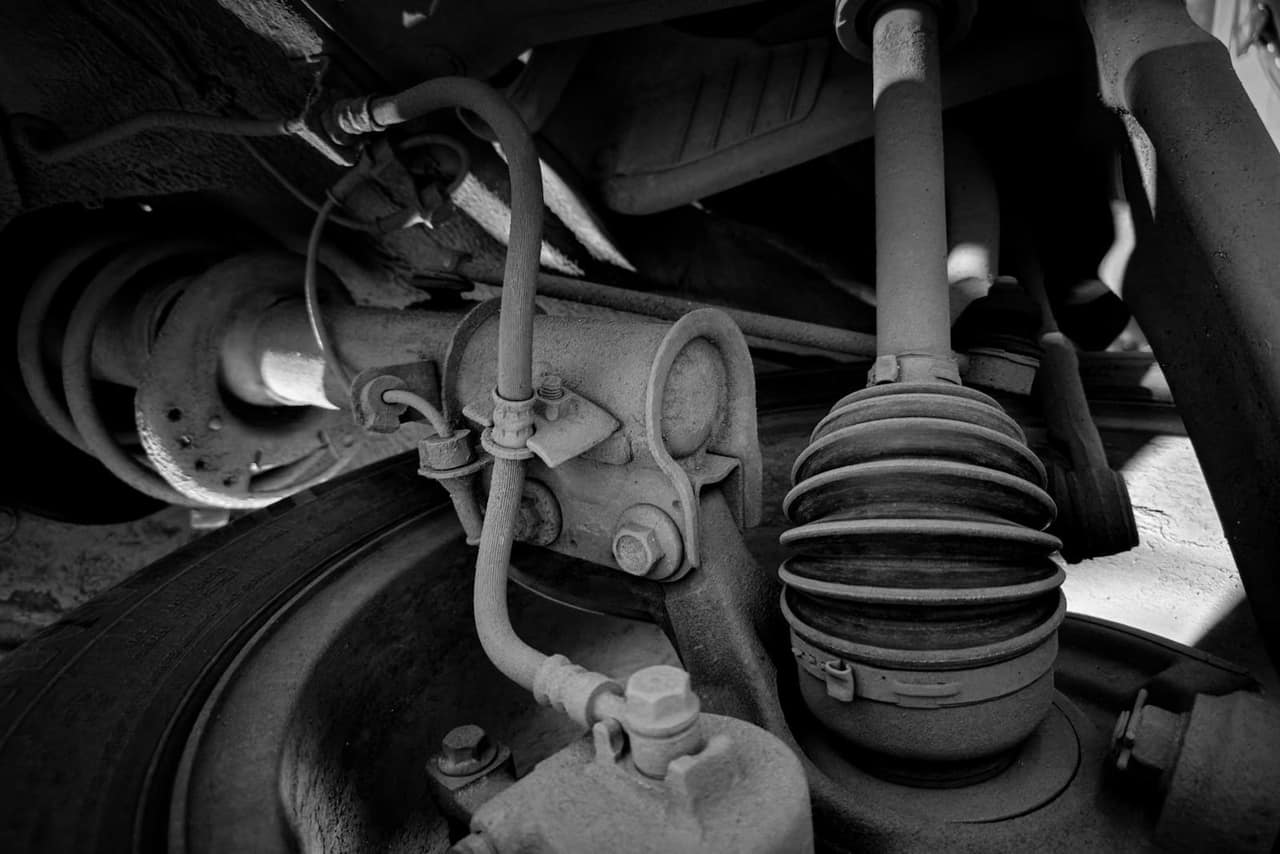
A wheel bearing lets the wheel spin freely around the axle with minimal friction. Modern wheel bearings are usually ball or roller type, hermetically sealed and filled with grease for life. That means they need no maintenance, but it also means they cannot be repaired when they wear out, only replaced.
On modern cars there are two basic types:
Separate bearing
On older and simpler designs, the bearing is a separate part pressed into the wheel knuckle or the hub. Replacement calls for a press to remove the old bearing and press in the new one. The bearings themselves are relatively cheap (15-50 euros), but the labour is demanding because a good part of the suspension has to be taken apart.
Integrated assembly (hub assembly)
On more modern cars, the bearing is built into the wheel hub which also includes the flange for the wheel and often the ABS sensor. This assembly is replaced as a unit, which is simpler to fit (usually 2-4 bolts), but the part itself is more expensive (60-200 euros for aftermarket, 150-400 euros for OEM).
Signs of a worn wheel bearing
A worn wheel bearing gives fairly distinctive signals:
- A hum or whine - a constant sound that gets louder with speed. It sounds like driving on a coarse road surface, but the sound is there regardless of the road
- The sound changes in corners - when you turn left, the load shifts to the right side, so the noise gets louder if the right bearing is worn (and vice versa)
- Vibrations in the steering wheel or body - in a more advanced stage of wear
- The steering wheel is not centred - a worn front bearing can shift the wheel out of position
- ABS light on the dashboard - on integrated assemblies, a damaged ABS sensor can trigger a warning
- Wheel play - in the final stage, the wheel visibly "rocks" when you try to move it up and down
How to test the bearing
Lift the car on a jack so the suspect wheel is in the air. Grab the wheel at the top and bottom and try to rock it (push up and down). If you feel any play or hear a knock, the bearing is worn. Then spin the wheel by hand and listen. A good bearing turns quietly and smoothly. A worn one hums, grinds or feels resistant.
Used wheel bearings: generally no
Let us be direct: buying used wheel bearings does not pay off in most cases. Here is why.
Wheel bearings are hermetically sealed parts whose condition you cannot judge visually. You can spin a bearing by hand and it can feel perfect, yet still be near the end of its life. Internal wear of the balls or rollers, grease degradation, microscopic cracks on the races, none of that is visible from the outside.
On top of that, new aftermarket bearings for most popular cars cost 15 to 50 euros for a separate bearing, or 60-150 euros for an integrated assembly. The price gap to a used one is too small to justify the risk.
The one situation where a used bearing makes sense
There is one situation where buying used makes sense: when you need an integrated hub assembly for a premium or rare car where a new part costs 300+ euros. A used assembly with low mileage (under 50,000 km) for 80-120 euros can be a sensible option. But even then, look for a seller who offers a guarantee.
Used wheel hubs: a different story
Unlike bearings, the hubs themselves (without the bearing) are metal parts that rarely wear out. If your car uses a design with a separate bearing pressed into the hub, a used hub can be an excellent buy.
A hub can be damaged by corrosion (especially the bearing seat), in the bolt holes or in a crash. But in normal conditions, the hub lasts the whole life of the car. A used hub with 100,000 km on it for 20-40 euros is a perfectly sensible purchase.
How much wheel bearing replacement costs
The total cost depends on the design type and the car model:
Separate bearing (pressed in)
- Bearing: 15-50 EUR (aftermarket), 40-100 EUR (OEM)
- Labour: 60-120 EUR (press needed, suspension disassembly)
- Total: 75-220 EUR per wheel
Integrated assembly (hub assembly)
- Assembly: 60-200 EUR (aftermarket), 150-400 EUR (OEM)
- Labour: 30-60 EUR (simpler replacement)
- Total: 90-460 EUR per wheel
Additional costs
Along with the replacement itself, you usually also need:
- A new Seeger clip or axle nut (5-15 EUR)
- Wheel alignment after replacing a front bearing (30-50 EUR)
- Possibly a new ABS sensor if it gets damaged during removal (15-40 EUR)
How long wheel bearings last
OEM wheel bearings on modern cars typically last from 100,000 to 200,000 km. Some last even longer. But there are factors that shorten the life:
- Water and dirt - a damaged bearing seal lets water in, which ruins the grease and the balls
- Bad roads - every pothole is an impact for the bearing
- Incorrect fitting - a misaligned press-in can damage the bearing before it ever starts working
- Overloading - regularly driving an overloaded car shortens bearing life
- Overtightened axle nut - creates preload that speeds up wear
Aftermarket bearings generally have a shorter life than OEM. Cheap aftermarket bearings can last only 30,000-50,000 km, while higher-quality ones (SKF, FAG, SNR) last nearly as long as OEM.
Buying and fitting tips
Here are practical tips that can save you money and frustration:
Buy quality brands. A wheel bearing is a safety part. Saving 20 euros on a cheap Chinese bearing does not pay off if you have to replace it again in a year, with another labour bill that is bigger than the part itself.
Check both bearings on the same axle. If one has failed, the other is probably close. Replacing both at the same time saves on labour because the car has to be on the lift anyway.
Do not drive too long with a worn bearing. The hum is the first sign, but if you keep driving, the bearing can seize, which in the worst case locks up the wheel during driving. That is a scenario you do not want to experience.
Insist on proper fitting. The bearing must be pressed in with a press, evenly and in the right direction. Hammering or angled pressure destroys the bearing before it starts working. If the mechanic reaches for a hammer, find another mechanic.
Common problems by model
VW Golf 5/6/7, Audi A3: Rear bearings are press-in type and known for relatively short life (80,000-120,000 km). Front ones are integrated and last longer. Rear replacement needs a press.
Opel Astra H/J: Front integrated assembly that includes the ABS sensor. Aftermarket assemblies are affordable (60-100 EUR), but make sure the ABS sensor works properly after fitting.
Renault Megane/Scenic: Known for squeaking rear bearings even when relatively new. The issue is often the ABS ring built into the bearing.
BMW E46/E90: Front bearings last relatively long, but replacement is demanding because the bearing is pressed into the wheel knuckle. Expect 100-150 EUR for labour per side.
Find a bearing or hub for your car
Wheel bearings come in specific sizes for each model, so it is important to order exactly the right part. On the PoDi platform you can send a request for wheel bearings, hubs or integrated assemblies with your vehicle details. We suggest new parts for bearings, but for hubs and wheel knuckles, used parts can be an excellent way to save.
We connect you with suppliers who offer parts from well-known makers at competitive prices, with information on fitment and warranty terms. Send a request and compare offers, it is free and with no commitment.