

Shocks are pricier than you think, and more important too
When a mechanic tells you that you need new shock absorbers, the first reaction is usually shock at the price. New shocks for an average car cost EUR 80 to 200 each, plus fitting. Multiply that by four and you easily reach a number that stings. And then you wonder: is there a cheaper option? Can I buy used shocks and save?
The answer is not a simple yes or no. It depends on many factors, and that is exactly what we will talk about. No rush, no hot air, just hard information to help you make a smart decision.
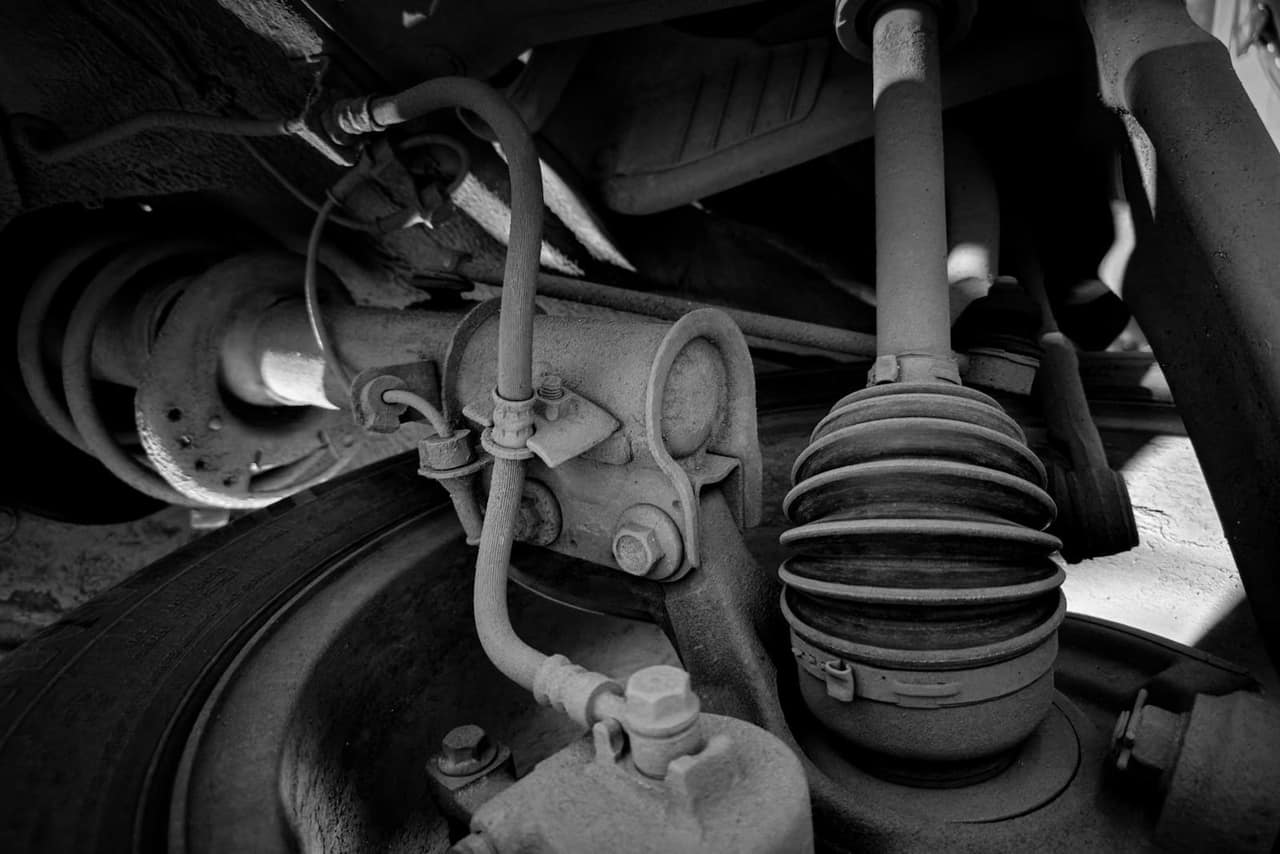
What shocks actually do and why they matter so much
Before we even get into used shocks, let's go back to basics. What do shock absorbers actually do? Most drivers know they "soften bumps", but the story goes far deeper.
Shocks control the movement of the springs. When you go over a pothole, the spring compresses and then wants to return to its rest position. Without shocks, the car would keep bouncing up and down like a boat on waves. The shock damps that movement and ensures the wheel returns to contact with the road quickly.
That means shocks directly affect:
- Safety - vehicle control through corners, under braking and during evasive manoeuvres
- Stopping distance - worn shocks can extend stopping distance by up to 20%
- Tyre wear - uneven tyre wear is often a sign of bad shocks
- Ride comfort - this is what most people notice first
- Stability at higher speeds - the car "floats" on the road when the shocks are gone
So shocks are not a luxury. They are a safety part of the vehicle. And that is the first thing you have to keep in mind when thinking about buying used.
When used shocks pay off and when they do not
Let's be concrete. There are situations where buying used shocks makes sense, and situations where it is pure waste of money.
When it DOES pay to buy used shocks
If you have an older car whose market value does not justify investing in new parts, used shocks can be a reasonable option. Say you have a car worth EUR 2,000. Putting EUR 800 into new shocks on all four corners is hard to justify economically. But EUR 200-300 for used ones still in good condition? That starts to make sense.
Likewise, if you use the car rarely, for short urban trips, or you are preparing it for sale in the next few months, used shocks can be a temporary fix that keeps the car on the road without a big outlay.
The third scenario is shocks from a car that was crashed on the opposite end. If the car was hit at the front, the rear shocks are probably perfectly fine and have plenty of life left. Such parts at scrapyards can be real finds.
When it does NOT pay to buy used shocks
If you drive daily, especially motorway miles over longer distances, do not skimp on shocks. It is just not worth the risk. The same applies if you have a newer or more valuable car. On such a vehicle you want parts that will last, not something that might survive six months.
Also, if you do not know the history of a used shock (mileage, what car it came from, how it was stored), the risk is too high. A shock can look perfect on the outside and be completely shot inside.

How to spot a good used shock
If you have decided to go ahead with buying a used shock, you have to know what to watch for. Here is a detailed guide for assessing condition.
Visual inspection
First and foremost: look at the shock carefully. Look for any signs of oil leakage. A shock works on hydraulic principles, and if oil is leaking the shock is finished. Even small traces of oil around the rod are a bad sign.
Look at the body of the shock too. Dents, scrapes or corrosion on the body can mean the shock was hit or exposed to long-term damp. Pay particular attention to the upper and lower mounts, because that is where cracks most often appear.
Hand test
Take the shock in your hands and try to compress and extend it manually. A quality shock will offer even resistance in both directions. If it compresses easily or unevenly, or you hear any noises, that shock is no good.
Important: a shock must offer more resistance when being extended than when being compressed. That is normal and how it is designed. But if it extends with no resistance at all, the gas has escaped and the shock is useless.
Mileage and age
Shocks typically last between 60,000 and 100,000 kilometres, depending on manufacturer and driving conditions. If you are buying a used shock, try to find out the mileage. A shock at 30,000 km can be an excellent buy. A shock at 80,000 km is already on the way out.
Age matters too. Rubber parts of the shock dry out and crack with age, even if the car was not driven much. A 10 year old shock with low miles can be worse than a 5 year old one with higher miles.
How much do used shocks cost?
Used shock prices vary enormously depending on car model, quality and source. Here is a rough guide for the most popular categories:
- City cars (Polo, Clio, Corsa) - EUR 20 to 50 each
- Mid-range (Golf, Focus, Megane) - EUR 30 to 70 each
- Larger cars (Passat, Mondeo, Octavia) - EUR 40 to 100 each
- Premium (BMW 3, Audi A4, Mercedes C) - EUR 60 to 150 each
- SUVs and 4x4s - EUR 50 to 120 each
Compare that with new prices: a new shock for a Golf is around EUR 100-150, while you can find a used one for EUR 40-60. The saving is significant, but only if the shock is genuinely good.
Where to buy used shocks
You have several options, each with its pros and cons.
Scrapyards are the classic choice. The advantage is that you can physically inspect the part before buying. The downside is that you rarely get any warranty. Good scrapyards keep records of the cars they strip, so you can find out the donor vehicle's mileage and history.
Online listings offer a wider choice, but you are buying blind. Photos can be misleading and sellers do not always have to be honest about condition. If buying online, ask for detailed photos of the rod and the area where oil might be visible.
Specialised platforms like ours are the best option because they connect buyers with vetted suppliers. On the PoDi platform you can send a request for used shocks and get quotes from several suppliers, so you can compare prices and terms.

Tips for fitting used shocks
Even if you have found perfect used shocks, fitting them is as important as the part itself.
Always change in pairs. Do not change just one shock on one side. Always replace both on the same axle (both fronts or both rears). Different shocks on the same axle can cause uneven car behaviour, especially in corners and under braking.
Replace the related parts too. While you are changing shocks, replace the top mounts, bump stops and protective boots. These small parts cost little, but if they are worn out they will ruin even brand new shocks.
Have the alignment done after fitting. Replacing shocks can shift wheel alignment. Alignment costs EUR 30-50 and will prevent uneven tyre wear and poor handling.
A test drive is mandatory. After fitting, take a test drive on different surfaces. Listen for any noises, vibrations or instability. Problems are most visible going over speed bumps and braking from higher speed.
Alternative: refurbished shocks
There is a middle path between new and used shocks, and that is refurbished (rebuilt) shocks. On these, the oil, seals and sometimes the piston are replaced while the body is kept. Refurbished shocks are cheaper than new (usually 50-70% of new price), and the quality is significantly better than used because the critical internal parts are new.
Not all shocks are suitable for refurbishing. Twin-tube shocks are easier to rebuild than monotube. Ask the supplier if they have refurbished shocks for your model, because it can be the ideal compromise between price and quality.
Used shocks are not for every situation, but they are not a bad idea either
Used shocks are not for everyone and not for every situation. But in the right circumstances they can be a smart buy that saves you serious money without compromising safety. The key is to know what you are looking for, how to check condition and who you are buying from.
If you are not sure which shocks suit your car or want to compare offers, send a request to PoDi and let us find you the best option. Free, fast and no obligation.