
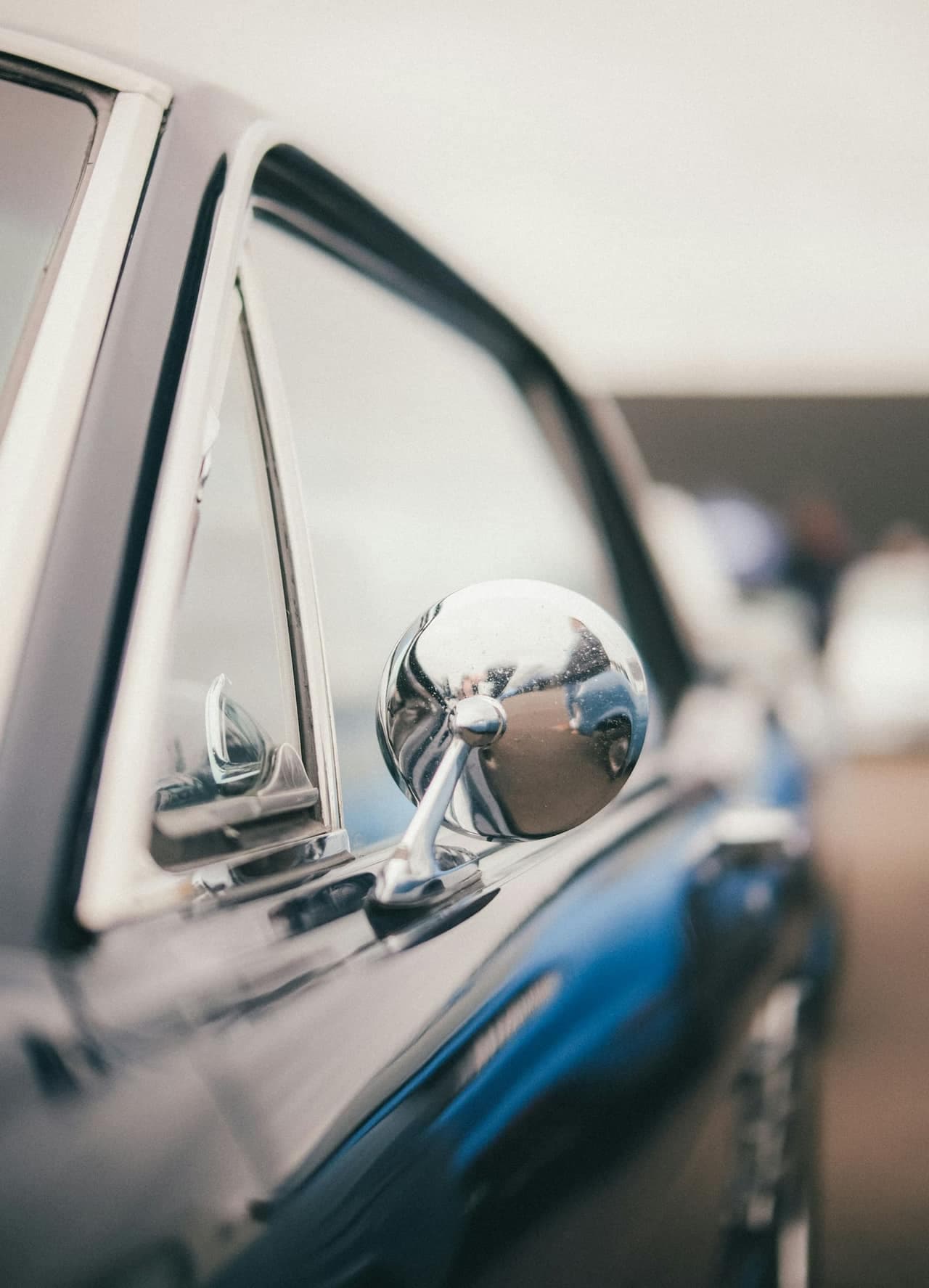
Wing mirrors belong to that category of parts you do not think about until you lose one. And losing a mirror is not hard: a narrow gap, an impatient driver in the next lane, or a parking space that is just a touch too tight, and you end up with a broken, cracked or completely torn-off mirror. Replacing one with a new original mirror can cost anywhere from EUR 150 to as much as EUR 800, depending on the equipment. A used mirror? Usually 30-60% of that price, doing exactly the same job.
But mirrors today are not just little glass panes on a stick. They are small technology packages with electric motors, heaters, LED indicators, blind-spot sensors, even cameras. That is why it is important to know exactly what you need and what to watch for when buying a used mirror.
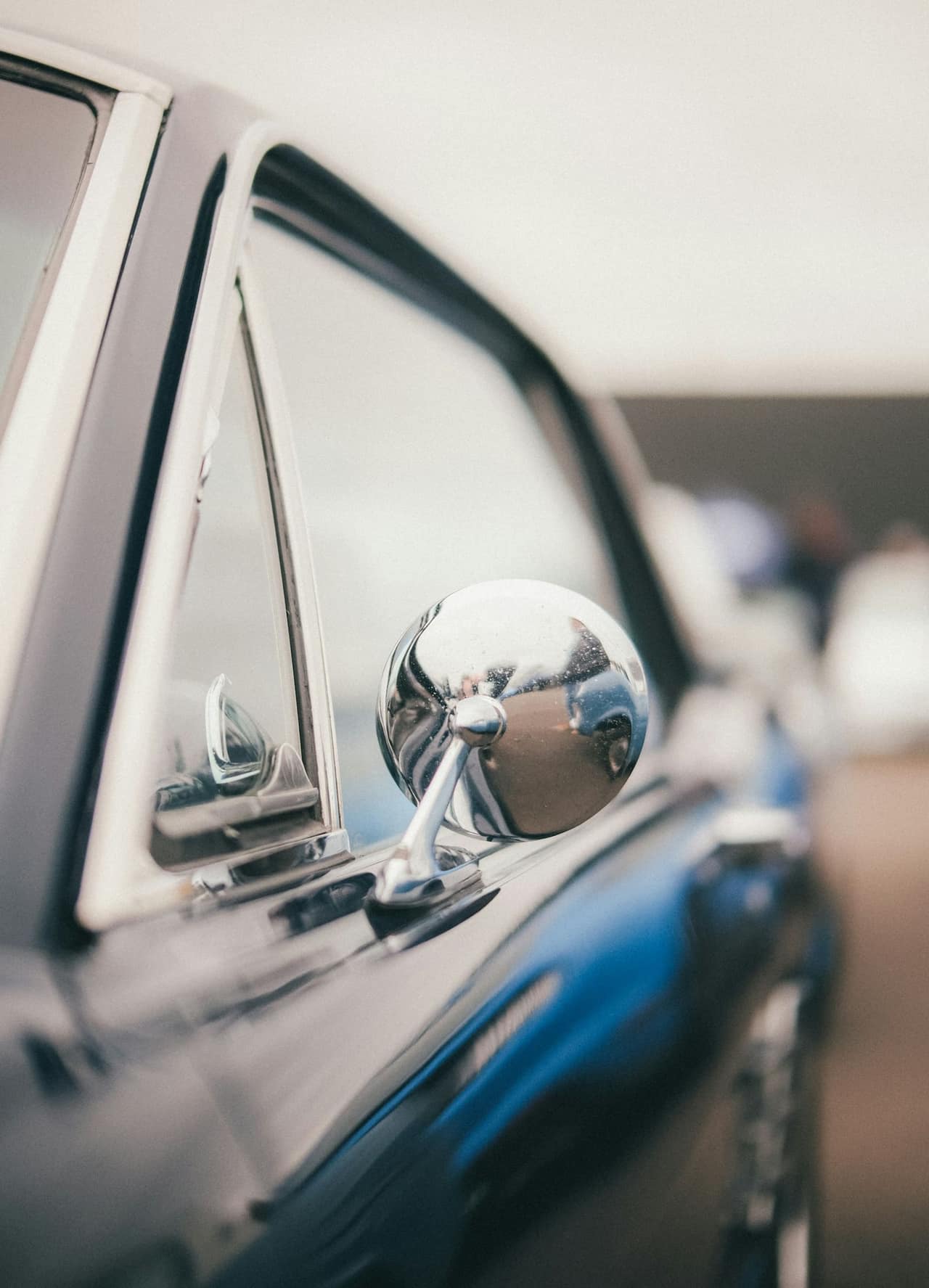
Anatomy of a modern mirror
To understand what we are buying, let us look at what a modern mirror can include:
Housing
The outer part of the mirror, usually made of ABS plastic, painted in the car's colour or in black. The housing protects the internal components from weather and impacts. On many models, the housing can be replaced separately, but if the internal structure is damaged, you need the whole assembly.
Glass (mirror)
The mirror glass is not a plain flat mirror. On most European cars, the driver's mirror is aspheric (with two curvature zones) for a wider field of view, while the passenger's is flat or slightly convex. The glass sits on a plastic backing and can usually be replaced separately if only the glass has broken.
Adjustment motors
Electrically adjustable mirrors have two small motors: one for horizontal adjustment (left-right) and one for vertical (up-down). They are controlled by a joystick or buttons in the cabin. When a motor fails, the mirror can no longer be electrically adjusted in that direction.
Heating
Heated mirrors have a thin heater behind the glass that warms the mirror and clears fog and ice. The heating is usually activated together with the rear window heater. It is an extremely useful function in winter and during wet weather.
Electric folding
At higher trim levels, mirrors can be folded electrically at the press of a button or automatically when you lock the car. This function uses an additional motor and a gear mechanism. When this mechanism fails, the mirror either does not fold or tries to with a grinding noise that is quite unpleasant to listen to.
LED indicator
Many modern mirrors have an integrated LED indicator in the housing. This improves the visibility of your signal for other road users, especially pedestrians and cyclists.
Blind-spot sensor (BSM)
Premium cars often have a radar or ultrasonic sensor in the mirror housing that detects vehicles in the blind spot and warns the driver with an LED indicator on the mirror. It is one of the most useful safety features on modern cars.
Camera
Some models have a camera integrated into the underside of the mirror for a 360-degree view around the car. This is a rare but increasingly common option on premium and newer models.
Welcome lighting
Mirrors on some models have an LED light on the underside that lights up the ground when you unlock the car or open the doors. On some models, this light projects the manufacturer's logo.
The most common reasons for replacing a mirror
Mirrors are most often damaged for the following reasons:
Contact with other objects: Narrow gaps, bollards in car parks, other cars. Mirrors are the widest part of the car and the first to take a hit. In minor knocks, usually only the housing or the glass breaks. In stronger ones, the whole assembly suffers, including the bracket and the electrical components.
Vandalism: Deliberate damage to mirrors is unfortunately a common occurrence in public car parks. Most often only the housing is torn off or the glass smashed.
Motor failure: The motors for adjustment and folding wear out over time. Symptoms include slower response, grinding, adjustment in only one direction or a complete stop. When a motor fails, it is usually cheaper to replace the whole mirror with a used one than to repair the motor.
Heating failure: The mirror heater can burn out or lose contact. The problem is hard to notice in summer, but in winter when your mirror keeps misting up while the other side stays clear, you know the heating is not working.
How much do used mirrors cost?
The price depends on the equipment of the mirror and the car model:
Basic electric adjustment (no heating, no folding)
- VW Golf 5/6, Polo - EUR 25 to 50
- Opel Astra H/J - EUR 20 to 45
- Ford Focus 2/3 - EUR 20 to 45
- Renault Megane, Clio - EUR 20 to 40
Electric adjustment + heating + LED indicator
- VW Golf 7, Passat B7/B8 - EUR 40 to 80
- Skoda Octavia 3, Superb - EUR 35 to 70
- Toyota Corolla, RAV4 - EUR 40 to 80
Full equipment (electric folding + heating + LED + BSM sensor)
- BMW 3 / 5 Series (F30/F10) - EUR 80 to 180
- Audi A4/A6 - EUR 80 to 200
- Mercedes C/E Class - EUR 100 to 250
- Volvo S60/V60 - EUR 80 to 180
For comparison, a new original mirror with full equipment for a BMW F30 costs EUR 400-600. A used one in good working order goes for EUR 100-150. The saving is impressive.
What to watch for when buying a used mirror
1. Exact part identification
Mirrors differ by side (left/right), trim level, housing colour and year of manufacture. The same car model can have 4-6 different mirror variants. Provide the exact details of your car and trim level when you are looking for a replacement.
2. Motor functionality
If you are buying an electrically adjustable mirror, check that both motors work (horizontal and vertical). Test by connecting to a 12V supply or, if you are buying at a salvage yard, test on the car before it is dismantled. A motor that grinds or struggles to start is on its way to failure.
3. Heating
The heater is hard to test without fitting, but you can visually inspect the back of the mirror (if it can be removed). The heater is a thin film or wire bonded to the back of the mirror. If you see signs of overheating or damage, the heater probably does not work.
4. Electric folding
Test the folding mechanism by hand. The mirror should fold and unfold smoothly without grinding or sticking. If you feel resistance or hear cracking, the gear mechanism is worn.
5. Glass (mirror)
The mirror glass is the most commonly damaged part and at the same time the easiest to replace on its own. If the housing and the mechanism are in good condition and only the glass is broken, you can buy just a replacement glass for EUR 10-30. The glass usually sits on a plastic backing held by clips or adhesive.
6. Housing colour
If looks matter to you, look for a mirror in your car's colour. Alternatively, mirror housings can be painted for EUR 20-40 at a body shop, so colour does not have to be a deal-breaker.
7. Blind-spot sensor
If your car has a factory-fitted blind-spot detection system, the replacement mirror must have the same sensor. A mirror without the sensor will not work with your system. The other way around, if your car does not have a BSM system, a mirror with a sensor will fit physically but the sensor will have no function without the matching control module in the car.
Replacing just the glass vs. the whole mirror
If only the mirror glass is damaged, you do not need to buy the whole assembly. A replacement mirror glass can be bought separately and swapped in 5 minutes:
- Tilt the mirror sideways to access the edge
- Carefully separate the mirror from the backing (usually held by clips or adhesive)
- Unplug the heater connector (if present)
- Insert the new glass and press until it clicks into place
A replacement mirror glass costs EUR 10-30 new, and even less used. It is a far cheaper option than replacing the whole mirror when the housing and the mechanism are fine.
Fitting a used mirror
Replacing a whole mirror is a 15-30 minute job you can do yourself:
- Remove the interior door trim in the mirror area (usually a plastic triangle on the A-pillar)
- Unplug the electrical connector
- Undo the screws that hold the mirror to the door (usually 3 screws, Torx or hex)
- Take the old mirror off
- Fit the new mirror and tighten the screws
- Reconnect the electrical connector
- Put the interior trim back
- Test all functions
The only complication can be with mirrors that have a lot of functions (BSM sensor, camera) because they may require coding via a diagnostic tool after fitting.
Where to find the right used mirror
Mirrors are one of the most sought-after used parts because they are often damaged. That also means they are among the most available on the market. At PoDi we connect you with suppliers of used mirrors for your car. Send an enquiry to PoDi with details of your car (make, model, year, side, trim level) and you will get offers quickly.
At salvage yards, mirrors are usually among the first parts to be sold off damaged cars because demand is high. If you are looking for a mirror for a popular model (Golf, Astra, Octavia), you should not have any trouble finding one.
One of the most cost-effective used parts
Used mirrors are one of the most cost-effective used parts. The saving is significant, especially on models with rich equipment, and checking that everything works is straightforward. Before buying, identify exactly which type of mirror you need, check all the functions and pay attention to the condition of the folding mechanism. And do not forget: sometimes it is enough to replace only the mirror glass, which is even cheaper and simpler.
Need a mirror? PoDi helps you find the right part for your car. Free enquiry, fast offers, reliable suppliers.