
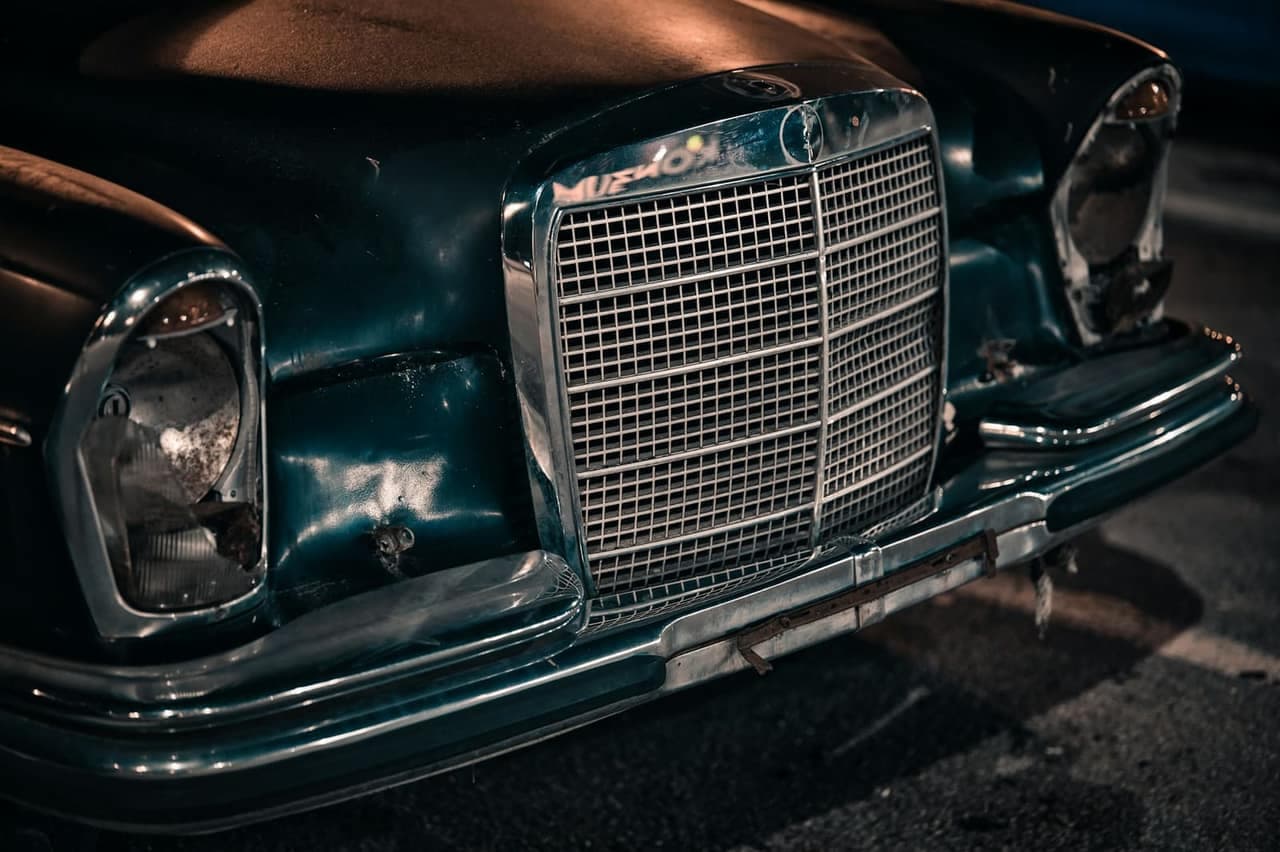
Headlights are one of the most important safety components on a car. Without good lighting, night driving becomes a dangerous guessing game about what is ahead of you. And when one headlight goes, you have two choices: buy a new one that costs as much as a short holiday at the coast, or find a quality used one that does the job just as well for much less.
Halogen, xenon and LED - three generations of headlights with different strengths and weaknesses. Here you get concrete advice on how to buy used headlights without throwing money away.
Three generations of headlights
If you think about it, the development of headlights tracks the development of the car industry itself. Each new generation brought better lighting, longer life and nicer design. But also a higher replacement cost, which makes used parts even more appealing.
Halogen lights: the proven classic
Halogen lights are the oldest technology still used in modern cars. The principle is simple: a tungsten filament heats up inside a glass bulb filled with halogen gas. The result is a warm, yellowish light we all know well.
Here is why halogen lights are still popular:
- Price - both new and used halogen headlights are the cheapest option on the market
- Simplicity - changing a bulb is a 5-minute job you can do yourself in the garage
- Availability - you can find bulbs and headlights literally everywhere
- Compatibility - halogen bulbs come in standard formats (H1, H4, H7...) that are universal
The main downsides of halogen lights are a much shorter bulb life, higher energy consumption and weaker light intensity compared with newer technologies. But for everyday city driving and moderate night routes, halogen lights are plenty.
When you buy used halogen headlights, things are pretty straightforward. The headlight housing rarely fails, and bulbs are cheap to replace. The only thing to watch for is the clarity of the lens, because it can fog up or yellow over time from UV exposure.
Xenon (HID) lights: a leap in quality
Xenon lights, also known as HID (High Intensity Discharge), appeared in the 1990s and quickly became the standard in premium cars. Instead of a filament, a xenon bulb uses an electric arc between two electrodes inside a glass tube filled with xenon gas.
The result is a blue-white light that is significantly stronger than halogen. The numbers speak for themselves:
- Luminous flux - xenon produces about 3,200 lumens versus 1,400 lumens for halogen
- Service life - twice as long as halogen
- Energy consumption - about 35W versus 55W for halogen
- Light colour - closer to daylight, less tiring on the eyes on long drives
But a xenon system is not just a bulb. Each xenon headlight has a ballast (an electronic unit that ignites and regulates the bulb), an ignitor (which generates the initial high voltage for ignition) and often automatic beam height correction. If any of these components fails, you need a replacement. And this is where used parts shine, because a new xenon ballast can cost EUR 200 to 400, while a used one goes for EUR 50 to 100.
LED lights: the future that is already here
LED (Light Emitting Diode) lights are the newest technology in mass car production. Instead of a single bulb, an LED headlight uses an array of small LED chips that together create the light beam. The advantages are impressive:
- Service life - theoretically extremely long, practically for the entire life of the car
- Energy consumption - only 20-30W for the same or better light output than xenon
- Switch-on speed - LED lights up instantly, without warming up
- Design - compact dimensions allow for more creative headlight shapes
- Temperature - LED headlights produce less heat going forward (but more going backward, so they have their own cooling fins)
Sounds perfect, but here is the snag. LED headlights are designed as sealed units. On most modern cars you cannot simply replace the "bulb" because the LED chips are integrated into the headlight housing. When an LED headlight stops working, you change the whole unit. And a new LED headlight for any car younger than 2018 can easily cost EUR 500 to 1,500. Per piece.
This is exactly why the market for used LED headlights is booming. The price of a used LED headlight is usually 30 to 50% of the price of a new one, which on pricier models means a saving of several hundred euros.
How much do used headlights actually cost?
To put things in perspective, here are rough prices for popular car models in Croatia:
Halogen headlights (used)
- VW Golf 5/6 - EUR 30 to 80 each
- Opel Astra H/J - EUR 25 to 60 each
- Ford Focus 2/3 - EUR 30 to 70 each
- Renault Megane 2/3 - EUR 25 to 60 each
Xenon headlights (used, complete with ballast)
- BMW 3 Series (E90/F30) - EUR 100 to 250 each
- Audi A4 (B7/B8) - EUR 120 to 300 each
- Mercedes C-Class (W204) - EUR 150 to 350 each
- VW Passat B6/B7 - EUR 80 to 200 each
LED headlights (used)
- BMW 3 Series (G20) - EUR 250 to 600 each
- Audi A3/A4 (2016+) - EUR 200 to 500 each
- VW Golf 8 - EUR 200 to 450 each
- Mercedes C-Class (W205) - EUR 300 to 700 each
When you compare these prices with new ones, the saving is obvious. A new LED headlight for a BMW G20 costs over EUR 1,000. A used one in good condition goes for EUR 300 to 400. That is a saving of EUR 600+ on a single headlight.
What to watch for when buying used headlights
Buying used headlights is not complicated, but there are a few things to check before you reach for your wallet:
1. Condition of the lens
This is the first and most important thing. The headlight lens must be clean, without scratches, fogging or yellowing. A clouded lens reduces the light output by up to 50%, which defeats the whole point of replacing the headlight. Look at the lens at an angle, turn the headlight toward a light source and look for any irregularities.
2. Moisture inside the housing
If you see water droplets or condensation inside the headlight, that means the sealing is compromised. A small amount of condensation after washing or rain can be normal, but lasting traces of moisture are a sign of trouble. Moisture will over time destroy the reflectors, oxidise the contacts, and on xenon and LED systems it can cause a short circuit.
3. Condition of the reflector
The inner reflector (the mirror behind the bulb) has to be clean and shiny. If it has darkened, peeled or has white spots, the headlight will not light the road well even with a new bulb. This happens especially with halogen headlights because the bulbs produce a lot of heat.
4. Housing and brackets
Check that the housing has no cracks, that all brackets and bolts are in place, and that the electrical connectors are intact. A crack in the housing means moisture will get in, and broken brackets mean the headlight will not sit firmly in place and will vibrate while driving.
5. Compatibility
This sounds obvious, but it is important to stress: check the exact model, year of production and trim variant of your car. The same car model in different versions can have different headlights. For example, the VW Golf 7 has three completely different headlight types depending on the trim level: halogen, xenon and LED. They are not interchangeable without extra modifications.
6. Coding and adaptation
On newer cars (2015+), replacing headlights sometimes requires coding via a diagnostic device. This is especially common with LED and adaptive headlights on BMW, Audi and Mercedes vehicles. Before buying, check whether you need additional coding and how much it costs.
Where to buy used headlights in Croatia?
The market for used car parts in Croatia is fairly active, and you have several options:
Online platforms for car parts are one of the faster ways. On platforms like PoDi you can send a request for a specific part and compare offers from several sellers. That saves you time because you do not have to search through scrapyards and classified ads yourself.
Scrapyards are a classic source of used parts. The advantage is that you can personally inspect the part before buying. The downside is that you need to visit several scrapyards to find the right part, and not every scrapyard has parts for your model.
Online classifieds offer a wide selection, but quality varies. You buy from private sellers, so you have no guarantee. Always ask for a personal inspection before paying.
A practical approach: send a request through the PoDi platform. Sending a request is free, offers come from vetted suppliers, and you can compare prices without spending half a day visiting scrapyards.
Halogen, xenon or LED: which used headlight is the best choice for you?
The answer depends on your car and budget, but here are general guidelines:
If you have an older car (up to 2010): Stick with halogen headlights. They are cheap, easily available and simple to fit. There is no point in fitting xenon to a car that does not have a factory-prepared system for it, because besides the headlights you will also need new ballasts, automatic height correction and headlight washers.
If you have a mid-range car (2010 to 2018): Xenon headlights are an excellent choice. The market for used xenon headlights is huge because many owners are upgrading to LED. You can find quality used xenon headlights at very accessible prices.
If you have a newer car (2018+): LED headlights are probably your only choice because the car comes with them from the factory. Fortunately, as more such cars hit the used parts market, prices of used LED headlights are coming down.
Fitting used headlights: yourself or a service?
Replacing halogen headlights is a job most drivers can do themselves. Usually you need to remove a few bolts, disconnect the electrical connector and take out the old headlight, then reverse the process with the new one. YouTube is full of video guides for almost every car model.
Replacing xenon headlights is a bit more complicated because you have extra components (ballast, ignitor) and high voltage in the system. If you are not experienced with electronics, leave it to a service. Replacement should cost EUR 30 to 60 per side.
Replacing LED headlights on newer cars often requires removing the bumper, and after fitting also diagnostic coding. This is definitely a job for a service. Count on EUR 50 to 100 for fitting plus any coding.
A smart investment without compromising safety
Used headlights are a smart investment for anyone who wants to save without compromising safety. The key is knowing what to look for, checking the condition before buying, and buying from reliable sources.
If you need headlights for your car, send a free request through the PoDi platform and compare offers from vetted suppliers. State the model, year and type of headlights you need, and suppliers will send offers directly.