
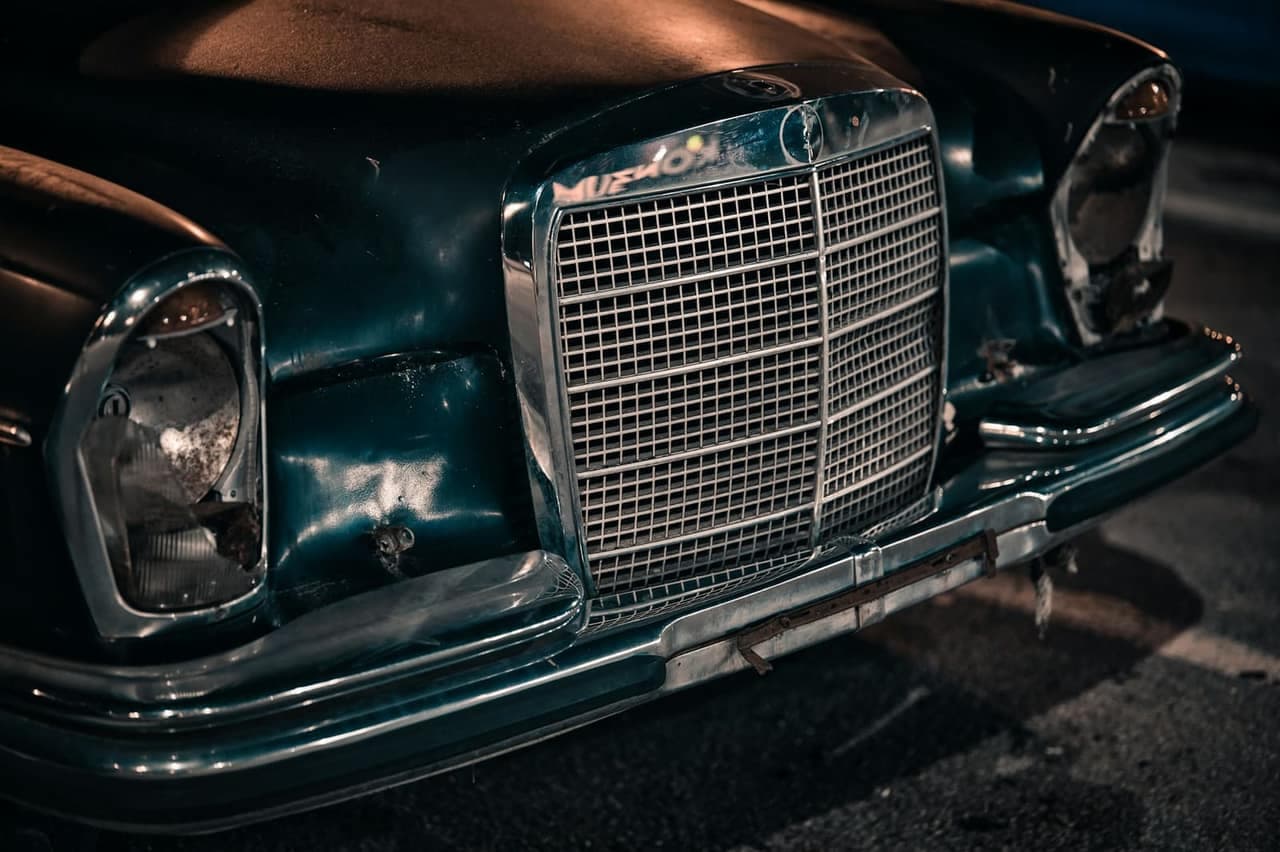
The front grille: the face you recognise a car by
Have you ever noticed that you can identify a car brand just from the front grille? BMW's "kidneys", Audi's "singleframe" connected rings, the Mercedes star in the middle of the grille, Alfa Romeo's triangular "scudetto". The front grille is the face of the car, its signature, the thing you recognise in the rear-view mirror on the motorway.
And precisely because it is so visible and recognisable, a damaged or missing grille immediately stands out. Broken plastic, a missing slat, faded chrome trim, all of that immediately spoils the overall impression. A car may be technically perfect, but if its grille is in poor condition, it looks neglected.
A new original grille for an average car costs from EUR 80 to 300. For premium brands with chrome or special finishes, the price can be EUR 500 or more. Used grilles? From EUR 20 to 100 for most models. A saving that more than pays for itself on a part that so drastically affects how the car looks.
What is a grille and what is a front mask
These terms are often used interchangeably, but there is a difference:
Grille
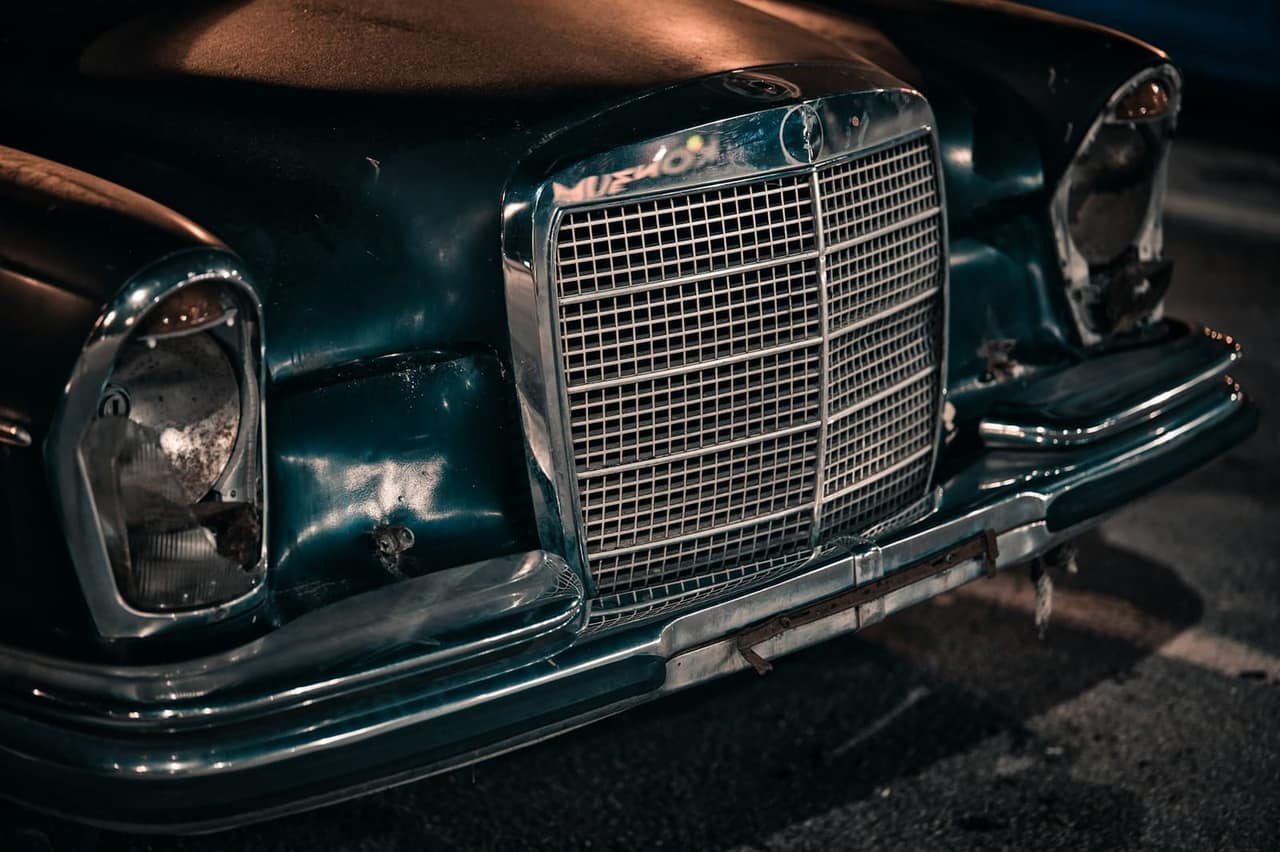
The grille is the opening at the front of the car that allows airflow to the radiator and engine cooling. It can be made of plastic, metal or a combination of materials. The grille also has an aesthetic function because it defines the "face" of the car.
Front mask
The mask is a broader term that covers the entire front panel between the bumper and the bonnet. It includes the grille but also the surrounding frame, the brand badge, and sometimes mounts for headlights or sensors. On some models, the mask is one integrated part, while on others it is assembled from several separate elements.
When you are looking for a replacement part, be precise about what you need. Just a grille (the insert that goes into the opening) or the whole mask (the complete front panel with the grille)? These are different parts with different prices.
Grille styles by brand
Each brand has its own distinctive grille style, and that affects the availability and price of used parts:
Volkswagen
VW uses horizontal slats combined with a chrome strip and the badge in the middle. The grille is usually an integrated part of the front mask. Different trim levels (Trendline, Comfortline, Highline) can have different grilles (more or less chrome). GTI models have a specific grille with a red strip and a honeycomb pattern.
BMW
BMW's "kidneys" are perhaps the most recognisable design element in the car industry. They come in various sizes (getting bigger with each new generation) and finishes (chrome, gloss black, matt black). Each series and generation has specific kidney dimensions.
Audi
Audi's "singleframe" grille is a large, dominant element that takes up almost the entire front face. It usually has a honeycomb pattern on S and RS models, or horizontal slats on standard models.
Mercedes-Benz
Mercedes offers two styles: classic with a chrome grille and the star on the bonnet (traditional look), and sporty with a diamond pattern and a large star in the middle of the grille (AMG Line). These are completely different parts.
What to watch for when buying a used grille
- Cracks and breaks - Grilles are usually plastic and prone to cracking, especially on the thin slats and mounting clips. Inspect every slat and all the mounting clips.
- Chrome condition - If the grille has a chrome finish, check for peeling, blemishes or damage to the chrome. Restoring chrome is expensive and usually not worth it on plastic parts.
- Colour - Some grilles are painted in body colour (on some models the upper part of the mask is body-coloured). Check that the colour matches.
- Clips and mounts - Grilles are fitted with clips that break easily. Check that all clips are in place and undamaged. Broken clips mean the grille will not sit firmly and will vibrate while driving.
- Sensors - Newer models have sensors for adaptive cruise control, a camera or parking sensors built into the grille. Check whether these sensors come with the grille and whether they are working.
- Badge - Check that the brand badge is in place and in good condition. A replacement badge is cheap (EUR 5 to 20), but it is good to know if you need one.
Grille compatibility
Grilles are extremely model-specific. They differ by:
- Model and generation - Every generation has a different grille
- Facelift - A facelift almost always brings a new grille
- Trim level - Standard, sporty, luxury versions
- Technology - With or without adaptive cruise, camera, sensors
- Active grilles - Some models have grilles with active slats that open and close depending on cooling needs. This is a special (and more expensive) variant.
Because of this complexity, I recommend always using the OEM part number to verify compatibility. At PoDi we connect you with suppliers who have the right used grilles for your model. Send an enquiry to PoDi with your vehicle's full details, and suppliers will suggest a suitable grille.
Grille upgrades: popular mods
Replacing the grille is also a popular way to upgrade a car visually. Some of the most common mods:
- Chrome to black - Swapping chrome grilles for gloss-black or matt-black versions for a more aggressive look
- Standard to sport - Fitting a grille from a sport pack (GTI, S-Line, M Sport, AMG) on a standard model
- Honeycomb grille - Popular on Audi models, replacing the standard slats with a honeycomb pattern
- Badgeless - Some owners prefer a cleaner look without the brand badge on the grille
For these mods, used grilles are a perfect solution. Instead of buying a new GTI grille for EUR 200+, you can find a used one for EUR 40 to 80 and give your standard Golf a sportier look.
But a note: some mods need minor adjustments to fit. For example, fitting an M Sport grille on a standard BMW may require adjusting the mounting points. Look into it in advance.
Used grille prices
- VW Golf grille - EUR 20 to 60
- BMW kidneys - EUR 20 to 80
- Audi front mask - EUR 40 to 120
- Mercedes grille - EUR 50 to 150
- Opel/Renault/Skoda - EUR 15 to 50
New original grilles start at EUR 80 for the simplest models and go up to EUR 500+ for premium brands with chrome or special finishes.
Fitting a grille
Replacing a grille is one of the simplest body jobs. Most grilles fit with clips and need no tools other than perhaps a plastic lever for releasing the clips. The procedure usually takes 15 to 30 minutes.
On some models, you need to remove the front bumper to get to the grille. That makes things a bit more complicated, but it is still a relatively simple job (a bumper-off task is part of a workshop shift).
This is definitely a job you can do yourself in a garage, even without much experience with cars. There are video tutorials online for replacing the grille on almost every model.
A small part that changes the whole impression
The front grille is a small but extremely visible element of the car. It defines its identity and is the first part people notice. Used grilles are an excellent choice because they are cheap, easy to fit and can significantly improve the look of your car.
Check compatibility (model, year, equipment), the condition of the clips and slats, and the colour/finish. And if you are looking for a specific grille for an upgrade or replacement, at PoDi we connect you with suppliers. Send an enquiry and compare offers.