
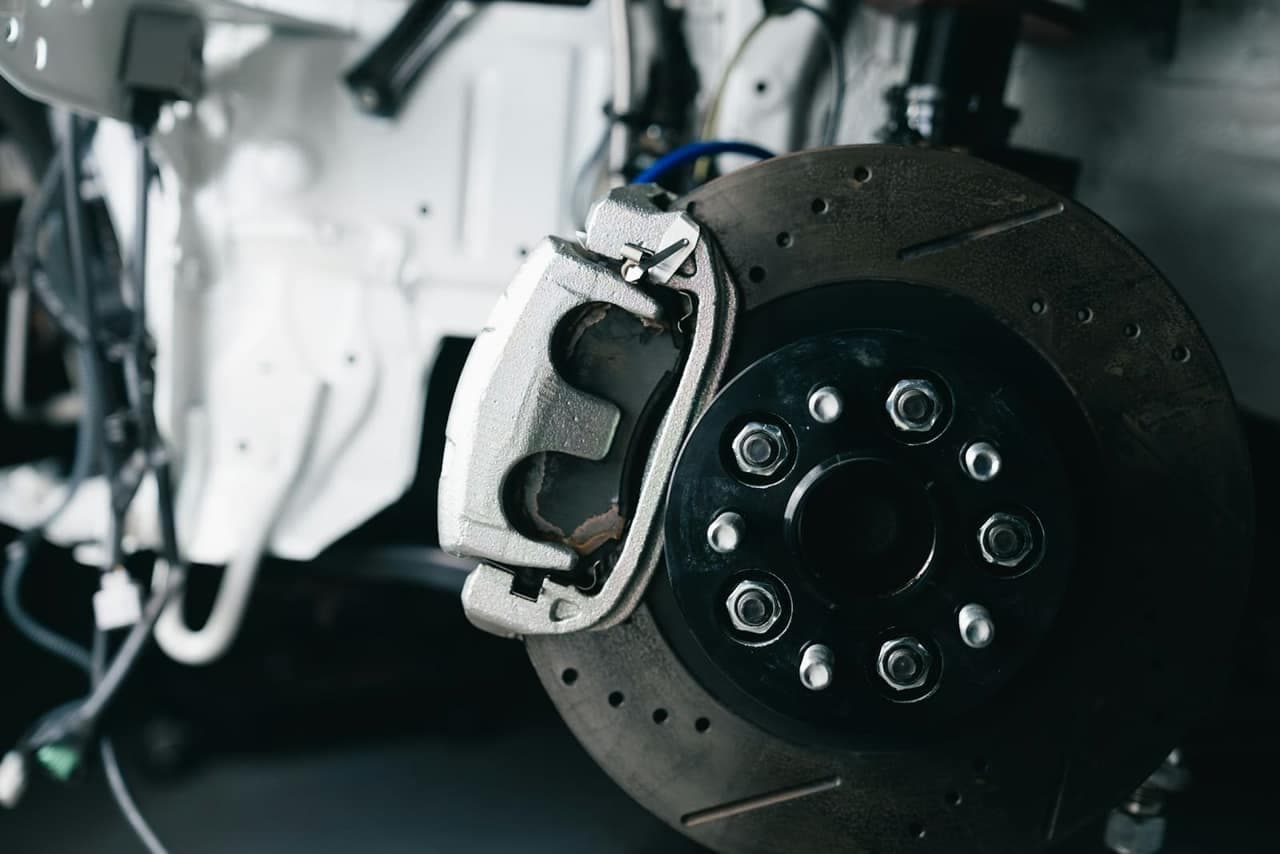
Brakes are no joke, but used parts can be perfectly safe
When I say "used brake parts", most people immediately think "no thanks, I do not cut corners on brakes". And they are right, partly. On brake pads, discs and hoses you really should not save money because those are wear items that get used up over time and have to be new.
But the brake master cylinder and brake booster? Those are a different story. These components are designed to last as long as the car itself. They do not wear out in the classic sense and very rarely fail. And when they do fail, it is usually because the seals have aged, not because the housing or mechanism has worn. That is why used brake cylinders and boosters are a perfectly legitimate option that can save you significant money.
What the master cylinder is and why it matters so much
The master cylinder is the heart of the hydraulic brake system. When you press the brake pedal, the booster multiplies the force of your foot, and the master cylinder turns that mechanical force into hydraulic pressure that travels through the brake hoses to the calipers or wheel cylinders at each wheel.
Modern master cylinders are of tandem design, which means they have two separate circuits. If one circuit fails (e.g. because of a burst hose), the other keeps working and you can still brake, at least partly. This is a safety feature that is legally required on all vehicles.
The master cylinder consists of a metal housing (usually aluminium or cast iron), pistons with seals, springs and a brake fluid reservoir. The housing almost never fails. The pistons do not wear because they work in fluid. The only part that can wear out is the seals, and that takes 15 to 20 years or more.
Symptoms of a bad master cylinder
How do you spot that the problem is in the master cylinder and not some other part of the brake system?
- Pedal "sinks" to the floor - You press the brake and the pedal slowly drops toward the floor even while you hold pressure. That is a classic sign that the seals in the cylinder are leaking and fluid is bypassing internally (from one chamber into another).
- Soft pedal feel - The pedal has no firm resistance and feels "spongy". This can also be air in the system, but if bleeding does not help, the cylinder is suspect.
- Visible leak - Brake fluid leaks from the cylinder or at the joint with the booster. This is a clear sign the seals are no longer holding.
- Uneven braking - If one brake circuit works and the other does not, the cylinder may be the cause.
What a brake booster is
The brake booster is that big round or oval part between the brake pedal and the master cylinder. Its job is to amplify the force your foot puts on the pedal, so you do not have to push the pedal with all your strength to stop a 1.5-tonne car.
Most brake boosters work on a vacuum principle. The engine creates vacuum through the intake manifold, and that vacuum is used to help with braking. When you press the pedal, a valve in the booster lets atmospheric pressure into one side of a diaphragm, while vacuum sits on the other side. The pressure difference creates a force that helps your foot.
Newer vehicles (especially turbocharged diesels and electric cars) use electric vacuum pumps or even fully electric brake boosters because their engines do not naturally create enough vacuum.
Symptoms of a bad booster
- Hard pedal - You have to push the pedal very hard to brake. Like driving a car without power assistance (which is exactly what is happening).
- Hissing when braking - The sound of air being sucked in when you press the pedal points to a leak in the diaphragm or valve inside the booster.
- Engine drops revs when braking - If the booster leaks vacuum, the engine feels it as a loss of vacuum at the intake manifold and can start running roughly or losing revs.
- Pedal does not return - The pedal stays depressed or returns slowly. This can be an issue with the return spring inside the booster.
Why buying used is worth it
Here are concrete numbers that speak for themselves:
Master cylinder:
- New original (OEM): 150 to 500 EUR, depending on model
- New aftermarket: 80 to 250 EUR
- Used original: 40 to 120 EUR
Brake booster:
- New original: 250 to 800 EUR
- New aftermarket: 150 to 400 EUR
- Used original: 60 to 200 EUR
When you add both parts together (because they are often replaced as a pair), the difference between new and used can be 300 to 800 euros. That is serious money.
And what about quality? An original used part from a car that has covered 150,000 km is generally in better shape than a new aftermarket part of questionable quality. OEM parts are designed for 300,000+ km of service. Halfway through, they are still far from the end of their life.
How to check a used master cylinder
Here is a step-by-step guide for checking a used master cylinder before buying:
- Visual inspection of the housing - Check for cracks, corrosion or damage to the housing. An aluminium housing must have no damage at all. If the housing is cast iron, minor surface corrosion is acceptable, but deep corrosion is not.
- Check the fittings - The threads on the fittings for the brake hoses must be clean and undamaged. Damaged threads mean you cannot connect the cylinder safely.
- Look inside - If you can, look into the reservoir opening. The inside should be smooth and clean, with no corrosion or deposits.
- Check the pistons - If possible, push the piston manually. It should move smoothly without sticking. If it sticks or will not move, the seals have probably swollen or the inside has corroded.
- Check the reservoir - The brake fluid reservoir (if it comes with the cylinder) must not be cracked or discoloured (yellowed plastic is normal for older parts).
How to check a used brake booster
- Visual inspection - The housing must not be dented, cracked or rusted (if metal). Dents can mean the diaphragm inside is damaged.
- Check the vacuum port - The fitting for the vacuum hose must be intact and undamaged.
- Diaphragm test - Plug the vacuum port with your finger and push the input rod (the one going toward the pedal). If you feel resistance and the rod moves with difficulty, the diaphragm is probably good. If the rod moves easily, the diaphragm leaks.
- Check the input rod - The rod must be straight and move freely back and forth without sticking.
- Check the mounting points - The bolt holes must be undamaged.
Installation and tips
Replacing the master cylinder and brake booster is not the most complicated job, but it requires knowledge and care. A few tips:
- Always replace the brake fluid when you replace the master cylinder. Old fluid can contain moisture and contaminants that can damage a new (or used) cylinder.
- Always bleed the brake system after replacement. Air in the system means a soft pedal and reduced braking efficiency.
- If you replace the booster, check the adjustment of the input rod. Too much or too little clearance can cause pedal problems (too soft or too hard travel).
- Use the correct torque values for all connections. An overtightened joint can damage threads, and an undertightened one can leak.
- After installation, test the brakes in a quiet, flat space before going out on the road. Press the pedal a few times and check that it is firm and there are no leaks.
When to buy new instead
There are situations when buying new is better:
- If the used part is from a vehicle older than 15 years, the seals are probably at the end of their life and will need replacing.
- If you cannot check the part before buying (online purchase without a return option).
- If the price gap between used and a new aftermarket part is less than 30%, new is the safer choice.
- If you drive a vehicle that often tows a trailer or is heavily loaded, it is better to have a new part with a full service life.
But in most situations, a quality used master cylinder or brake booster with reasonable mileage is perfectly safe and significantly cheaper.
Long-lived parts, a short check
Master cylinders and brake boosters fall into the category of parts that buy excellently used. They are long-lived, rarely fail, and when bought used you can save 50 to 70% compared with new. The key is to check the part before buying and to leave installation to someone who knows what they are doing.
Need a used master cylinder or brake booster for your car? Send a request on PoDi with your vehicle details and you will get offers from verified suppliers.