
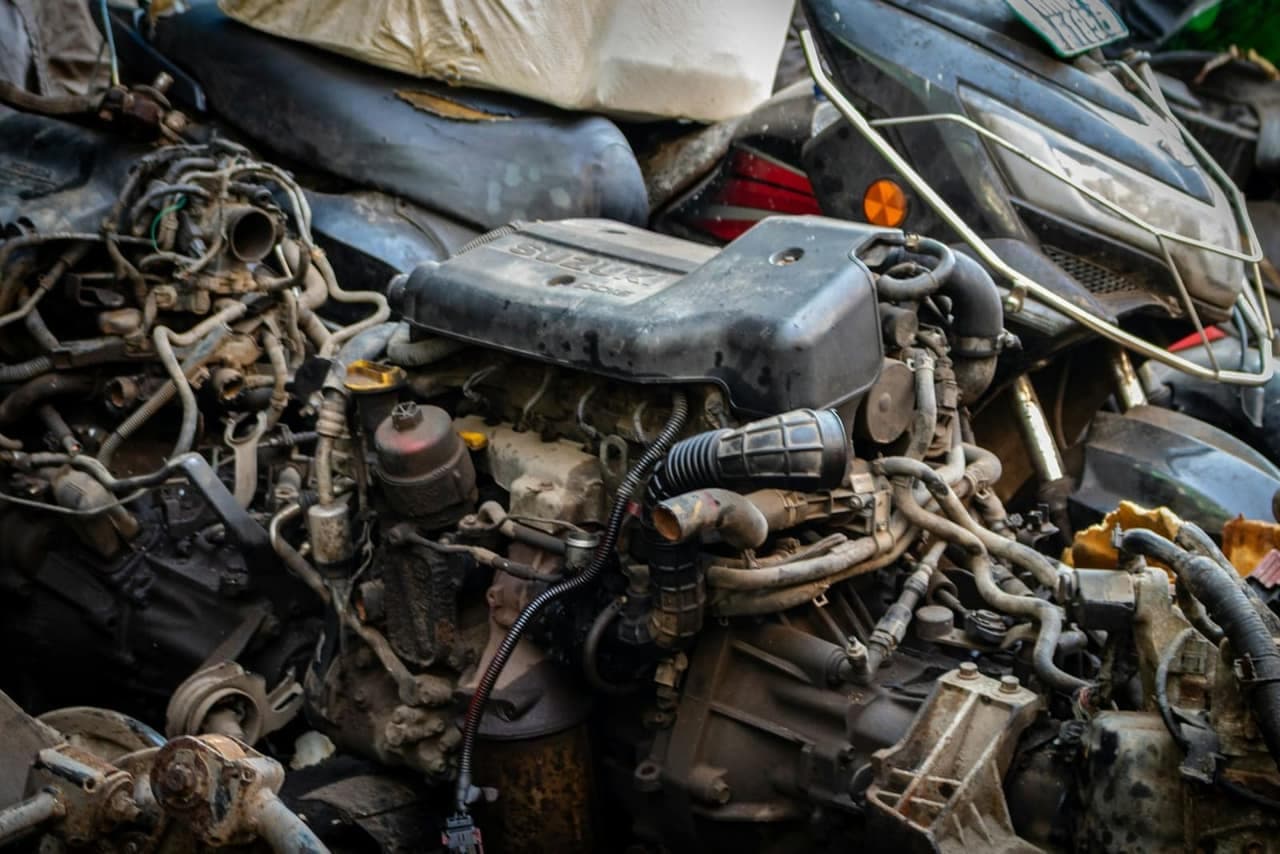
Sensors: your engine's eyes and ears
Imagine trying to drive a car blindfolded. Impossible, right? Well, the ECU (engine computer) relies on sensors the way you rely on your senses. Without working sensors, the ECU does not know how much air is coming into the engine, how rich or lean the fuel mixture is, or how the engine is running. The result is poor performance, high consumption, and a dashboard lit up like a Christmas tree.
The three sensors we are looking at today are absolutely critical for engine operation: the lambda sensor (oxygen sensor), the MAF sensor (mass air flow) and the MAP sensor (manifold absolute pressure). Each has a specific role, specific problems, and specific considerations when buying used.
Lambda sensor: guardian of emissions and consumption
The lambda sensor sits in the exhaust system and measures the amount of oxygen in the exhaust gases. Based on that data, the ECU adjusts how much fuel it injects into the engine to keep the mixture optimal (the stoichiometric ratio of 14.7:1 for petrol engines).
How the lambda sensor works
There are two main types of lambda sensors:
Narrowband lambda sensor - the older type that only tells you whether the mixture is rich or lean. It produces a voltage between 0.1V (lean mixture, lots of oxygen) and 0.9V (rich mixture, little oxygen). The ECU constantly oscillates between rich and lean, trying to keep the average at the ideal value.
Wideband lambda sensor - the modern type that precisely measures the exact mixture ratio. It gives the ECU much more accurate data, which means better injection control, lower consumption and cleaner emissions. It is the standard on newer vehicles today.
Most modern cars have two lambda sensors: one before the catalytic converter (upstream) and one after (downstream). The first regulates the mixture, the second checks that the cat is working.
Symptoms of a bad lambda sensor
- Higher fuel consumption (10-30% more than normal)
- Rough idle
- Check engine light with codes P0130-P0167
- Reduced engine performance
- Unpleasant smells from the exhaust (sulphur or rotten egg smell)
- Failing the emissions test (MOT)
Used lambda sensor: worth it?
Here we have to be brutally honest. Lambda sensors are a wear part. They have a limited life, usually 80,000 to 160,000 km, after which they start giving inaccurate readings. Buying a used lambda sensor is risky because you do not know how much use it has had or how much life is left.
Still, there are situations where it makes sense:
- A lambda sensor from a low-mileage vehicle (under 40,000 km)
- Wideband lambda sensors that are extremely expensive new (100-300 euros) but cost 30-70 euros used
- Specific OEM sensors for rare models that are hard to find new
For ordinary narrowband lambda sensors, new aftermarket ones cost 15-30 euros and it is usually not worth the gamble of a used one. But for expensive wideband sensors, a used one can be a great saving.
MAF sensor: mass air flow meter
The MAF (Mass Air Flow) sensor measures the amount of air entering the engine. That is critical information for the ECU because it determines how much fuel to inject. Without a working MAF sensor, the engine can run too rich (too much fuel) or too lean (too little fuel), and neither is good.
How the MAF sensor works
The most common type is the hot wire MAF sensor. Inside the sensor is a thin platinum wire that is heated to a constant temperature above the ambient air temperature. As air passes over the wire, it cools it down. The sensor's electronics measure how much current is needed to keep the wire at a constant temperature, and from that calculate the mass of air.
The more air that passes, the more the wire cools, the more current it needs, and the ECU knows the engine is "breathing" deeper. Brilliantly simple in theory, but in practice that thin platinum wire is sensitive to dirt, oil and moisture.

Symptoms of a bad MAF sensor
- Engine loses power, especially under acceleration
- Engine is hard to start or stalls
- Rough idle
- Hesitation or surging while driving
- Black smoke from the exhaust (rich mixture)
- Drastically higher fuel consumption
- Check engine light with codes P0100-P0104
Used MAF sensor: yes or no?
The MAF sensor is a better candidate for used buying than the lambda sensor. The reason is that MAF sensors, especially originals from well-known manufacturers (Bosch, Denso, Siemens VDO), can last a very long time if properly maintained.
The main cause of MAF sensor failure is not wear but contamination. A dirty air filter lets particles through that settle on the hot wire and change its characteristics. So a MAF sensor from a car that had regular air filter changes can be in excellent shape even after 200,000 km.
Testing trick: a MAF sensor can be cleaned with a special MAF sensor cleaner spray (do not use contact spray or WD-40, that can ruin the sensor). Clean a used MAF sensor before installation and there is a good chance it will work like new.
New original MAF sensors cost 80-250 euros, used ones 25-70 euros. The difference is significant and the risk is lower than with a lambda sensor. On the PoDi platform you can request a tested MAF sensor from a reliable supplier.
MAP sensor: manifold absolute pressure sensor
The MAP (Manifold Absolute Pressure) sensor measures the pressure (or vacuum) in the engine's intake manifold. Some cars use a MAP sensor instead of a MAF sensor, and some use both for more precise engine management.
How the MAP sensor works
The MAP sensor contains a piezoelectric element or micro-electromechanical system (MEMS) that responds to pressure changes. At idle, the intake manifold has high vacuum (low pressure). When you press the gas, vacuum drops (pressure rises). The MAP sensor sends that information to the ECU as a voltage signal.
On turbocharged engines, the MAP sensor has a particularly important role because it also measures boost pressure, which is critical for proper turbo control and fuel injection at elevated pressure.
Symptoms of a bad MAP sensor
- Engine is hard to start or stalls
- Rough idle
- Loss of power under acceleration
- Higher fuel consumption
- Check engine light with codes P0105-P0109
- On turbo engines: boost pressure issues
Used MAP sensor: it pays off
MAP sensors are excellent candidates for used buying. The reason is simple: they have no moving parts and no wear elements like the hot wire in a MAF sensor. The MAP sensor is essentially an electronic pressure transducer that either works or it does not.
The most common cause of MAP sensor failure is a blocked vacuum hose leading to the sensor, not the sensor itself. So before you replace a MAP sensor, check the hose. If the hose is fine and the sensor is not giving a proper signal, only then replace it.
New MAP sensors cost 30-100 euros, used ones 10-30 euros. Given that they are extremely reliable and long-lasting, a used MAP sensor is almost always a worthwhile purchase.
How to test used sensors before buying
Here are practical tips for testing each of these three sensors:
Testing a lambda sensor
Connect a multimeter to the sensor's signal output and heat it (with a burner or hot air). The sensor should start producing a voltage that oscillates between 0.1V and 0.9V. If the voltage sits at one value or changes slowly, the sensor is worn out.
Testing a MAF sensor
Connect a multimeter to the signal output. With the engine off, the voltage should be about 1.0V. If you have access to the car, fit the sensor and watch the values on a diagnostic tool. Airflow at idle should be 2-7 g/s for an average petrol engine. If it is significantly outside that range, the sensor is faulty.
Testing a MAP sensor
Connect a multimeter to the signal output and a vacuum pump to the sensor input. As you build vacuum, the voltage should decrease. With no vacuum (atmospheric pressure), voltage should be about 4.5V. With full vacuum (around -0.7 bar), voltage should drop to about 0.5-1.0V. If the signal is steady and changes smoothly with pressure, the sensor is good.

Sensor compatibility
Sensors are not universal and you have to mind compatibility:
Lambda sensors - must have the same number of wires (1, 2, 3 or 4) and the same type (narrowband or wideband). The connector has to match. Thread and length also have to be compatible.
MAF sensors - have to be exactly for your engine model because they are calibrated for a specific displacement and engine characteristics. A MAF from a different engine will give wrong readings even if it fits physically.
MAP sensors - have to have the same measurement range. A MAP sensor for a naturally aspirated engine only measures vacuum, while a MAP for a turbo engine also measures positive pressure. They are not interchangeable.
How much you can save with used sensors
Let us do a quick calculation for a typical car (a VW Golf 1.6 TDI for example):
- Lambda sensor (wideband, upstream): new 150 euros, used 45 euros = saving 105 euros
- MAF sensor: new 120 euros, used 35 euros = saving 85 euros
- MAP sensor: new 60 euros, used 15 euros = saving 45 euros
Total saving on just these three sensors: 235 euros. That is enough for a full shopping cart at the supermarket or half a set of winter tyres. Nothing to sneeze at.
Where to find used sensors
The easiest way is to send a request on the PoDi platform. List the exact vehicle model, the engine and, if possible, the part number of the sensor you need. Suppliers will send you offers and you pick the best option.
When buying sensors, it is particularly important to buy from suppliers who offer warranty and return options. Sensors are small parts, but they have a big impact on engine operation. A faulty sensor can cause excess fuel consumption that costs you more in a couple of months of driving than you saved on the sensor price.
Finally, do not forget that an engine problem does not always mean a faulty sensor. Dirty connectors, damaged wires or poor contacts can mimic the symptoms of a bad sensor. Before buying a new or used sensor, check the wiring and connectors. Sometimes the fix is as simple as cleaning a connector with contact spray.