
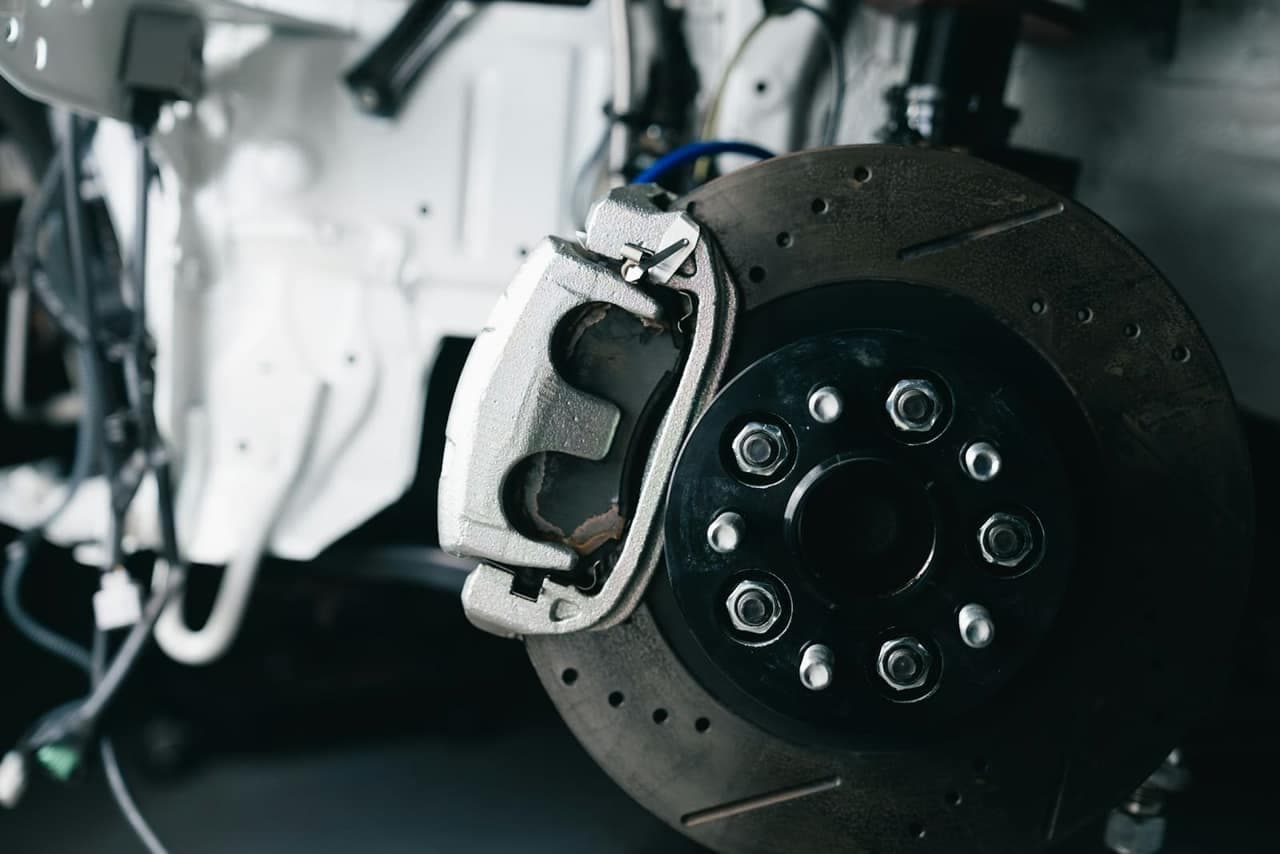
Calipers are not a wear item and that changes everything
When we talk about brakes, most people automatically think of pads and discs. And that makes sense because those are parts that wear and get replaced regularly. But brake calipers? Those are designed to last practically the entire life of the vehicle. And that is exactly why they are an ideal candidate for buying used.
Picture this: the brake caliper on your car has been doing its job for 200,000 kilometres. The piston inside moves back and forth every time you brake, but it moves in an oil environment with minimal friction. The caliper body is a heavy chunk of cast iron or aluminium that cannot "wear out". The only thing that can happen over time is the rubber piston seal hardening or the piston starting to corrode, but that usually only happens after 12 to 15 years, and mostly because of poorly maintained brake fluid.
A new set of brake calipers can cost from 200 to as much as 2,000 euros, depending on the make and model of vehicle. Used ones? From 50 to 400 euros. And if you are looking at sport calipers (Brembo, AP Racing), the savings can be even bigger. Let's look in more detail at why and how to buy used calipers.
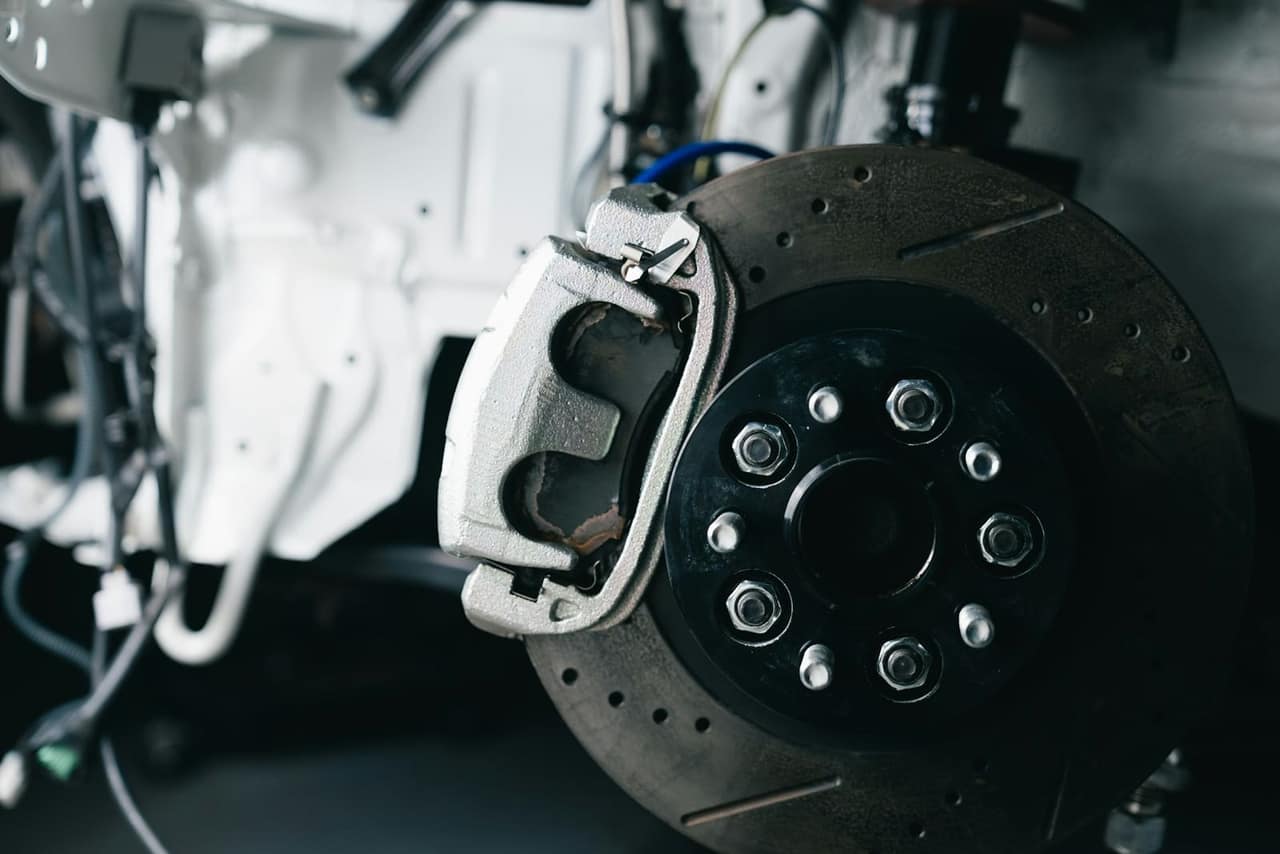
How a brake caliper works
To be able to judge the condition of a used caliper, you need to understand how it works. There are two basic types:
Floating caliper
This is the most common type on passenger cars. It has only one piston on the inner side. When you brake, the piston pushes the inner pad against the disc, and the reaction force pulls the caliper body inward, pressing the outer pad against the other side of the disc. The caliper "floats" on slide pins.
Advantage: simpler construction, lighter, cheaper. Disadvantage: the slide pins can seize if they are not lubricated, which causes uneven pad wear.
Fixed caliper
This has pistons on both sides of the disc (2, 4, 6 or even 8 pistons). The caliper is fixed in place and does not move. This is the system used on sportier vehicles and offers better braking, but is more expensive and heavier.
Brembo, AP Racing and other premium brands mostly make fixed calipers. And those calipers are the most worthwhile to buy used because they are extremely expensive new.
Why calipers fail
If they are designed to last forever, why do they need replacing at all? Here are the most common reasons:
Stuck piston. This is by far the most common problem. The piston seizes in the housing because of corrosion or swollen seals. The result: the caliper does not release the pad from the disc, the pad overheats, the disc warps and you get vibration when braking. This issue can often be solved by rebuilding the caliper rather than replacing it.
Stuck slide pin. On floating calipers, the slide pins can seize if they are not lubricated regularly. The symptom is the same as a stuck piston: uneven pad wear.
Brake fluid leak. If the piston seal leaks, brake fluid leaks onto the disc and pads, reducing braking efficiency. This is a serious safety issue that needs immediate attention.
Cracks or damage. Rare, but possible, especially after hitting a pothole or after a crash. A cracked caliper is not repaired, it is replaced.
How to check a used caliper
Here is a detailed procedure for checking a used brake caliper:
- Visual inspection of the housing - Look at the caliper body from all sides. Look for cracks, especially around the mounting ears and around the piston bore. Even a small crack means the caliper is scrap.
- Piston check - Try pushing the piston inward with a finger (or gentle pressure). It should move smoothly with moderate resistance from the seal. If it does not move at all, it is seized. If it moves with no resistance at all, the seal is gone.
- Check the piston surface - If you can see the piston (extended or visible), the surface must be smooth and shiny, without corrosion or scratches. A corroded piston will quickly destroy a new seal.
- Check the slide pins - On floating calipers, the slide pins must be straight and smooth. Rusted or bent pins mean trouble.
- Check the threads - The threads for the brake hose and for the bleed nipple must be clean and undamaged.
- Check the mounting points - The bolts and mounting holes must be in good shape, with no damaged threads or deformation.
Rebuild vs replacement
Here is something many people do not know: brake calipers can be rebuilt. A rebuild involves dismantling the caliper, cleaning all the parts, replacing the piston seals, replacing the rubber boots and slide pins, then reassembling and testing.
Rebuild kits cost from 15 to 50 euros per caliper, depending on the model. If the caliper body is in good shape (no cracks and with an undamaged piston), a rebuild is an excellent option that gives you a practically new caliper for a fraction of the price.
That means even a used caliper with a seized piston or a leak can be worth buying if the body is sound. Buy it cheap, invest 30 euros in a rebuild kit, set aside an hour for the rebuild, and you have a caliper that will serve another 100,000+ km.
When a rebuild is not an option
- The body has cracks (no compromise, it is scrap)
- The inner piston bore is corroded to the point where the surface is pitted (a new piston will not seal properly)
- The mounting points are damaged (you cannot safely mount the caliper)
Sport and upgrade calipers
If you are looking at Brembo, Wilwood or AP Racing calipers to upgrade your brake system, the used market is especially interesting. A new Brembo GT kit for the front brakes can cost 2,000 to 4,000 euros. A used set of calipers (without discs and pads, which you replace new anyway) can be found for 500 to 1,500 euros.
Sport calipers are usually in better condition because owners who invest in this kind of equipment generally take better care of their vehicles. They change brake fluid regularly, use quality pads and watch over the brake system.
When buying used sport calipers, also check:
- Were they used on track? Calipers that have been on a race track endure higher loads and temperatures.
- Are there signs of overheating? Discolouration of the metal (blue or purple tint) points to extreme temperatures.
- Which disc model do they use? You have to make sure you can source compatible discs and pads.
Most common models and prices for used calipers
Here are indicative prices for popular models:
- VW Golf 5/6/7 front - 40 to 80 EUR per piece
- BMW E90/F30 front - 60 to 120 EUR per piece
- Mercedes W204/W205 front - 70 to 150 EUR per piece
- Audi A4 B8 front - 50 to 100 EUR per piece
- Brembo 4-piston (various models) - 200 to 500 EUR per piece
Rear calipers are usually 20 to 40% cheaper than fronts because they are smaller and less loaded.
Installation tips
A few practical tips for fitting used calipers:
- Always replace calipers in pairs (both fronts or both rears). Different calipers on the same axle can cause uneven braking.
- When fitting "new" used calipers, also fit new pads and ideally new discs. Old pads have bedded in to the old calipers and will not seat properly on new ones.
- Always replace the brake fluid and bleed the system.
- Lubricate the slide pins (on floating calipers) with the appropriate brake grease. Never use ordinary grease because it can damage the rubber parts.
- After fitting, do a few gentle brakes to bed in the new pads. Do not brake hard for the first 200 km.
When a rebuild makes sense, and when replacement does
Brake calipers are one of the parts that absolutely pay off bought used. They are long-lived, easy to check, can be rebuilt and the savings are significant. Do not mix up calipers with pads and discs, which are wear items and should be new. Calipers are the lasting part of the brake system and used options are completely safe with proper checks.
Need used brake calipers for your car? Send a request on the PoDi platform and you will get offers with prices and photos from our suppliers.