
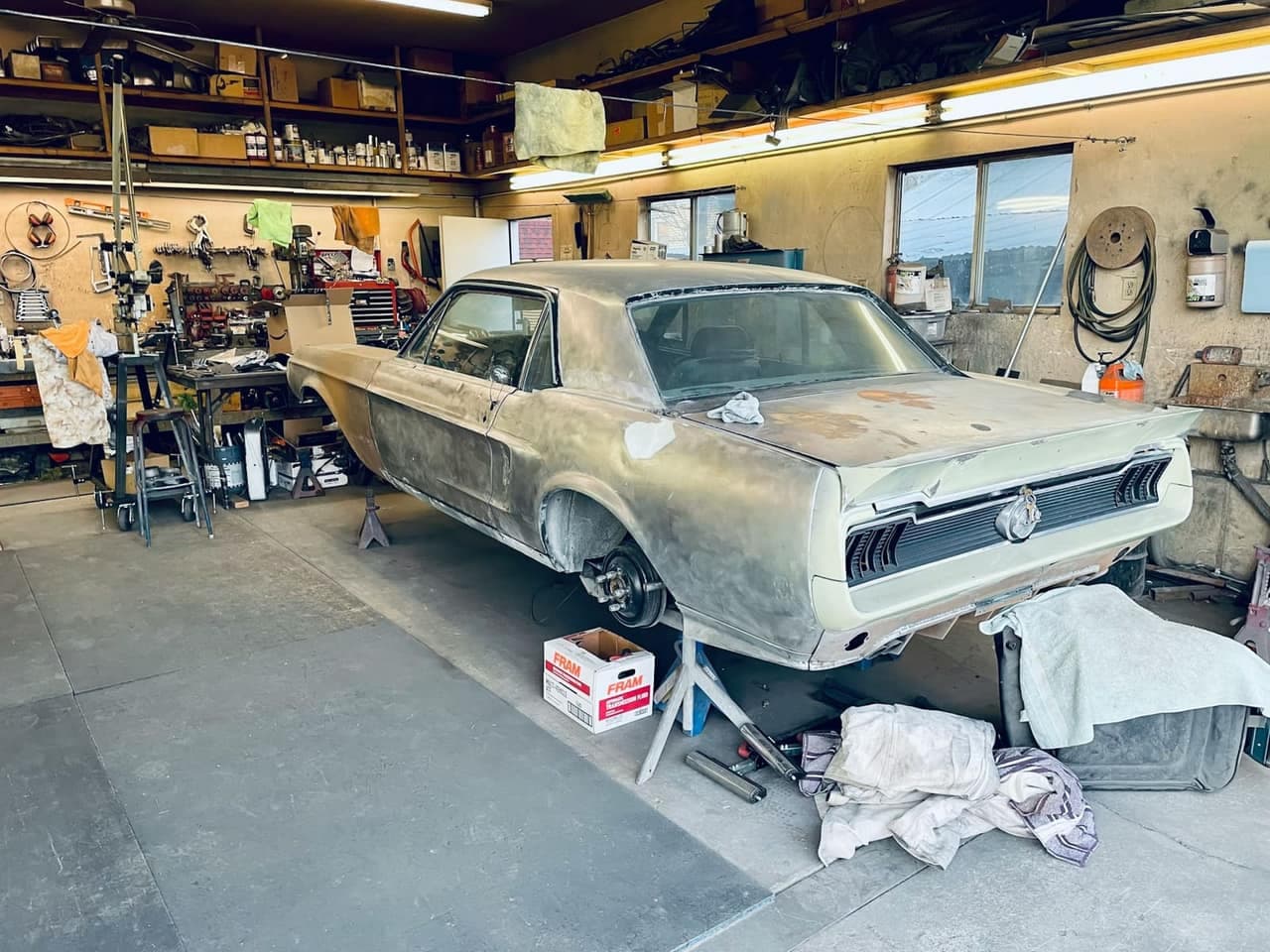
The drivetrain: the invisible hero of your car
Everyone talks about the engine. The gearbox also gets its moment of fame when it breaks. But the differential and driveshafts? Most drivers cannot even point them out on the car, let alone explain what they do. The irony is that without them, the car would not move a centimetre.
The differential is the magic mechanism that lets the inner and outer wheel turn at different speeds when you corner. Without it, the car would behave as if it had welded axles and the tyres would tear themselves apart on the tarmac in every bend.
Driveshafts (propshafts and half shafts) are what transfer power from the gearbox to the wheels. They are relatively simple parts, but when they fail, you feel it through vibrations, knocking and sometimes total loss of drive.
When these parts ask to be replaced, the price of a new one can be a shock. Used parts are the logical alternative, and in this guide we will go through everything you need to know.
Types of differentials
Not every differential is the same, and it is important to understand the differences because that affects what you need to buy and what to watch out for.
Open differential
The simplest and most common type. Found in almost all standard front-wheel-drive or rear-wheel-drive cars. It lets the wheels turn at different speeds, but has one drawback: if one wheel loses traction, all the power goes to that wheel (which just spins freely).
As a used part, the open differential is the safest buy because it is mechanically the simplest.
Limited slip differential (LSD)
An LSD solves the open differential's problem by limiting the difference in rotational speed between the two wheels. It is used in sports cars and some SUVs.
There are mechanical (plate-type), viscous and electronic versions. A used LSD needs more careful checking because the plates wear down and lose their function over time.
Torsen differential
A special type of differential that uses worm gears to distribute torque. Used in Audi quattro systems and some other 4x4 vehicles. It is tough but complex, so as a used part it should be checked by a specialist.
Transfer case (centre differential)
In all-wheel-drive vehicles, the centre differential (or transfer case) splits power between the front and rear axles. This is a complex and expensive part, so the saving from buying used is especially significant.
Driveshafts: types and problems
Propshaft
The propshaft transfers power from the gearbox to the rear differential in rear-wheel-drive or 4x4 cars. It is usually a long metal cylinder with universal joints at the ends.
Most common problems:
- Worn universal joints - cause vibrations and knocking, especially when pulling away
- Imbalance - vibrations at higher speeds (usually 80 to 120 km/h)
- Worn centre bearing - on two-piece propshafts, the rubber mount wears out and causes vibrations
Half shafts
Half shafts transfer power from the differential to the wheels. At each end of the half shaft there is a constant velocity joint (CV joint) that allows power transfer at an angle, which is necessary because the wheels turn and move up and down.
Most common problems:
- Torn boot - the protective rubber boot that shields the CV joint splits, grease leaks out, dirt gets in, and the joint is destroyed
- Worn CV joints - clicking in corners is the classic symptom, especially on the inner or outer joint
- Deformation - rare, but half shafts can bend in a heavy impact
Symptoms of a faulty differential
How do you spot a differential that needs replacing? Here is what to look out for:
- Whining or humming - a constant noise that changes with speed, often louder at a certain speed
- Knocking when changing direction - when you switch from accelerating to decelerating or the other way around
- Vibrations - especially at higher speeds
- Oil leak - differential oil leaks around the cover gasket or oil seals
- Metallic noises - grinding or scraping that points to damaged gears
If you spot any of these symptoms, do not wait. Driving with a damaged differential can lead to a total lock-up of the drivetrain, which is dangerous.
Checking a used differential
Here is what to check before buying:
- Turn the input shaft by hand - it should rotate smoothly, without catching or unusual sounds
- Check the oil - drain a little oil from the differential. It should be clean, with no metal particles. If the oil is grey or has bits of metal in it, the differential is worn.
- Gear backlash - a little backlash is normal, but too much means worn gears
- Seal condition - check the oil seals and the cover gasket
- Final drive ratio marking - always check that the used differential has the same ratio as your original
Checking used driveshafts
- Propshaft - check the universal joints for play (there should be no side-to-side movement), the centre bearing must be intact and elastic, the tube must not be bent or dented
- Half shafts - check the CV joints for play and the condition of the boots. If the boots are torn, the joints are probably damaged. Spin the half shaft and listen for noises.
Used part prices
Differentials
- Front differential (FWD): EUR 200 to 500
- Rear differential (RWD/4x4): EUR 300 to 800
- Transfer case: EUR 400 to 1,200
- LSD differential: EUR 500 to 1,500
Driveshafts
- Propshaft: EUR 150 to 500
- Half shaft with CV joints: EUR 80 to 250
- CV joint only: EUR 30 to 80
Fitting these parts costs EUR 150 to 500 for a differential, EUR 100 to 300 for a propshaft and EUR 80 to 200 for a half shaft.
Compatibility is the key
With the drivetrain, compatibility matters a great deal. The differential must have:
- The same final drive ratio as the original
- The same number of mounting bolts
- The same type of driveshaft connection
- The same type (open, LSD, etc.)
For half shafts, they must match in length, number of splines on the differential side and CV joint size. Even a small difference in length can cause problems.
For propshafts, the length must be identical, and the universal joints must be the same type and size.
When buying used pays off
Differentials and driveshafts are parts that are excellent candidates for second-hand purchase. The reason is that they are mechanically tough and, with normal use and regular oil changes, can last hundreds of thousands of kilometres.
It is especially worth buying used:
- Half shafts with good CV joints (a new half shaft is often needlessly expensive)
- Propshafts for older models that are no longer in production
- Transfer cases for 4x4 vehicles (a new part is enormously expensive)

Differentials and shafts: a safe buy if you know how to check
Used differentials and driveshafts are some of the safer used parts to buy, provided they have been properly checked. The keys are checking the oil for metal particles, checking backlash and confirming the final drive ratio is compatible.
If you are not sure exactly which part you need or where to find it, send a request via PoDi. Enter your vehicle data and describe the problem, and suppliers will send you offers for matching parts.