
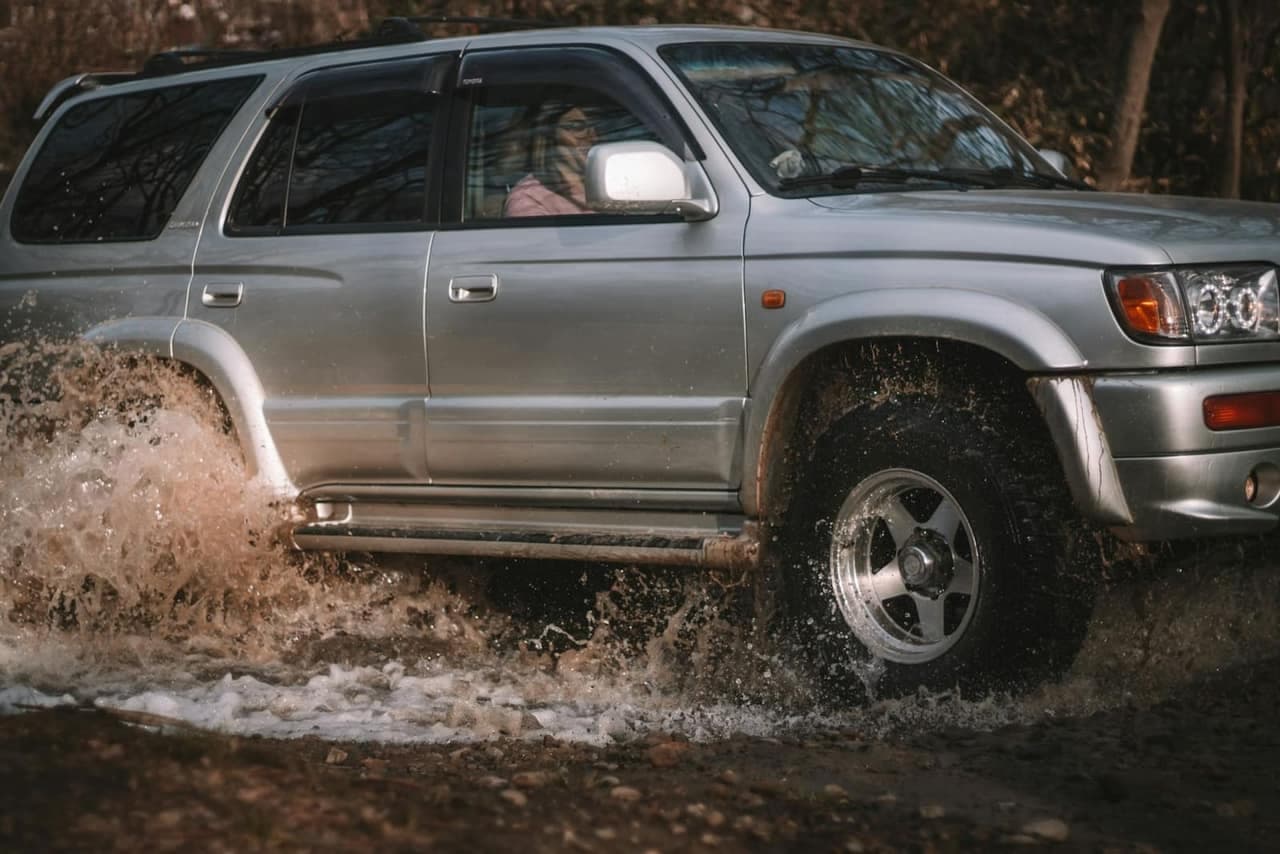
Air suspension: when the car floats over the road
If you have ever driven a car with air suspension, you know what I am talking about. That smoothness of ride, that floating feeling above the road, that automatic height adjustment. Air suspension is one of those technologies that, once you try it, is hard to step back from to a conventional setup.
But air suspension has another side too. When it breaks, and it will break, the repair costs can be astronomical. A new air spring for a Mercedes S-Class costs 500-1,000 euros. A compressor for an Audi A6 Allroad? 600-1,200 euros. A valve block for a Range Rover? 300-600 euros. Multiply that by the number of parts that need replacing and you easily reach a figure with four or five zeros.
That is where used parts become not just an option, but often the only reasonable option for owners of older premium cars with air suspension. Because the alternative is conversion to conventional suspension, which changes the car's character and reduces its value.
How air suspension works
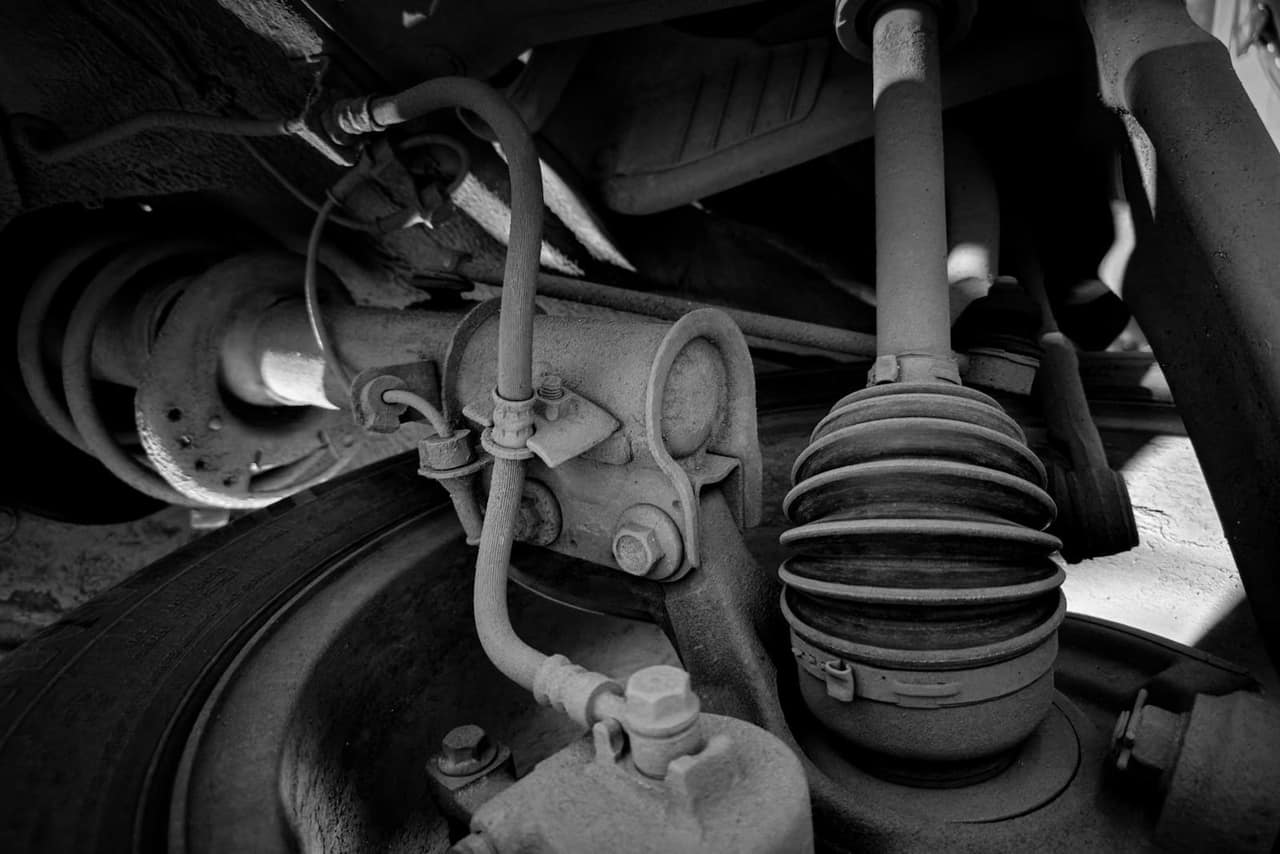
Air suspension replaces conventional coil springs with air bags (air springs). Instead of a steel coil, the car's weight is carried by rubber "bags" filled with compressed air. The amount of air in each spring is controlled electronically, which enables automatic adjustment of ride height and stiffness.
System components
- Air springs - the rubber bags on each wheel that carry the car's weight. They fail most often because they are made of rubber and exposed to the weather
- Compressor - the electric pump that compresses air and inflates the springs. Usually housed in the boot or under the car
- Air reservoir (receiver) - a tank that holds compressed air ready for the system to react quickly
- Valve block - solenoid valves that control airflow to each spring
- Height sensors - measure the car's ride height at each wheel and send information to the control unit
- Control unit (ECU) - the system's "brain" that processes sensor data and manages the compressor and valves
- Air lines - plastic or rubber hoses that connect all the components
The most common air suspension faults
Air suspension is a sophisticated system with many components, and each of them can fail. Here are the most common faults ranked by frequency:
1. Air spring failure
Rubber air springs dry out and crack with age. Failure can be sudden (the car drops on one side) or gradual (slowly loses height). Age is the main enemy, and most air springs start to show signs of aging after 8-12 years, regardless of mileage.
Symptoms: the car drops when parked for a longer time, the car is lower on one side, the compressor runs more often than usual (you hear it when you start the car).
2. Worn compressor
When air springs start to leak, the compressor has to work harder to keep up pressure. That accelerates compressor wear. A worn compressor cannot produce enough pressure, so the car drops and the system throws an error.
Symptoms: the car rises slowly, the compressor runs for a long time and loudly, the car cannot be raised to a higher position.
3. Valve block leaks
The valves that control airflow can leak or get stuck. A leak causes loss of air, and a stuck valve can cause one wheel to remain in the wrong position.
4. Height sensor failure
Height sensors are mechanical elements (usually an arm with a potentiometer) that wear and give wrong information to the control unit. The result is that the car tries to compensate for a non-existent problem and sets itself to the wrong height.
5. Air line leaks
Plastic hoses become brittle with age and can crack at joints. This is actually the cheapest fault to repair, but it can mimic the symptoms of more expensive issues.
Used air suspension parts: a detailed analysis
Let's go through each component and assess the value of buying used.
Used air springs
This is the most sought-after used air suspension part, but also the riskiest to buy. The rubber of an air spring wears over time (not mileage), so a used air spring that is 8 years old, even with low mileage, can fail at any time.
When it makes sense: only if the air spring is young (less than 4-5 years old) and significantly cheaper than new. A spring from a car that is 3 years old and was crashed on the other side can be a great buy.
Prices: used air spring 80-200 EUR, new aftermarket 150-400 EUR, new original 400-1,000 EUR.
Alternative: aftermarket air springs from brands like Arnott, Dunlop or Continental offer quality close to original for 30-50% less. For many models, this is a better choice than used.
Used compressor
Compressors are tougher than air springs and last longer (usually 150,000-250,000 km or 10-15 years). A used compressor with low mileage can be a great buy because the savings are significant.
How to check: ideally, the compressor should be tested under load. If you are buying from a yard, ask them to test it on the car before they pull it. Listen for sounds, check that it can produce the required pressure, and how long it takes to raise the car.
Prices: used compressor 100-300 EUR, new aftermarket 200-500 EUR, new original 500-1,200 EUR.
Important: when replacing the compressor, also replace the air filter on the compressor intake. A dirty filter is a common cause of premature compressor wear.
Used valve block
Valve blocks are electro-mechanical parts that can be tested with a diagnostic tool. A used valve block is a relatively safe buy because faults are usually obvious (the valve either works or it does not).
Prices: used 60-150 EUR, new aftermarket 150-350 EUR, new original 300-600 EUR.
Used height sensors
Height sensors are cheap new (20-60 EUR), so buying used does not make much sense. But if you need a specific sensor for a rare model, used for 10-20 EUR may be the only option.
Used control unit (ECU)
Air suspension control units are expensive new (300-800 EUR) and used ones can be a good buy (80-200 EUR). But watch out: some control units are coded to a specific vehicle and require programming after fitting, which can cost 50-100 EUR at a diagnostics shop.
Conversion to conventional suspension: an alternative
For owners of older cars with air suspension who do not want to keep pouring money into repairs, conversion to conventional suspension (springs + shocks) is an option. There are conversion kits for popular models like Mercedes S/E-Class, BMW 7 Series and Range Rover.
A conversion kit usually costs 300-600 euros and includes springs and shocks. Fitting costs 200-400 euros. The total is 500-1,000 euros, which can be less than replacing all the air components.
Downsides of conversion:
- You lose the ability to adjust ride height
- The ride is harder and less comfortable
- The car can lose value
- Dashboard error (the system detects no air suspension)
- Possible issues at the roadworthiness test
Popular models with air suspension and their quirks
Mercedes S-Class (W220, W221): The Airmatic system is known for a relatively short air spring life (6-10 years). Front springs are more expensive because they integrate the shock absorber. Used parts are easy to find because the car was popular.
Audi A6 Allroad (C5, C6): Quattro system with air suspension on all four wheels. Rear springs are cheaper and easier to replace than fronts. The compressor sits under the car and is prone to corrosion from salt.
Range Rover (L322, L405): The EAS (Electronic Air Suspension) system is sophisticated but fault-prone. The valve block is a common problem. Used parts are sought after and prices are higher than for Mercedes or Audi.
BMW 7 Series (E65, F01): The front suspension uses a combination of air springs and conventional shocks. The system is durable but expensive to repair when it fails.
VW Touareg/Porsche Cayenne: They share a platform and many air components. Used parts from a Touareg often fit a Cayenne, which is useful because original Porsche parts are astronomically expensive.

Air suspension diagnostics
Before buying used parts, it is important to accurately diagnose which part is faulty. Many symptoms overlap (a leaking spring and a leaking valve give similar symptoms), so "by eye" diagnosis can lead to buying the wrong part.
Professional diagnostics with the right tool (VCDS for VW/Audi, Star for Mercedes, ISTA for BMW) can precisely identify the faulty part. Diagnostics cost 30-50 euros and can save you hundreds on unnecessary parts.
Simple home diagnostics:
- Leak test: Raise the car to the high position, switch off the engine and leave overnight. If the car has dropped, you have a leak. Spraying soapy water on springs and joints will reveal a bubble at the leak point.
- Compressor test: When you start the car, listen to the compressor. If it runs longer than 2-3 minutes continuously, the system has a leak or the compressor is not producing enough pressure.
- Valve test: If only one wheel behaves oddly (does not rise or lower), the problem is probably in the valve for that wheel.
Tips for air suspension maintenance
Proper maintenance can significantly extend the life of air suspension:
- Regularly wash the underside of the car - salt and dirt accelerate the wear of rubber parts
- Use silicone spray on the air springs - once a year apply silicone spray to the rubber parts of the springs to protect them from drying out
- Do not park at the lowest position - leaving the car at the lowest position for long periods puts extra load on the air springs
- React to early symptoms - a small problem (slight leak) quickly becomes a big problem (ruined compressor) because the compressor runs overtime
Find air suspension parts
Air suspension is an area where used parts can save thousands of euros. But equally, the wrong part or a part in poor condition can cost extra hundreds in unnecessary work and diagnostics.
On the PoDi platform you can send a request for air suspension parts with exact details of your vehicle and fault symptoms. Suppliers on the PoDi platform who work with premium vehicles can offer you used parts of verified condition, refurbished components or affordable aftermarket alternatives.
Whether you need one air spring or a complete system overhaul, a smart purchase starts with an informed decision. Send a request, compare offers and put your car back on the road without emptying your bank account.