
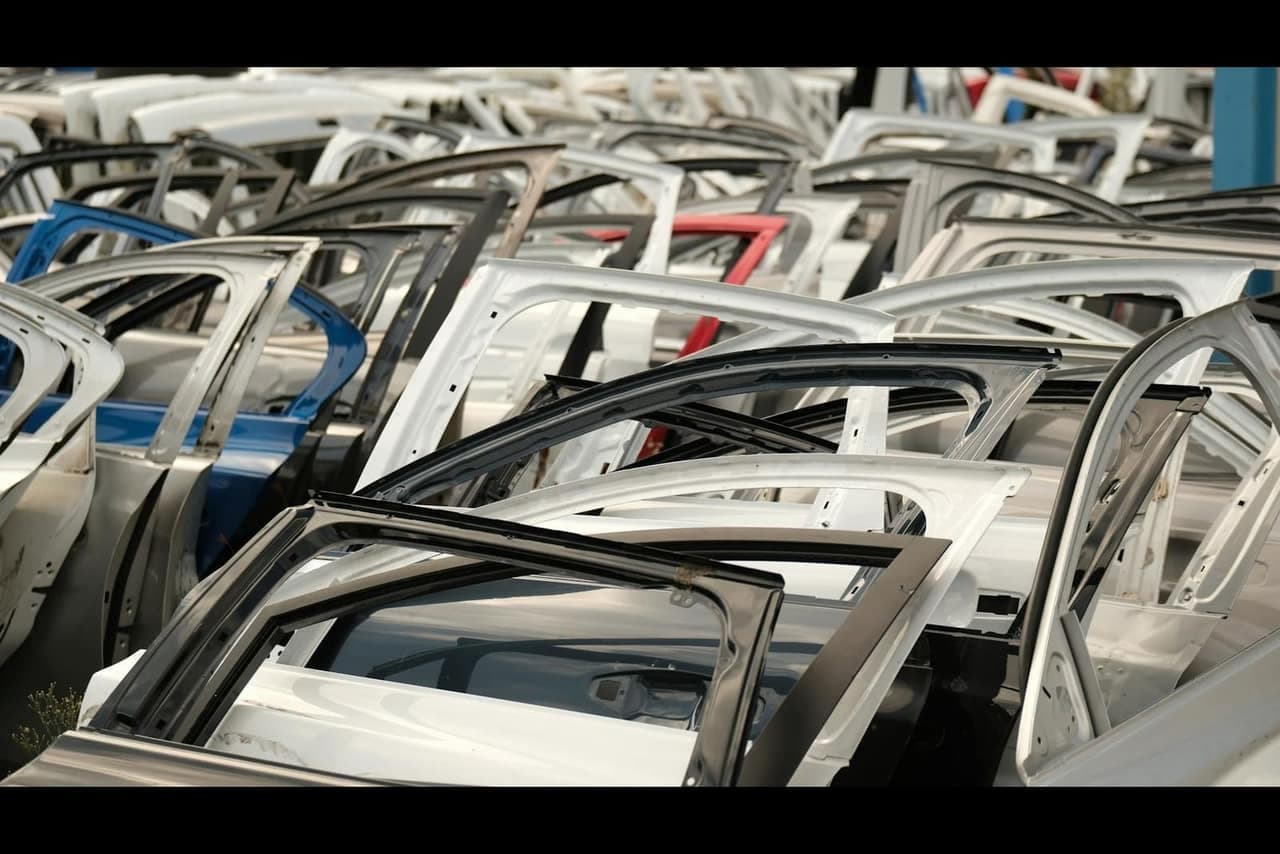
Got old parts and do not know what they are worth?
It happens to all of us. You replace an alternator, but the old one still works (just weaker). You change a bumper because it's scratched, but structurally it's intact. You take off a headlamp because you upgraded to LED, and the original halogen is perfectly functional. Or, even better, you have a whole car you no longer drive, but the parts on it are worth more than the car as a whole.
The question everyone asks is the same: how much is it worth? And the answer is not simple because it depends on a pile of factors. But after reading this guide, you will have enough knowledge to make a reasonable estimate of the value of any used part.
Factor #1: The price of a new part
This is the starting point of every valuation. If a new original part costs 500 euros, a used one in good condition can be worth 150 to 250 euros (30 to 50 percent of the new price). If the new part costs 50 euros, the used one is worth maybe 10 to 15 euros, and often it does not pay to sell it individually.
Rule of thumb: the more expensive the new part, the greater the absolute value of the used part and the greater the buyer's motivation to look for a used option. Nobody will waste time looking for a used bulb for 3 euros, but they will certainly consider a used ECU that costs 800 euros new.
Check the new part price on sites like autodoc.com, carparts24.com or directly at the authorised dealer. Bear in mind that there is a difference between an original (OEM) part and an aftermarket part. Your used OEM part is compared with the price of a new OEM part, not with the cheaper aftermarket.
Factor #2: Condition of the part
This is the most important factor affecting the price. A used part can be in different conditions, and each condition has its own price:
As new (90 to 100 percent of original condition) - The part was taken off a new or nearly new vehicle, perhaps after an accident. No signs of wear, corrosion or damage. Such a part can be worth 50 to 70 percent of the new price.
Very good (70 to 90 percent) - The part has been used but is in excellent condition. Minimal signs of use, fully functional. This is the most common category of quality used parts. Value: 35 to 50 percent of new.
Good (50 to 70 percent) - Visible signs of use, perhaps minor cosmetic damage, but functionally sound. Value: 20 to 35 percent of new.
Acceptable (30 to 50 percent) - More noticeable wear, perhaps minor functional limitations, but still usable. Value: 10 to 20 percent of new.
For refurbishment - The part does not work or has significant damage but can be refurbished. Value depends on what the refurbishment costs. Usually 5 to 15 percent of new.
Factor #3: Demand and model popularity
A part for a VW Golf is worth more than an identical part for a Lancia Thesis. Why? Because there are hundreds of thousands of Golfs on the roads, and almost no Lancias. More vehicles on the roads means more potential buyers.
Popular makes and models in the region (and whose parts sell best):
- Highly sought after: VW Golf (all generations), VW Passat, BMW 3 and 5 series, Mercedes C and E class, Audi A3/A4/A6, Opel Astra, Ford Focus, Toyota Corolla/Yaris
- Sought after: Škoda Octavia/Fabia, Renault Megane/Clio, Peugeot 308/3008, Hyundai i30/Tucson, Kia Ceed/Sportage, Fiat Punto/500
- Less sought after: Citroën, Suzuki, Honda (except Civic), Mazda, Volvo passenger
- Low demand: Lancia, Alfa Romeo (except Giulietta), Saab, more exotic models
An exception to this rule are classic cars and rare models where that very rarity raises the value. But more on that in a separate piece.
Seasonal demand
Some parts have seasonal demand that affects the price. Air conditioning compressors are worth more in spring and summer. Heaters and heating system parts are worth more in autumn and winter. Suspension and brake parts are constantly in demand. Body parts (bumpers, wings) are more sought after in winter months when there is more damage on the roads.

Factor #4: Age and mileage
How old is the car the part came from, and how many kilometres has it done? These are questions every buyer asks, and the answers directly affect the price.
Generally, parts from newer vehicles are worth more. An alternator from a Golf 7 from 2018 is worth more than an alternator from a Golf 5 from 2006. Unless the Golf 5 alternator is in perfect condition and the Golf 7 one had problems. Condition always beats age.
Mileage is particularly relevant for mechanical parts: engine, gearbox, turbo, pumps. For electronic components (ECU, navigation, multimedia) and body parts (bumpers, doors, glass), mileage is less important.
Rough guidelines for mechanical parts:
- Up to 100,000 km: the part is in its "youth", maximum value
- 100,000 to 200,000 km: middle age, moderate value reduction (10 to 20 percent)
- 200,000 to 300,000 km: visible value reduction (20 to 40 percent)
- Over 300,000 km: significant reduction, but for sturdy parts (engines, gearboxes) it can still be usable
Factor #5: OEM number and compatibility
A part with a clearly visible OEM (original) number is worth more because the buyer can confirm compatibility with certainty. If you have a part without a number or with an unreadable one, value drops because the buyer takes on more risk.
Also, parts that are compatible with several models are worth more because the base of potential buyers is bigger. For example, an alternator used in the Golf 5, Škoda Octavia and Seat Leon has three times the market of a part that fits only one model.
Concrete valuation examples
To give you a more realistic picture, here are valuation examples for common parts:
Engine (complete, working)
- VW 2.0 TDI (140 PS), 150,000 km: 1,500 to 2,500 EUR (new engine 6,000+ EUR)
- BMW N47 2.0d, 180,000 km: 2,000 to 3,000 EUR (new 8,000+ EUR)
- Opel 1.6 CDTi, 120,000 km: 1,000 to 1,800 EUR (new 5,000+ EUR)
Automatic gearbox
- DSG 7-speed (VW group), 130,000 km: 800 to 1,500 EUR (new 4,000+ EUR)
- ZF 8HP (BMW/Audi), 100,000 km: 1,200 to 2,000 EUR (new 5,000+ EUR)
Turbo charger
- Garrett for 2.0 TDI, 150,000 km: 200 to 400 EUR (new 800 to 1,200 EUR)
Headlamp (front, complete)
- LED headlamp for BMW 3 F30: 200 to 400 EUR (new 800 to 1,500 EUR)
- Halogen headlamp for Golf 7: 50 to 100 EUR (new 200 to 350 EUR)
Bumper (front, undamaged)
- Mercedes C class W205: 150 to 300 EUR (new 500+ EUR)
- Opel Astra K: 80 to 150 EUR (new 250 to 400 EUR)
Where to sell used parts
When you know what your part is worth, the next question is where to sell it. Here are the options, from simplest to most rewarding:
Selling to a scrapyard - The simplest option, but also the least money. The yard will offer you a price at the lower end because they have to make money on the resale. Expect 50 to 70 percent of the market price of the used part. Advantage: quick sale, no waiting.
Online classifieds - eBay, Facebook Marketplace, regional sites. Post an advert with good photos and a realistic price. Expect to sell at market price, but you might wait weeks or months for the right buyer.
Specialist groups - Facebook groups for specific makes (BMW parts, VW parts, etc.). Direct access to buyers looking for exactly what you have.
PoDi platform - Register as a supplier and respond to requests from buyers looking for specific parts. Advantage: buyers come to you with a specific need.
How to extract maximum value
Here are tips that can raise the sale price of your part by 20 to 50 percent:
- Clean the part - A clean part looks more valuable. Wash it, remove dust and grease. Five minutes of cleaning can add 20 percent to the price.
- Take quality photos - Clear photos from several angles, on a clean background, with good lighting. Buyers shop with their eyes.
- Quote the OEM number - If it is visible on the part, be sure to include it in the listing. That gives the buyer confidence.
- Be transparent - If the part has a defect, mention it. Buyers value honesty and such listings sell faster.
- Offer a warranty - Even a short warranty (7 or 14 days) can significantly raise value and speed up the sale.
- Timing - If you can choose when to sell, aim for the season. Aircon in summer, heating in winter, suspension in spring.
When it does not pay to sell individually
Sometimes it is better to sell the car as a whole than to bother with dismantling and selling parts individually. Here is when:
- The car is of an unpopular make/model with low demand for parts
- Most parts are in poor condition (corrosion, wear)
- You have no space to store parts while they are being sold
- You have no time for advertising and communication with buyers
- The total parts valuation does not justify the time invested
In such cases, selling the whole vehicle to a scrapyard or as a "parts car" is a more pragmatic choice. You will get less money, but also fewer headaches.
Five factors in your head before the listing
Valuing used parts is not an exact science, but with the right information you can arrive at a reasonable estimate. Remember the key factors: new part price, condition, model popularity, age and mileage, and current market demand.
If you have parts to sell or need to buy a used part, visit the PoDi platform and use our network of buyers and sellers for the best possible price.