

Why would you replace parts yourself?
Let's be honest. Taking the car to a shop for every little thing is expensive. The mechanic charges 30, 40 or even 50 euros an hour, yet sometimes the job itself is done in 20 minutes. When you add the price of a new part bought at the shop (which is almost always higher than when you buy it yourself), the bill quickly grows to a number that makes you ask: "Can I do this myself?"
The answer, in many cases, is yes. Swapping plenty of used parts does not require specialised knowledge or equipment. You need a bit of patience, basic tools and a good guide. That is what we offer you here.
Of course, there are jobs you should not do yourself. We will talk about those too because safety always comes first. But for a whole range of common swaps, your hands and a garage are perfectly enough.
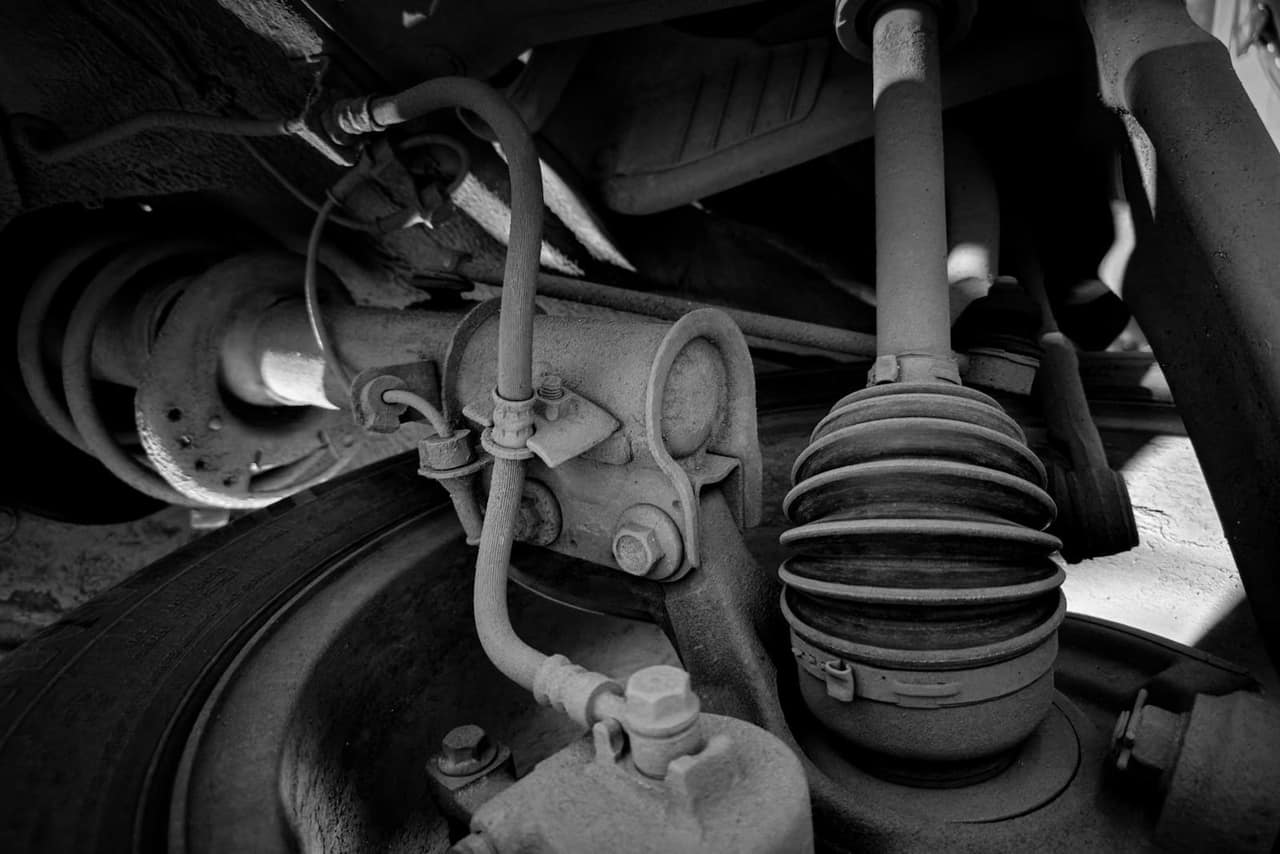
Which parts get replaced at home most often?
Before we get into the details, here is a list of parts you can swap relatively easily by yourself, even if you are not a professional mechanic:
- Air filter - literally the easiest swap, takes five minutes
- Cabin filter (pollen) - usually under the bonnet or behind the glove box
- Spark plugs - on petrol cars, needs a plug socket and a bit of care
- Brake pads - medium difficulty but quite doable at home
- Brake discs - go in a pair with the pads, a bit harder but doable
- Battery - three minutes of work, just watch the polarity
- Bulbs - front, rear, indicators
- Wiper blades - the simplest swap ever
- Thermostat - medium difficulty but saves a lot of money
- Lambda sensor - if accessible, just unscrew and screw in a new one
All these parts are great candidates for buying used on the PoDi platform. Filters, bulbs and sensors in particular are often available in excellent condition at a much lower price than new ones.
Preparation before the swap: what you need to know
Don't just grab the wrenches and start unscrewing. Preparation is half the job, and that is not just a phrase. Here is what to do before you even touch the car:
1. Identify the exact part
This sounds obvious, but you would be surprised how many people order the wrong part. Check the OEM part number, compare it with cross-reference databases (we have a separate article about that) and be sure the part fits your model, year and engine variant. A Golf 5 with 1.9 TDI and a Golf 5 with 2.0 TDI can have completely different parts for the same function.
2. Watch a video or tutorial
YouTube is your best friend. Type in the make, model and the part you are replacing, and almost certainly there is a video showing the whole procedure. Watch it at least once before you start. Pay attention to the order of steps, the tools used and possible traps.
3. Prepare tools and space
There is nothing worse than being mid-job and realising you are missing the right size wrench. Check which tools you need for your specific job and prepare them in advance. Also, make sure you have enough space and light. Working under a car in the dark on a gravel car park is neither safe nor pleasant.
4. Get the part in advance
Don't take the car apart and then go looking for the part. Get the part first, check it fits, and only then start the work. On the PoDi platform you can send a request for a used part and get offers from several suppliers, so you have time to check everything before getting into the job.
Step by step: replacing brake pads
To show you what a typical swap looks like, we will walk you through replacing the front brake pads. This is one of the most common DIY jobs and a great example of how used parts (in this case refurbished calipers or quality used pads) can save money.
What you need:
- Jack and jack stands - NEVER work on a jack alone
- Wheel brace or impact driver
- Socket set (usually 13mm, 17mm or 19mm for the caliper)
- Caliper piston tool or a C-clamp
- New (or quality used) brake pads
- Brake cleaner spray
- Gloves and safety glasses
The procedure:
Step 1: Loosen the wheel nuts while the car is still on the ground. Don't take them off completely, just loosen by half a turn.
Step 2: Lift the car with the jack and put the stands in straight away. I will say it again: never work under a car that stands only on a jack. Jacks are made for lifting, not for holding.
Step 3: Take off the wheel. Now you can see the brake disc and the caliper.
Step 4: Unscrew the caliper bolts (usually two bolts on the back). The caliper comes off like a lid. You do not need to disconnect the brake hose because you can hang the caliper on a spring with wire or ties. Never let the caliper hang on the hose because that can damage the hose.
Step 5: Take out the old pads. Look at them and compare with the new ones to be sure they are the same dimensions.
Step 6: Push the caliper piston back using the tool or a C-clamp. Before that, open the brake fluid reservoir cap because the level rises as you push the piston back. Do it slowly and evenly.
Step 7: Fit the new pads, put the caliper back and tighten the bolts with a torque wrench to the specified torque.
Step 8: Put the wheel back, lower the car and tighten the nuts in a cross pattern.
Step 9: Before you drive off, press the brake pedal several times until you get firm resistance. This is critical because the piston has to come into contact with the new pads.
The whole job takes 30 to 60 minutes per axle once you get used to it. The first time it might take an hour and a half, and that is perfectly fine.
Air filter replacement: a five minute job
If you have never changed anything on a car, start with the air filter. Seriously, this is so simple you will wonder why you ever paid anyone to do it.
Open the bonnet. Find the air filter box, usually a large plastic box with a hose going to the engine. Open it (usually clips or screws). Take out the old filter. Put in the new one. Close the box. Done.
A used air filter is not worth buying because new ones are cheap, but the point is that after this swap you build confidence for harder jobs. And along the way you have saved 15 to 20 euros that the shop would have charged for this "service".
Battery replacement: simple but with rules
The battery is another part you can replace in a few minutes. But there are rules you must follow:
- Always remove the negative (-) terminal first, then the positive (+)
- When fitting the new one, connect the positive (+) first, then the negative (-)
- Check that the terminals are clean and firmly tightened
- A used battery can be a good choice if it has been tested and still has capacity
On newer cars, a battery swap may require resetting some systems (e.g. windows, start-stop). Check what is needed for your model after the swap.
When NOT to do it yourself
Some jobs need specialised tools, knowledge or equipment you simply do not have at home. Here are the situations where it is better to go to a shop:
- Timing belt replacement - wrong timing wrecks the engine, and special locking tools are required
- Airbag system work - risk of activation, can cause serious injury
- Clutch replacement - requires dropping the gearbox, which is a serious job
- Aircon system work - refrigerant is dangerous and requires certification
- Electronics and programming - ECU, immobiliser and similar systems need diagnostics
- Structural repairs - anything affecting body integrity
For these jobs, feel free to buy a used part on the PoDi platform because you will save on the part, but leave the fitting to a professional.

Safety first
Whatever job you are doing on the car, stick to these rules:
- Always use jack stands when working under the car
- Wear safety glasses and gloves
- Work on a flat, hard surface
- Never work on a hot engine
- Keep a fire extinguisher nearby
- If you are unsure about something, stop and check
- Never rush
It is better to spend an extra hour on the job than to end up in A&E. Sounds dramatic, but a car is a heavy machine and mistakes can be dangerous.
Where to get used parts for a DIY swap?
Once you decide to replace a part yourself, the question is where to get it at a good price. New parts at dealerships are expensive, and you are not always sure about the quality of cheaper replacement parts.
Used original parts are often the best price-to-quality ratio. On the PoDi platform you can send a request for any part, and we connect you with suppliers across the country and beyond who will send you offers. You pick the one that suits you best by price, condition of the part and seller location.
The advantage of used original parts is that they were designed for your car. No compatibility issues, the material quality is original, and the price is significantly lower than for a new original part. Replacement parts can be cheaper but are often of lower quality too, especially when it comes to safety components like brakes or suspension parts.
Start with a filter, earn confidence
Replacing car parts at home is not rocket science. Start with simple things like filters or bulbs, gain confidence and slowly move on to more demanding jobs. Every successful swap saves you money and gives a feeling of satisfaction.
And when you need a used part at a fair price, PoDi is there. Send a request, compare offers and get on with the job. Your car and your wallet will thank you.